John Summary
STEPBible TIPNR
John the Baptist was a prophet who preached repentance and baptized many, including Jesus, preparing the way for the Messiah.
the baptist (MAT 3:1)
Lineage: Zacharias › John the Baptist
Loading book references…
John the Baptist was a prophet who preached repentance and baptized many, including Jesus, preparing the way for the Messiah.
John the Baptist was a significant figure in the New Testament who played a crucial role in preparing the way for Jesus Christ. He was the son of Zechariah and Elizabeth, born miraculously in their old age (Luk.1.13,60,63). John lived an ascetic life in the wilderness, wearing camel's hair and eating locusts and wild honey (Mat 3:4; Mrk 1:6).
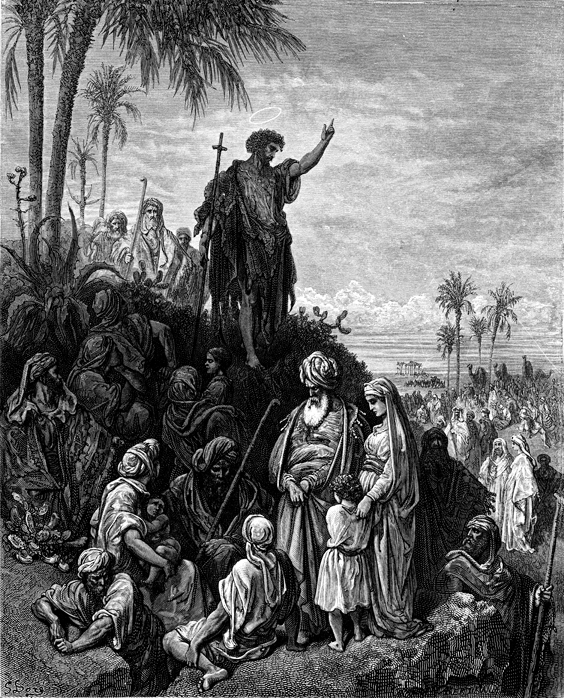
As a prophet, John preached a message of repentance and baptized people in the Jordan River (Mat 3:1; Mrk 1:4; Luk 3:2). He emphasized the importance of bearing fruit worthy of repentance (Mat 3:8) and warned of the coming judgment (Mat 3:10). Many people, including tax collectors and soldiers, came to be baptized by him (Luk.3.12,14).
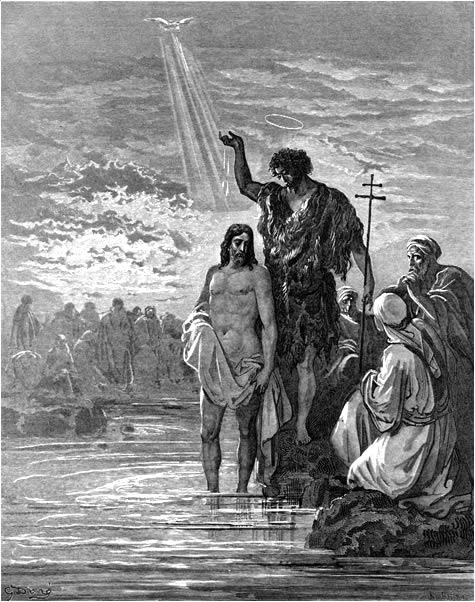
John's ministry reached its climax when Jesus came to be baptized by him (Mat 3:13-14; Mrk 1:9). John initially hesitated, recognizing Jesus' superiority, but Jesus insisted, and John baptized Him. This event marked the beginning of Jesus' public ministry.
Later, John was imprisoned by Herod Antipas for criticizing Herod's marriage to his brother's wife (Mat 4:12; 14.3-4; Mrk 6:17-18; Luk 3:20). While in prison, John sent his disciples to ask Jesus if He was the Messiah (Mat 11:2-3; Luk 7:18-19). Jesus responded by pointing to His miracles and teachings, affirming His identity (Mat 11:4-6; Luk 7:22-23).
Tragically, John was beheaded at the request of Herodias' daughter (Mat 14:8-10; Mrk 6:24-28). Jesus praised John as a great prophet and more than a prophet, the one who prepared the way for the Messiah (Mat 11:7-14; Luk 7:24-28).
John's disciples continued to follow some of his practices even after his death, such as fasting (Mat 9:14; Mrk 2:18; Luk 5:33). Jesus spoke of John's greatness and his role in salvation history (Mat 11:11-13; Luk 16:16). The early Church recognized John as the forerunner of Christ, fulfilling the prophecies of Isaiah and Malachi (Mat 3:3; 11.10; Mrk 1:2; Luk 3:4-6; 7.27).
The “forerunner of our Lord.” We have but fragmentary and imperfect accounts of him in the Gospels. He was of priestly descent. His father, Zacharias, was a priest of the course of Abia (1 Chr. 24:10), and his mother, Elisabeth, was of the daughters of Aaron (Luke 1:5). The mission of John was the subject of prophecy (Matt. 3:3; Isa. 40:3; Mal. 3:1). His birth, which took place six months before that of Jesus, was foretold by an angel. Zacharias, deprived of the power of speech as a token of God’s truth and a reproof of his own incredulity with reference to the birth of his son, had the power of speech restored to him on the occasion of his circumcision (Luke 1:64). After this no more is recorded of him for thirty years than what is mentioned in Luke 1:80. John was a Nazarite from his birth (Luke 1:15; Num. 6:1-12). He spent his early years in the mountainous tract of Judah lying between Jerusalem and the Dead Sea (Matt. 3:1-12).
At length he came forth into public life, and great multitudes from “every quarter” were attracted to him. The sum of his preaching was the necessity of repentance. He denounced the Sadducees and Pharisees as a “generation of vipers,” and warned them of the folly of trusting to external privileges (Luke 3:8). “As a preacher, John was eminently practical and discriminating. Self-love and covetousness were the prevalent sins of the people at large. On them, therefore, he enjoined charity and consideration for others. The publicans he cautioned against extortion, the soldiers against crime and plunder.” His doctrine and manner of life roused the entire south of Palestine, and the people from all parts flocked to the place where he was, on the banks of the Jordan. There he baptized thousands unto repentance.
The fame of John reached the ears of Jesus in Nazareth (Matt. 3:5), and he came from Galilee to Jordan to be baptized of John, on the special ground that it became him to “fulfil all righteousness” (3:15). John’s special office ceased with the baptism of Jesus, who must now “increase” as the King come to his kingdom. He continued, however, for a while to bear testimony to the Messiahship of Jesus. He pointed him out to his disciples, saying, “Behold the Lamb of God.” His public ministry was suddenly (after about six months probably) brought to a close by his being cast into prison by Herod, whom he had reproved for the sin of having taken to himself the wife of his brother Philip (Luke 3:19). He was shut up in the castle of Machaerus (q.v.), a fortress on the southern extremity of Peraea, 9 miles east of the Dead Sea, and here he was beheaded. His disciples, having consigned the headless body to the grave, went and told Jesus all that had occurred (Matt. 14:3-12). John’s death occurred apparently just before the third Passover of our Lord’s ministry. Our Lord himself testified regarding him that he was a “burning and a shining light” (John 5:35).
Sources: BibleData (CC BY 4.0, John_1) · STEPBible TIPNR (CC BY 4.0, John@Mat.3.1-Act) · Theographic Bible Metadata (CC BY-SA 4.0, john_1676)