Stephen was one of the seven men chosen by the early church in Jerusalem to serve as deacons, responsible for the daily distribution of food to widows (Act 6:1-6). He is described as being full of faith, wisdom, and the Holy Spirit (Act.6.5, 8).
As Stephen continued to perform wonders and signs among the people, he faced opposition from members of the Synagogue of the Freedmen, who disputed with him (Act 6:9). However, they could not withstand the wisdom and the Spirit by which he spoke (Act 6:10).
Consequently, they brought false charges against Stephen, accusing him of blasphemy against Moses and God (Act 6:11-14). When brought before the Sanhedrin (the Jewish high court), Stephen's face was said to have appeared like the face of an angel (Act 6:15).
In his defense, Stephen delivered a powerful speech recounting Israel's history and their rejection of God's prophets, culminating in their rejection of Jesus as the Righteous One (Act 7:1-53). He accused his hearers of resisting the Holy Spirit and persecuting the prophets, just as their fathers had done (Act 7:51-52).
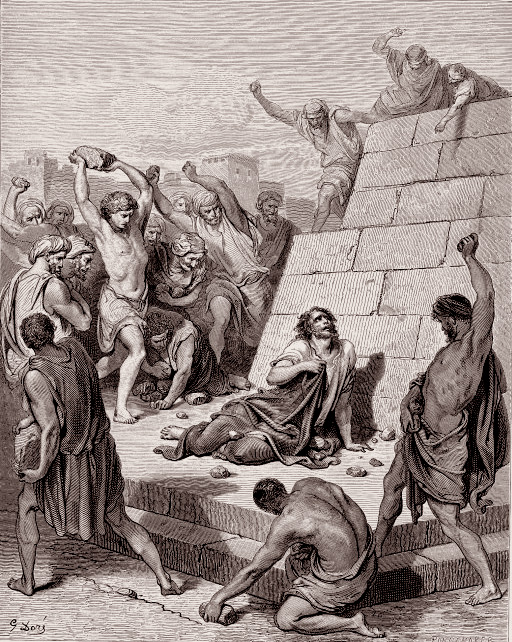
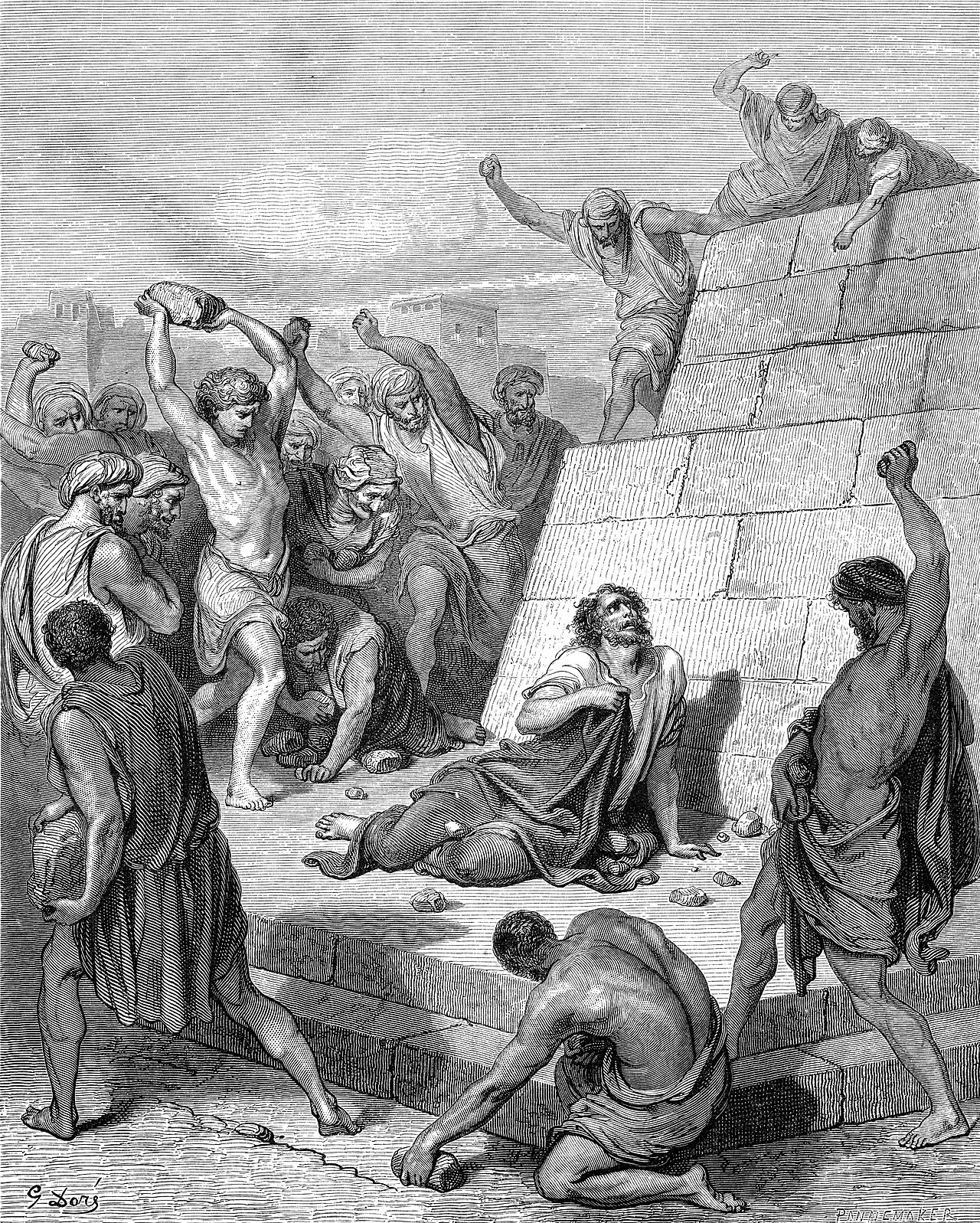
Enraged by his words, the members of the Sanhedrin gnashed their teeth at Stephen, but he, full of the Holy Spirit, gazed into heaven and saw the glory of God and Jesus standing at the right hand of God (Act 7:54-55). When he declared this vision, they dragged him out of the city and stoned him to death, with a young man named Saul (later known as Paul) guarding the garments of those who carried out the execution (Act 7:56-60).
As he was being stoned, Stephen called out to the Lord Jesus to receive his spirit and, echoing Jesus' words on the cross, asked God not to hold this sin against his persecutors (Act 7:59-60). Devout men buried Stephen and lamented deeply over him (Act 8:2).
Stephen's martyrdom marked a significant turning point in the early church, as it sparked a great persecution against the church in Jerusalem, leading to the dispersion of believers throughout Judea and Samaria (Act.8.1, 11:19). This dispersion ultimately led to the spread of the gospel beyond Jerusalem, fulfilling Jesus' command to be his witnesses to the ends of the earth (Act 1:8).