Ararat Summary
STEPBible TIPNR
Ararat, the mountain range where Noah's ark came to rest after the flood.
A mountain range where Noah's ark rested after the flood.
Loading book references…
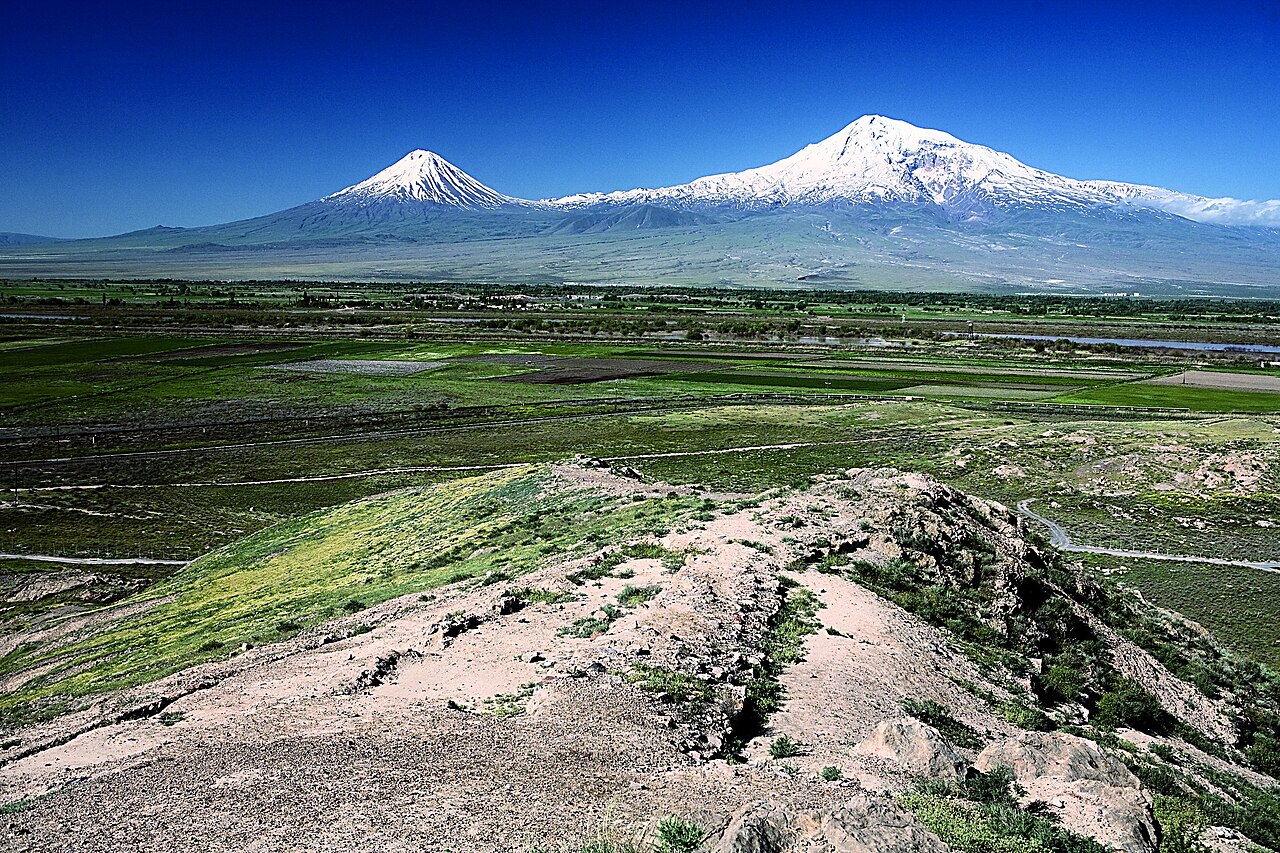
Ararat, the mountain range where Noah's ark came to rest after the flood.
Ararat is a mountain range located in the region of Armenia, in present-day eastern Turkey. It is most famously known as the place where Noah's ark came to rest after the great flood, as recorded in Genesis 8:4. The specific mountain is often identified as Mount Ararat, which consists of two peaks: Greater Ararat and Lesser Ararat.
In the Bible, Ararat is also mentioned in the context of historical events. In 2Ki.19.37 and Isaiah 37:38, it is recorded that Adrammelech and Sharezer, the sons of Sennacherib, king of Assyria, fled to the land of Ararat after assassinating their father. This suggests that Ararat was a recognized geographical and political entity during the time of the Assyrian Empire.
Furthermore, in Jeremiah 51:27, Ararat is mentioned alongside Minni and Ashkenaz as kingdoms summoned to rise up against Babylon. This prophetic passage foretells the fall of Babylon and the role that the kingdoms of Ararat and its allies would play in this event.
The biblical references to Ararat highlight its significance as a geographical landmark and its association with important events in biblical history, most notably the landing of Noah's ark and the preservation of life after the flood. The mention of Ararat in the context of political alliances and conflicts also demonstrates its relevance in the geopolitical landscape of the ancient Near East.
Sacred land or high land, the name of a country on one of the mountains of which the ark rested after the Flood subsided (Gen. 8:4). The “mountains” mentioned were probably the Kurdish range of South Armenia. In 2 Kings 19:37, Isa. 37:38, the word is rendered “Armenia” in the Authorized Version, but in the Revised Version, “Land of Ararat.” In Jer. 51:27, the name denotes the central or southern portion of Armenia. It is, however, generally applied to a high and almost inaccessible mountain which rises majestically from the plain of the Araxes. It has two conical peaks, about 7 miles apart, the one 14,300 feet and the other 10,300 feet above the level of the plain. Three thousand feet of the summit of the higher of these peaks is covered with perpetual snow. It is called Kuh-i-nuh, i.e., “Noah’s mountain”, by the Persians. This part of Armenia was inhabited by a people who spoke a language unlike any other now known, though it may have been related to the modern Georgian. About B.C. 900 they borrowed the cuneiform characters of Nineveh, and from this time we have inscriptions of a line of kings who at times contended with Assyria. At the close of the seventh century B.C. the kingdom of Ararat came to an end, and the country was occupied by a people who are ancestors of the Armenians of the present day.
Sources: OpenBible.info Bible Geocoding Data (CC BY 4.0, ab89be9) · STEPBible TIPNR (CC BY 4.0, Ararat@Gen.8.4-Jer) · Theographic Bible Metadata (CC BY-SA 4.0, ararat_86) · Wikidata (CC0 1.0, Q72303)