Argob Summary
STEPBible TIPNR
Argob, a region in Bashan, conquered by the Israelites and known for its many fortified cities.
A region in Bashan, known for its fortified cities.
Loading book references…
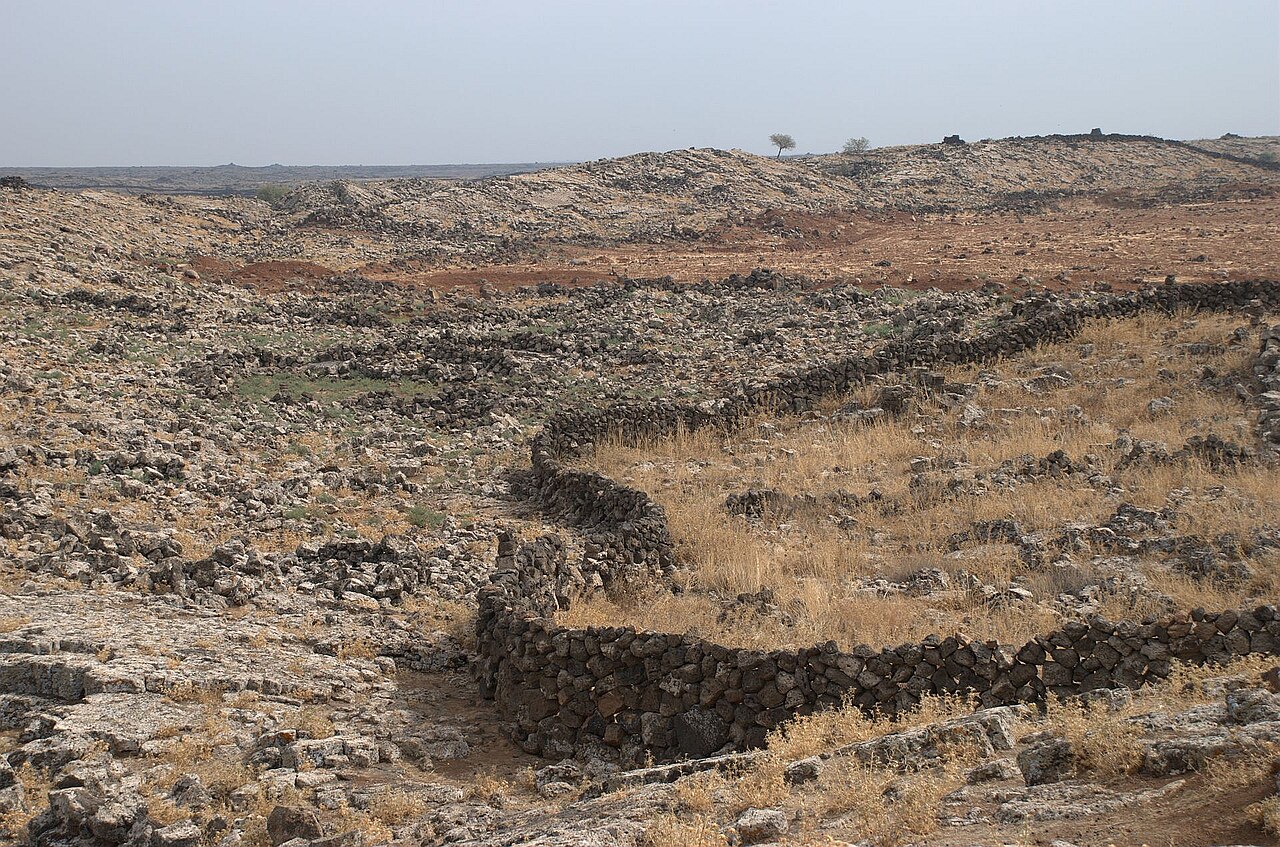
Argob, a region in Bashan, conquered by the Israelites and known for its many fortified cities.
Argob was a region located in the kingdom of Bashan, east of the Jordan River, in what is now modern-day Syria. It is mentioned in the Bible in connection with the Israelites' conquest of the Promised Land under the leadership of Moses and Joshua.
In Deu.3.4, Argob is described as a region containing sixty fortified cities, all of which were captured by the Israelites during their conquest of Og, the king of Bashan. These cities were noted for their high walls, gates, and bars, indicating their strong defensive capabilities (Deu.3.5).
The region of Argob was allotted to the half-tribe of Manasseh as part of their inheritance in the Promised Land (Deu.3.13). Jair, a descendant of Manasseh, took possession of Argob and named it Havvoth-jair, which means "the towns of Jair" (Deu.3.14).
During the reign of King Solomon, Argob was included in the territory governed by one of his twelve officers, who was responsible for providing provisions for the king and his household (1Ki.4.13).
The biblical references to Argob highlight its significance as a fortified and strategically important region in the Transjordan area. The conquest of Argob by the Israelites demonstrates their military success under divine guidance and the fulfillment of God's promise to give them the land. The region's inclusion in the allotment of the tribes and its mention during Solomon's reign underscore its ongoing importance in the history of Israel.
Stony heap, an “island,” as it has been called, of rock about 30 miles by 20, rising 20 or 30 feet above the table-land of Bashan; a region of crags and chasms wild and rugged in the extreme. On this “island” stood sixty walled cities, ruled over by Og. It is called Trachonitis (“the rugged region”) in the New Testament (Luke 3:1). These cities were conquered by the Israelites (Deut. 3:4; 1 Kings 4:13). It is now called the Lejah. Here “sixty walled cities are still traceable in a space of 308 square miles. The architecture is ponderous and massive. Solid walls 4 feet thick, and stones on one another without cement; the roofs enormous slabs of basaltic rock, like iron; the doors and gates are of stone 18 inches thick, secured by ponderous bars. The land bears still the appearance of having been called the ‘land of giants’ under the giant Og.” “I have more than once entered a deserted city in the evening, taken possession of a comfortable house, and spent the night in peace. Many of the houses in the ancient cities of Bashan are perfect, as if only finished yesterday. The walls are sound, the roofs unbroken, and even the window-shutters in their places. These ancient cities of Bashan probably contain the very oldest specimens of domestic architecture in the world” (Porter’s Giant Cities).
Sources: OpenBible.info Bible Geocoding Data (CC BY 4.0, a42a5b2) · STEPBible TIPNR (CC BY 4.0, Argob@Deu.3.4-1Ki) · Theographic Bible Metadata (CC BY-SA 4.0, argob_88) · Wikidata (CC0 1.0, Q826132)