Arnon Summary
STEPBible TIPNR
The Arnon, a river and valley that marked the boundary between Moab and the Amorites, later serving as Israel's southern border.
A river and valley, serving as a boundary for Israel.
Loading book references…
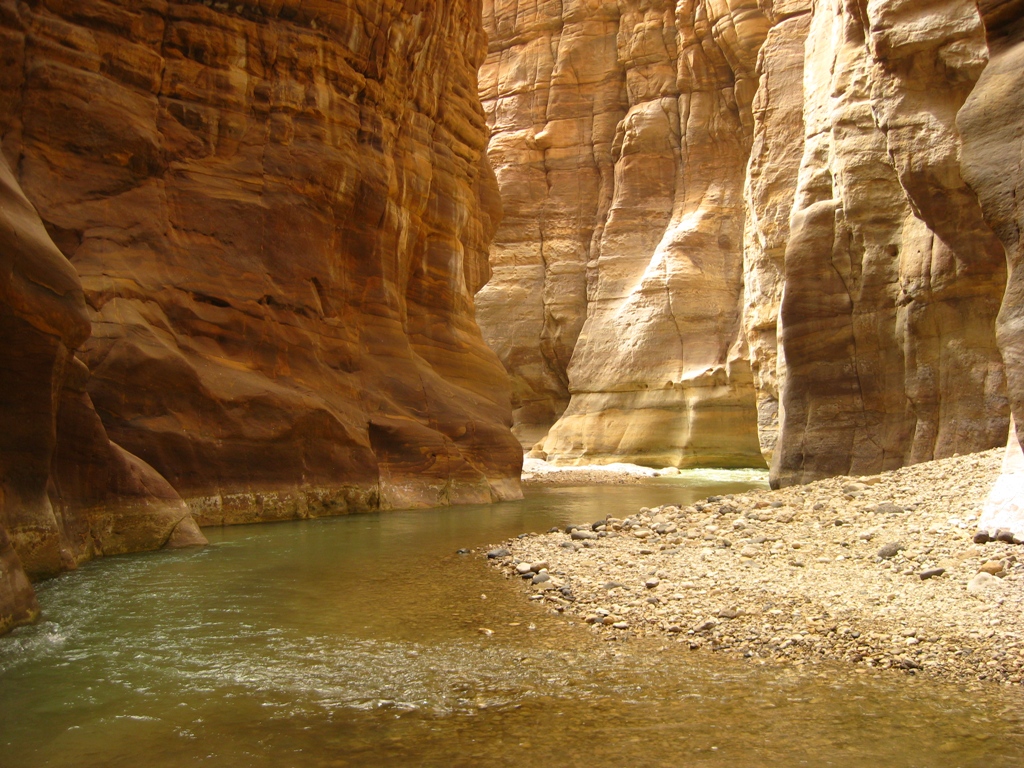
The Arnon, a river and valley that marked the boundary between Moab and the Amorites, later serving as Israel's southern border.
The Arnon is a river and its accompanying valley, located east of the Dead Sea, in what is now modern-day Jordan. It is mentioned numerous times in the Old Testament, primarily in the context of Israel's journey to the Promised Land and the subsequent division of the territory.
During the Israelites' wilderness wanderings, the Arnon served as a boundary between the Moabites and the Amorites (Numbers 21:13). The Amorites, led by King Sihon, had previously conquered the land north of the Arnon from the Moabites (Numbers 21:26). When the Israelites requested passage through Sihon's territory, he refused and engaged them in battle. Israel defeated Sihon and took possession of the land from the Arnon to the Jabbok (Numbers 21:24).
The Arnon later served as the southern border of the territory assigned to the tribes of Reuben and Gad (Deu.3.12, 16; Joshua 13:9, 16). It also marked the southern limit of the region controlled by King Sihon (Deu.2.36; Joshua 12:2) and, in later years, the extent of Jephthah's victories over the Ammonites (Judges 11:18, 22).
During the reign of Jehu, king of Israel, the territory east of the Jordan, including the area from the Arnon, was lost to Hazael, king of Aram (2Ki.10.33). The prophets Isaiah and Jeremiah also mention the Arnon in their prophecies concerning Moab (Isaiah 16:2; Jeremiah 48:20).
The Arnon's significance in the Bible lies in its role as a geographical boundary, marking the limits of territorial control for various nations and tribes throughout Israel's history. Its frequent mention in the context of military campaigns and territorial allotments underscores its importance as a strategic landmark in the region.
Swift, the southern boundary of the territory of Israel beyond Jordan, separating it from the land of Moab (Deut. 3:8, 16). This river (referred to twenty-four times in the Bible) rises in the mountains of Gilead, and after a circuitous course of about 80 miles through a deep ravine it falls into the Dead Sea nearly opposite Engedi. The stream is almost dry in summer. It is now called el-Mujeb. The territory of the Amorites extended from the Arnon to the Jabbok.
Sources: OpenBible.info Bible Geocoding Data (CC BY 4.0, a4cc324) · STEPBible TIPNR (CC BY 4.0, Arnon@Num.21.13-Jer) · Theographic Bible Metadata (CC BY-SA 4.0, arnon_92) · Wikidata (CC0 1.0, Q2120208)