Ashkelon Summary
STEPBible TIPNR
Ashkelon, one of the five principal Philistine cities, was captured by Judah but later became a symbol of judgment.
A major Philistine city, often a target of prophecy.
Loading book references…
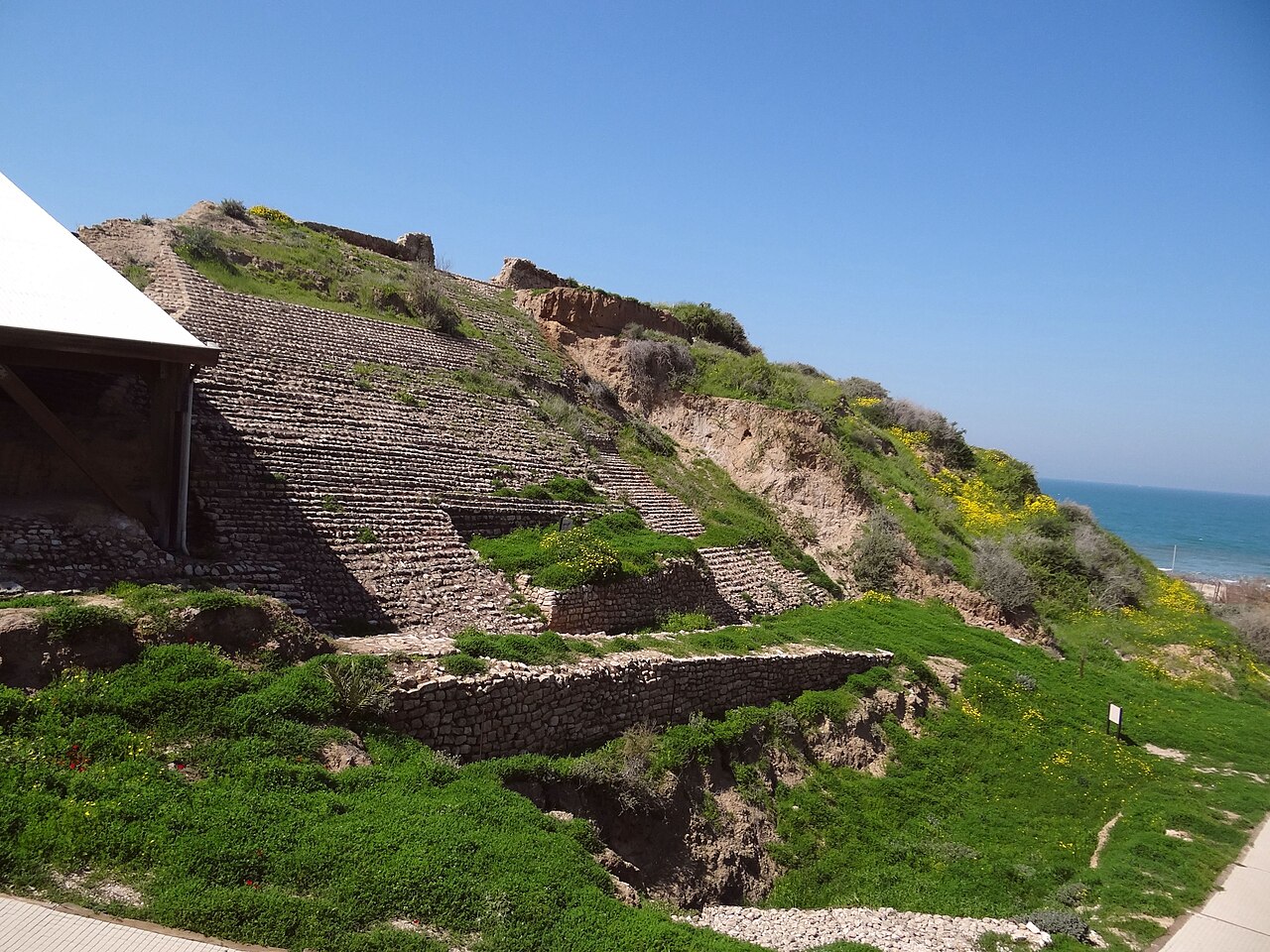
Ashkelon, one of the five principal Philistine cities, was captured by Judah but later became a symbol of judgment.
Ashkelon was one of the five major cities of the Philistines, located along the Mediterranean coast, approximately 35 miles (56 km) south of Tel Aviv. It is mentioned several times in the Bible, often in the context of conflict with Israel and as a target of prophetic judgment.
In Judges 1:18, Ashkelon is listed among the cities captured by the tribe of Judah during the conquest of Canaan. However, the city later reverted to Philistine control. Judges 14:19 records that Samson, empowered by the Spirit of the Lord, went down to Ashkelon, killed thirty men, and took their garments to pay a debt.
Ashkelon is mentioned as one of the Philistine cities that received a golden tumor as a guilt offering when the Ark of the Covenant was returned to Israel (1Sa.6.17). In 2Sa.1.20, David laments the death of Saul and Jonathan, urging that the news not be proclaimed in Ashkelon, lest the Philistines rejoice.
Several prophets, including Jeremiah, Amos, and Zephaniah, pronounce judgments against Ashkelon. Jeremiah includes Ashkelon among the nations that will drink the cup of God's wrath (Jeremiah 25:20) and describes the city as cut off and bereaved (Jeremiah 47:5, 7). Amos prophesies that God will send fire upon Ashkelon (Amo.1.8), while Zephaniah declares that Ashkelon will become a desolation (Zephaniah 2:4) but also foresees a future restoration (Zephaniah 2:7). Zechariah portrays Ashkelon as fearful and mourning in the face of God's judgment (Zechariah 9:5).
Throughout its biblical history, Ashkelon remains a significant Philistine stronghold and a symbol of opposition to Israel. The city's inclusion in prophetic oracles underscores its importance and the divine judgment it would face for its hostility toward God's people.
'=Askelon=Ascalon, was one of the five cities of the Philistines (Josh. 13:3; 1 Sam. 6:17). It stood on the shore of the Mediterranean, 12 miles north of Gaza. It is mentioned on an inscription at Karnak in Egypt as having been taken by king Rameses II., the oppressor of the Hebrews. In the time of the judges (Judg. 1:18) it fell into the possession of the tribe of Judah; but it was soon after retaken by the Philistines (2 Sam. 1:20), who were not finally dispossessed till the time of Alexander the Great. Samson went down to this place from Timnath, and slew thirty men and took their spoil. The prophets foretold its destruction (Jer. 25:20; 47:5, 7). It became a noted place in the Middle Ages, having been the scene of many a bloody battle between the Saracens and the Crusaders. It was beseiged and taken by Richard the Lion-hearted, and “within its walls and towers now standing he held his court.” Among the Tell Amarna tablets are found letters or official despatches from Yadaya, “captain of horse and dust of the king’s feet,” to the “great king” of Egypt, dated from Ascalon. It is now called ‘Askalan.
Sources: OpenBible.info Bible Geocoding Data (CC BY 4.0, ac87d4c) · STEPBible TIPNR (CC BY 4.0, Ashkelon@Jos.13.3-Zec) · Theographic Bible Metadata (CC BY-SA 4.0, ashkelon_103) · Wikidata (CC0 1.0, Q2752984)