Athens Summary
STEPBible TIPNR
Athens, the intellectual and cultural center of ancient Greece, where Paul preached the gospel and addressed the Areopagus.
A major city in Greece, visited by Paul.
Loading book references…
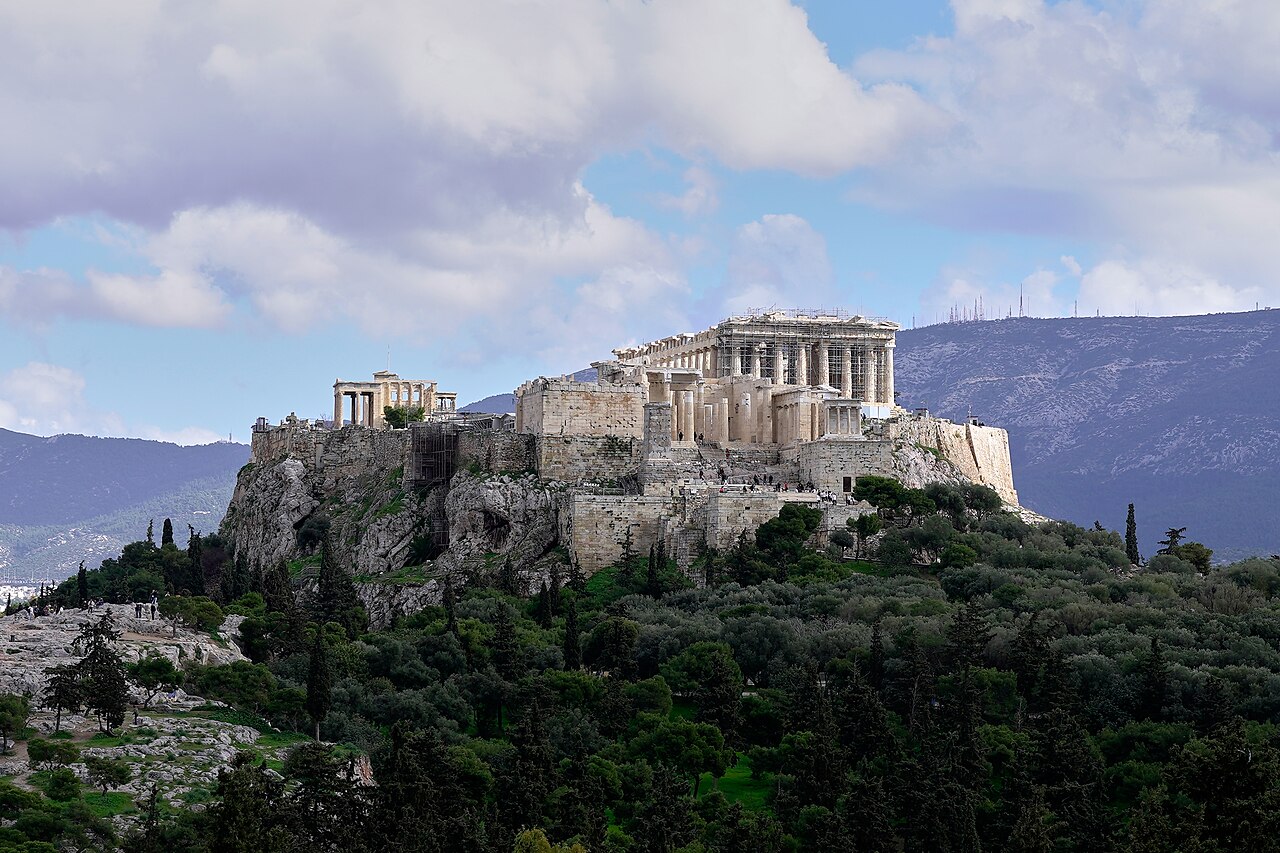
Athens, the intellectual and cultural center of ancient Greece, where Paul preached the gospel and addressed the Areopagus.
Athens was a prominent city in ancient Greece, known for its rich history, cultural achievements, and philosophical traditions. In the New Testament, Athens is mentioned primarily in connection with the Apostle Paul's second missionary journey.
According to Act.17.15-16, Paul was brought to Athens by some believers from Berea, who then returned with instructions for Silas and Timothy to join him as soon as possible. While waiting for them in Athens, Paul was deeply distressed to see that the city was full of idols.
Paul's time in Athens was marked by his interactions with the local philosophers and his famous sermon at the Areopagus, also known as Mars Hill (Act.17.19-34). He engaged in discussions with Epicurean and Stoic philosophers, who were intrigued by his teaching about Jesus and the resurrection. Some of them brought Paul to the Areopagus, where he delivered a discourse, starting with a reference to an altar dedicated to an unknown god.
In his sermon, Paul proclaimed the one true God, the Creator of all things, and called for repentance and faith in Jesus Christ. While some mocked Paul's message, others believed, including Dionysius, a member of the Areopagus, and a woman named Damaris.
After his time in Athens, Paul traveled to Corinth (Act.18.1), where he continued his ministry. Later, in his letters to the Thessalonians, Paul mentioned sending Timothy to them from Athens to strengthen and encourage them in their faith (1Th.3.1-2).
The capital of Attica, the most celebrated city of the ancient world, the seat of Greek literature and art during the golden period of Grecian history. Its inhabitants were fond of novelty (Acts 17:21), and were remarkable for their zeal in the worship of the gods. It was a sarcastic saying of the Roman satirist that it was “easier to find a god at Athens than a man.”
On his second missionary journey Paul visited this city (Acts 17:15; comp. 1 Thess. 3:1), and delivered in the Areopagus his famous speech (17:22-31). The altar of which Paul there speaks as dedicated “to the [properly “an”] unknown God” (23) was probably one of several which bore the same inscription. It is supposed that they originated in the practice of letting loose a flock of sheep and goats in the streets of Athens on the occasion of a plague, and of offering them up in sacrifice, at the spot where they lay down, “to the god concerned.”
Sources: OpenBible.info Bible Geocoding Data (CC BY 4.0, a1fe6e7) · STEPBible TIPNR (CC BY 4.0, Athens@Act.17.15-2Th) · Theographic Bible Metadata (CC BY-SA 4.0, athens_118) · Wikidata (CC0 1.0, Q131013)