Report an inaccuracy

Babylon

Place

Ancient Mesopotamian city, capital of Babylonian Empire, site of the Tower of Babel.

Names
  • en Babylon
    same as Babel
  • en Babylonia · Also called
  • en Babylon,Babylonian · Also called
  • en Babel · Also called
  • en Sheshak · Also called
  • en Sheshach · Also called
  • en Merathaim · Also called
  • en Pekod · Also called
  • en Babylonian · Also called
  • en Babylonians · Also called
  • en Tyre · Also called
  • he בָּבֶ֫ל · H0894
  • he בָּֽבְלַי · H0896
  • he שֵׁשַׁךְ · H8347
  • he מְרָתַיִם · H4850
  • he פְּקוֹד · H6489
  • el Βαβυλών · G0897
  • bg Вавилон
Location
Kind: City
Modern name: Babylon
Certainty: Confirmed
32.536170, 44.420820 · Show on map
Mentioned in (316)
Gen 10:10 Gen 11:9 2 Kgs 17:24 2 Kgs 17:30 2 Kgs 20:12 2 Kgs 20:14 2 Kgs 20:17 2 Kgs 20:18 2 Kgs 24:1 2 Kgs 24:7 2 Kgs 24:10 2 Kgs 24:11 2 Kgs 24:12 2 Kgs 24:15 2 Kgs 24:16 2 Kgs 24:17 2 Kgs 24:20 2 Kgs 25:1 2 Kgs 25:6 2 Kgs 25:7 2 Kgs 25:8 2 Kgs 25:11 2 Kgs 25:13 2 Kgs 25:20 2 Kgs 25:21 2 Kgs 25:22 2 Kgs 25:23 2 Kgs 25:24 2 Kgs 25:27 2 Kgs 25:28 2 Kgs 25:29 1 Chr 9:1 2 Chr 32:31 2 Chr 33:11 2 Chr 36:6 2 Chr 36:7 2 Chr 36:10 2 Chr 36:17 2 Chr 36:18 2 Chr 36:20 Ezra 1:11 Ezra 2:1 Ezra 4:9 Ezra 4:12 Ezra 5:12 Ezra 5:13 Ezra 5:14 Ezra 5:17 Ezra 6:1 Ezra 6:5 Ezra 7:1 Ezra 7:6 Ezra 7:9 Ezra 7:16 Ezra 8:1 Neh 7:6 Neh 13:6 Esth 2:6 Ps 87:4 Ps 137:1 Ps 137:7 Ps 137:8 Isa 13:1 Isa 13:2 Isa 13:14 Isa 13:17 Isa 13:19 Isa 13:20 Isa 13:22 Isa 14:4 Isa 14:22 Isa 14:23 Isa 21:1 Isa 21:2 Isa 21:9 Isa 23:13 Isa 39:1 Isa 39:3 Isa 39:6 Isa 39:7 Isa 43:14 Isa 46:1 Isa 47:1 Isa 47:6 Isa 48:14 Isa 48:20 Jer 20:4 Jer 20:5 Jer 20:6 Jer 21:2 Jer 21:4 Jer 21:7 Jer 21:10 Jer 22:25 Jer 24:1 Jer 25:1 Jer 25:9 Jer 25:11 Jer 25:12 Jer 25:14 Jer 25:26 Jer 27:6 Jer 27:7 Jer 27:8 Jer 27:9 Jer 27:11 Jer 27:12 Jer 27:13 Jer 27:14 Jer 27:16 Jer 27:17 Jer 27:18 Jer 27:20 Jer 27:22 Jer 28:2 Jer 28:3 Jer 28:4 Jer 28:6 Jer 28:11 Jer 28:14 Jer 29:1 Jer 29:3 Jer 29:4 Jer 29:8 Jer 29:10 Jer 29:15 Jer 29:16 Jer 29:20 Jer 29:21 Jer 29:22 Jer 29:24 Jer 29:28 Jer 29:31 Jer 32:2 Jer 32:3 Jer 32:4 Jer 32:5 Jer 32:28 Jer 32:36 Jer 34:1 Jer 34:2 Jer 34:3 Jer 34:7 Jer 34:21 Jer 35:11 Jer 36:29 Jer 37:1 Jer 37:17 Jer 37:19 Jer 38:3 Jer 38:17 Jer 38:18 Jer 38:22 Jer 38:23 Jer 39:1 Jer 39:3 Jer 39:5 Jer 39:6 Jer 39:7 Jer 39:9 Jer 39:11 Jer 39:13 Jer 40:1 Jer 40:4 Jer 40:5 Jer 40:7 Jer 40:9 Jer 40:11 Jer 41:2 Jer 41:18 Jer 42:11 Jer 43:3 Jer 43:10 Jer 44:30 Jer 46:2 Jer 46:13 Jer 46:18 Jer 46:26 Jer 49:28 Jer 49:30 Jer 49:31 Jer 50:1 Jer 50:2 Jer 50:3 Jer 50:8 Jer 50:9 Jer 50:10 Jer 50:13 Jer 50:14 Jer 50:16 Jer 50:17 Jer 50:18 Jer 50:21 Jer 50:23 Jer 50:24 Jer 50:27 Jer 50:28 Jer 50:29 Jer 50:32 Jer 50:34 Jer 50:35 Jer 50:39 Jer 50:42 Jer 50:43 Jer 50:44 Jer 50:45 Jer 50:46 Jer 51:1 Jer 51:2 Jer 51:6 Jer 51:7 Jer 51:8 Jer 51:9 Jer 51:11 Jer 51:12 Jer 51:13 Jer 51:20 Jer 51:24 Jer 51:25 Jer 51:29 Jer 51:30 Jer 51:31 Jer 51:33 Jer 51:34 Jer 51:35 Jer 51:37 Jer 51:41 Jer 51:42 Jer 51:44 Jer 51:45 Jer 51:47 Jer 51:48 Jer 51:49 Jer 51:52 Jer 51:53 Jer 51:54 Jer 51:55 Jer 51:56 Jer 51:58 Jer 51:59 Jer 51:60 Jer 51:61 Jer 51:62 Jer 51:64 Jer 52:3 Jer 52:4 Jer 52:9 Jer 52:10 Jer 52:11 Jer 52:12 Jer 52:15 Jer 52:17 Jer 52:26 Jer 52:27 Jer 52:28 Jer 52:31 Jer 52:32 Jer 52:33 Jer 52:34 Ezek 1:1 Ezek 12:13 Ezek 14:22 Ezek 17:12 Ezek 17:14 Ezek 17:15 Ezek 17:16 Ezek 17:17 Ezek 17:20 Ezek 19:9 Ezek 21:19 Ezek 21:21 Ezek 21:23 Ezek 23:15 Ezek 23:17 Ezek 23:23 Ezek 24:2 Ezek 24:26 Ezek 26:7 Ezek 29:18 Ezek 29:19 Ezek 30:10 Ezek 30:24 Ezek 30:25 Ezek 32:11 Dan 1:1 Dan 1:3 Dan 2:12 Dan 2:14 Dan 2:18 Dan 2:24 Dan 2:48 Dan 2:49 Dan 3:1 Dan 3:12 Dan 3:30 Dan 4:6 Dan 4:29 Dan 4:30 Dan 5:7 Dan 5:11 Dan 7:1 Mic 4:10 Zech 2:6 Zech 2:7 Zech 6:10 Matt 1:11 Matt 1:12 Matt 1:17 Acts 7:43 1 Pet 5:13 Rev 14:8 Rev 16:19 Rev 17:5 Rev 18:2 Rev 18:10 Rev 18:21

SDA Books

Awaiting permission to publish
Linked through an explicitly cited Bible passage

Loading book references…

Place of death of (2)
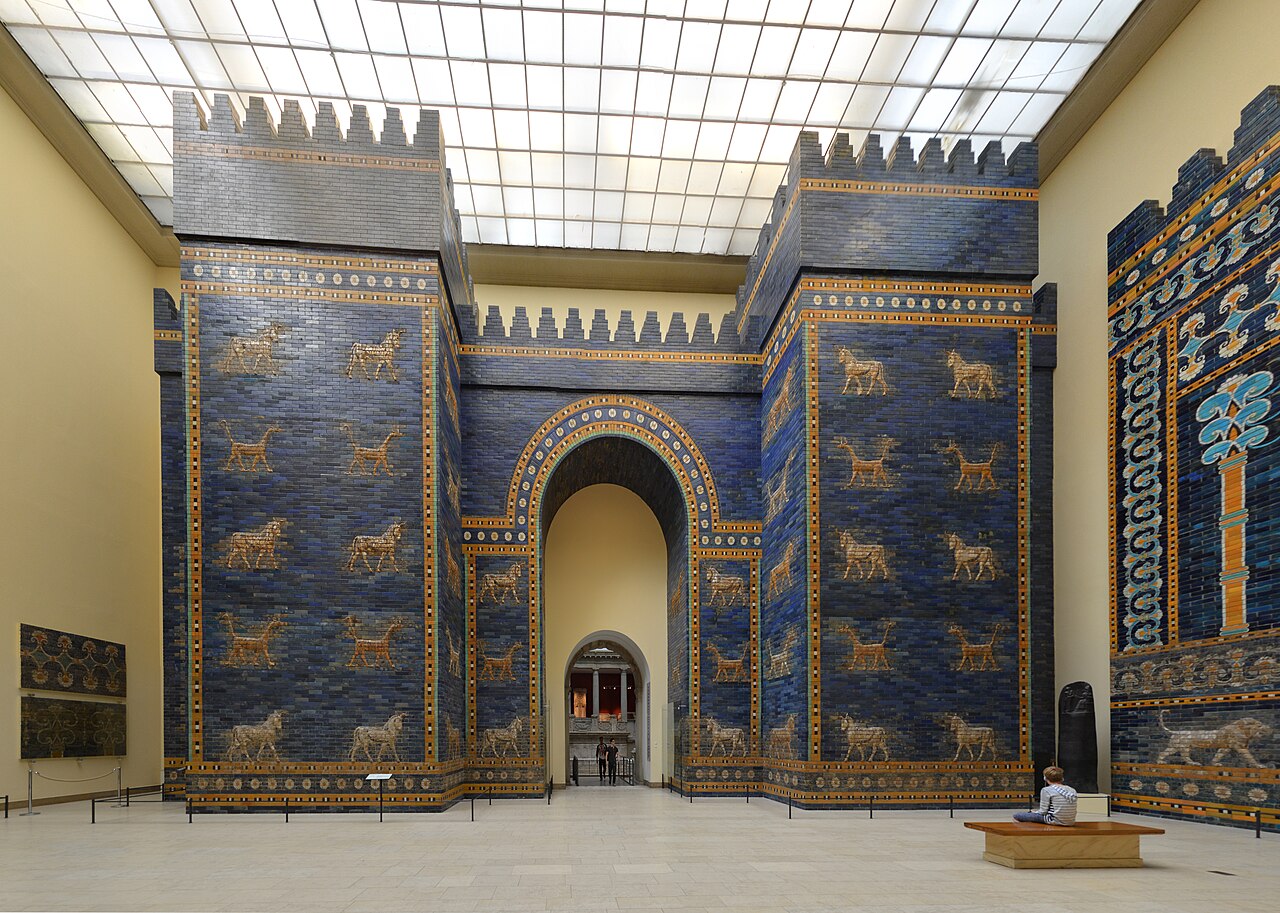
Ishtar gate from Babylon
Ishtar gate from Babylon · Radomir Vrbovsky · CC BY-SA 4.0 · Official source
Babylon Summary STEPBible TIPNR

Babylon, also known as Babel, Sheshak, Merathaim, or Pekod, was an ancient Mesopotamian city that served as the capital of the Babylonian Empire. (Multiple references, see article for details)

Babylon Article STEPBible TIPNR

Babylon, also known as Babel, was an ancient city located in Mesopotamia (modern-day Iraq) along the Euphrates River. It served as the capital of the Babylonian Empire, one of the most powerful empires in the ancient Near East. The city first appears in the Bible in Genesis 10:10 as part of Nimrod's kingdom and is identified as the location of the Tower of Babel (Genesis 11:9).

Throughout the Old Testament, Babylon is mentioned as a major political and military power, often in conflict with Israel and Judah. The city became the dominant power in the region under King Nebuchadnezzar II, who conquered Judah, destroyed Jerusalem and the Temple, and exiled many Jews to Babylon (2Kings 24-25; 2Chronicles 36). The Babylonian captivity lasted for 70 years, as prophesied by Jeremiah (Jeremiah 25:11; 29:10).

Several Old Testament prophets, including Isaiah, Jeremiah, and Ezekiel, prophesied against Babylon, foretelling its eventual downfall (Isaiah 13-14; Jeremiah 50-51; Ezekiel 26-32). In these prophecies, Babylon is sometimes referred to by other names, such as Sheshak (Jeremiah 25:26; 51:41), Merathaim (Jeremiah 50:21), and Pekod (Jeremiah 50:21; Ezk.23.23), which are believed to be code names or references to specific regions within the Babylonian Empire.

After the Persians conquered Babylon in 539 BC, the city gradually declined in importance. In the New Testament, Babylon is used symbolically to represent worldly power and opposition to God (Revelation 14:8; 16:19; 17:5; 18:2, 10, 21).

Babylon Dictionary Easton's Bible Dictionary (1897)

The Greek form of BABEL; Semitic form Babilu, meaning “The Gate of God.” In the Assyrian tablets it means “The city of the dispersion of the tribes.” The monumental list of its kings reaches back to B.C. 2300, and includes Khammurabi, or Amraphel (q.v.), the contemporary of Abraham. It stood on the Euphrates, about 200 miles above its junction with the Tigris, which flowed through its midst and divided it into two almost equal parts. The Elamites invaded Chaldea (i.e., Lower Mesopotamia, or Shinar, and Upper Mesopotamia, or Accad, now combined into one) and held it in subjection. At length Khammu-rabi delivered it from the foreign yoke, and founded the new empire of Chaldea (q.v.), making Babylon the capital of the united kingdom. This city gradually grew in extent and grandeur, but in process of time it became subject to Assyria. On the fall of Nineveh (B.C. 606) it threw off the Assyrian yoke, and became the capital of the growing Babylonian empire. Under Nebuchadnezzar it became one of the most splendid cities of the ancient world.

After passing through various vicissitudes the city was occupied by Cyrus, “king of Elam,” B.C. 538, who issued a decree permitting the Jews to return to their own land (Ezra 1). It then ceased to be the capital of an empire. It was again and again visited by hostile armies, till its inhabitants were all driven from their homes, and the city became a complete desolation, its very site being forgotten from among men.

On the west bank of the Euphrates, about 50 miles south of Bagdad, there is found a series of artificial mounds of vast extent. These are the ruins of this once famous proud city. These ruins are principally (1) the great mound called Babil by the Arabs. This was probably the noted Temple of Belus, which was a pyramid about 480 feet high. (2) The Kasr (i.e., “the palace”). This was the great palace of Nebuchadnezzar. It is almost a square, each side of which is about 700 feet long. The little town of Hillah, near the site of Babylon, is built almost wholly of bricks taken from this single mound. (3) A lofty mound, on the summit of which stands a modern tomb called Amran ibn-Ali. This is probably the most ancient portion of the remains of the city, and represents the ruins of the famous hanging-gardens, or perhaps of some royal palace. The utter desolation of the city once called “The glory of kingdoms” (Isa. 13:19) was foretold by the prophets (Isa. 13:4-22; Jer. 25:12; 50:2, 3; Dan. 2:31-38).

The Babylon mentioned in 1 Pet. 5:13 was not Rome, as some have thought, but the literal city of Babylon, which was inhabited by many Jews at the time Peter wrote.

In Rev. 14:8; 16:19; 17:5; and 18:2, “Babylon” is supposed to mean Rome, not considered as pagan, but as the prolongation of the ancient power in the papal form. Rome, pagan and papal, is regarded as one power. “The literal Babylon was the beginner and supporter of tyranny and idolatry...This city and its whole empire were taken by the Persians under Cyrus; the Persians were subdued by the Macedonians, and the Macedonians by the Romans; so that Rome succeeded to the power of old Babylon. And it was her method to adopt the worship of the false deities she had conquered; so that by her own act she became the heiress and successor of all the Babylonian idolatry, and of all that was introduced into it by the immediate successors of Babylon, and consequently of all the idolatry of the earth.” Rome, or “mystical Babylon,” is “that great city which reigneth over the kings of the earth” (17:18).
Sources: OpenBible.info Bible Geocoding Data (CC BY 4.0, a217d18) · STEPBible TIPNR (CC BY 4.0, Babylon@Gen.10.10-Rev) · Theographic Bible Metadata (CC BY-SA 4.0, babylon_151)

Report an inaccuracy

Describe the inaccuracy and, if possible, provide the correct text or a source. The page address will be included automatically.

Page: /en/places/babylon

Up to 5000 characters. You do not need to log in.

Contact details (optional)

Leave only the details you wish to share. They are sent to the administrator with your report and are not displayed publicly.

Make a suggestion

Describe your idea for improving the site. The page address will be included automatically.

Page: /en/places/babylon

Up to 5000 characters. You do not need to log in.

Contact details (optional)

Leave only the details you wish to share. They are sent to the administrator with your report and are not displayed publicly.