Bashan Summary
STEPBible TIPNR
Bashan was a region east of the Jordan River, known for its fertility and allotted to the half-tribe of Manasseh. (Multiple references, see article for details)
Region east of the Jordan, known for its fertility.
Loading book references…
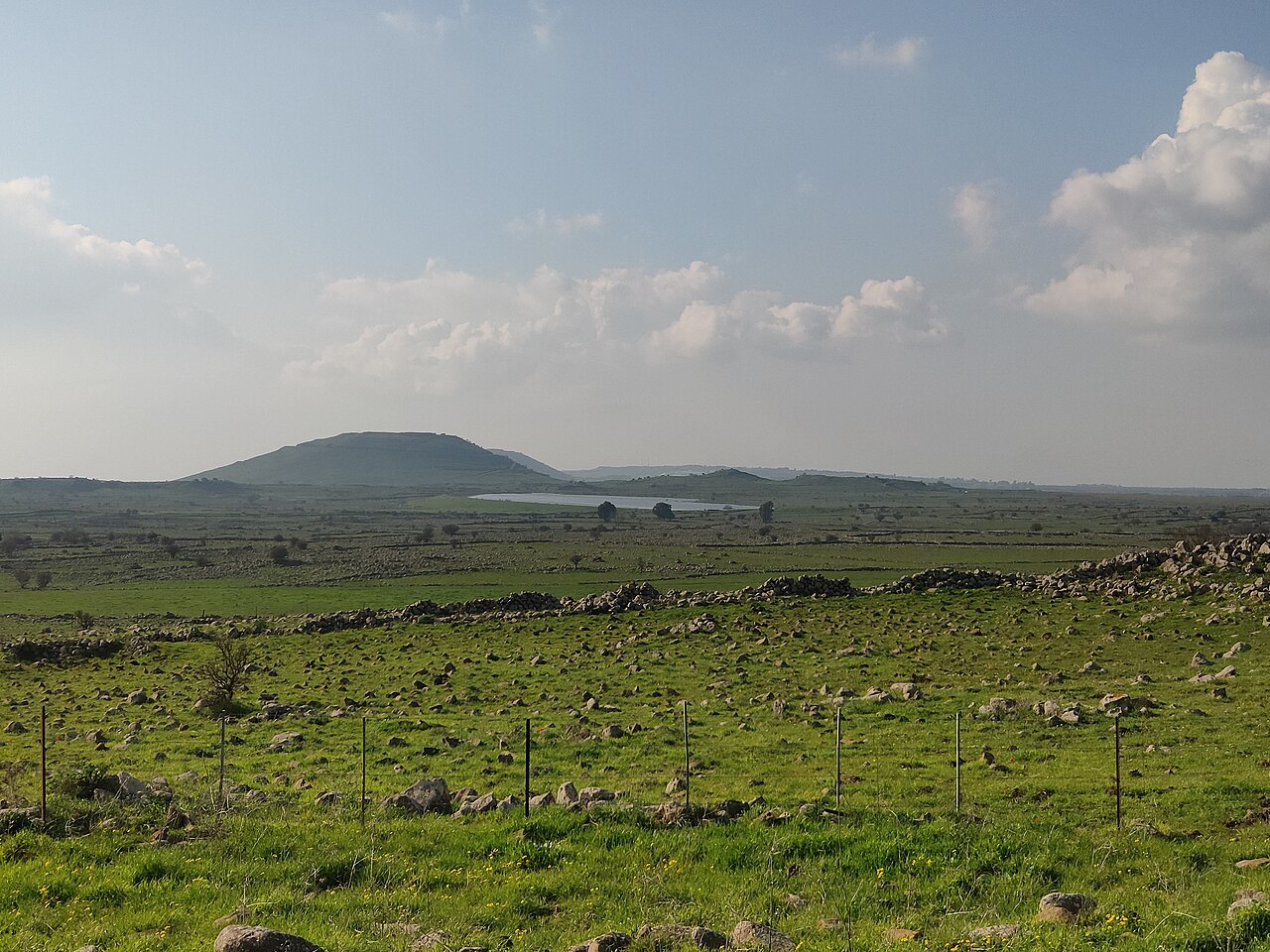
Bashan was a region east of the Jordan River, known for its fertility and allotted to the half-tribe of Manasseh. (Multiple references, see article for details)
Bashan was a region located east of the Jordan River, known for its fertile land, lush pastures, and abundant livestock. It was conquered by the Israelites during the time of Moses, along with the territories of Sihon, king of the Amorites, and Og, king of Bashan (Numbers 21:33; Deu.3.1-11). The land of Bashan was allotted to the half-tribe of Manasseh (Numbers 32:33; Joshua 13:29-31).
The region was known for its strong oak trees (Isaiah 2:13; Ezk.27.6) and its well-nourished cattle, often referred to as the "bulls of Bashan" (Deu.32.14; Psalm 22:12; Amo.4.1). It was also famous for its rich pastures (Jeremiah 50:19; Micah 7:14) and its fertile soil, which was well-suited for growing crops (Psalm 135:11; 136:20).
Bashan was one of the regions from which Solomon received supplies for his royal court (1Ki.4.13). It was also the homeland of Golan, one of the cities of refuge designated by Moses (Deu.4.43; Joshua 20:8; 21:27).
Several Old Testament passages use Bashan as a symbol of God's power and judgment (Psalm 68:15, 22; Isaiah 33:9; Jeremiah 22:20; Ezk.39.18; Zechariah 11:2). The region was also mentioned in the context of God's blessings and provision for His people (Deu.33.22; Nehemiah 9:22).
Light soil, first mentioned in Gen. 14:5, where it is said that Chedorlaomer and his confederates “smote the Rephaim in Ashteroth,” where Og the king of Bashan had his residence. At the time of Israel’s entrance into the Promised Land, Og came out against them, but was utterly routed (Num. 21:33-35; Deut. 3:1-7). This country extended from Gilead in the south to Hermon in the north, and from the Jordan on the west to Salcah on the east. Along with the half of Gilead it was given to the half-tribe of Manasseh (Josh. 13:29-31). Golan, one of its cities, became a “city of refuge” (Josh. 21:27). Argob, in Bashan, was one of Solomon’s commissariat districts (1 Kings 4:13). The cities of Bashan were taken by Hazael (2 Kings 10:33), but were soon after reconquered by Jehoash (2 Kings 13:25), who overcame the Syrians in three battles, according to the word of Elisha (19). From this time Bashan almost disappears from history, although we read of the wild cattle of its rich pastures (Ezek. 39:18; Ps. 22:12), the oaks of its forests (Isa. 2:13; Ezek. 27:6; Zech. 11:2), and the beauty of its extensive plains (Amos 4:1; Jer. 50:19). Soon after the conquest, the name “Gilead” was given to the whole country beyond Jordan. After the Exile, Bashan was divided into four districts,
Sources: OpenBible.info Bible Geocoding Data (CC BY 4.0, aa7a40a) · STEPBible TIPNR (CC BY 4.0, Bashan@Num.21.33-Zec) · Theographic Bible Metadata (CC BY-SA 4.0, bashan_159) · Wikidata (CC0 1.0, Q4118554)