Beth-haccherem Summary
STEPBible TIPNR
Beth-haccherem was a town in Judah, possibly fortified, mentioned by Jeremiah as a place to raise a signal fire.
Town in Judah, possibly fortified, mentioned by Jeremiah.
Loading book references…
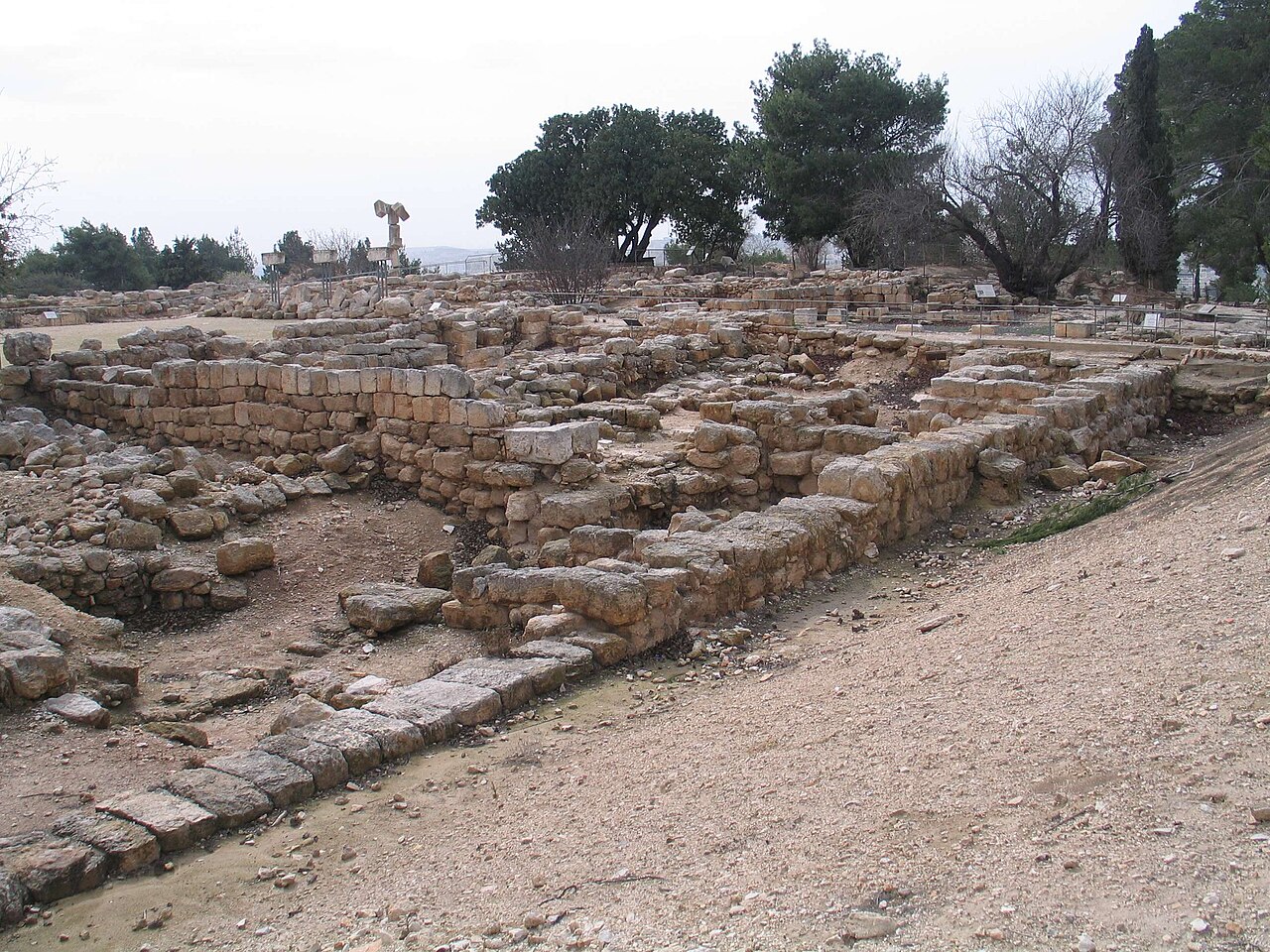
Beth-haccherem was a town in Judah, possibly fortified, mentioned by Jeremiah as a place to raise a signal fire.
Beth-haccherem, meaning "house of the vineyard" in Hebrew, is mentioned twice in the Bible. In Nehemiah 3:14, it is listed as one of the sections of Jerusalem's wall that was repaired by Malchijah, the son of Rechab, who was the ruler of the district of Beth-haccherem. This suggests that Beth-haccherem was a town or region near Jerusalem, possibly located in the hill country of Judah.
In Jeremiah 6:1, the prophet warns the people of Benjamin to flee from Jerusalem and to raise a signal fire in Beth-haccherem, as disaster and great destruction were coming from the north. This warning comes in the context of the impending Babylonian invasion and the judgment that would befall Jerusalem and Judah.
The mention of raising a signal fire in Beth-haccherem suggests that the town may have been situated on a high point or had a watchtower that could be used to send signals to the surrounding areas. Signal fires were used in ancient times to warn of approaching danger or to communicate important messages quickly over long distances.
The reference in Nehemiah indicates that Beth-haccherem had a ruler or administrator, implying that it was a town of some significance. Its proximity to Jerusalem and its role in the defense system of the city further underscore its importance.
The location of the town remains uncertain.
House of a vineyard, a place in the tribe of Judah (Neh. 3:14) where the Benjamites were to set up a beacon when they heard the trumpet against the invading army of the Babylonians (Jer. 6:1). It is probable that this place is the modern ‘Ain Karim, or “well of the vineyards,” near which there is a ridge on which are cairns which may have served as beacons of old, one of which is 40 feet high and 130 in diameter.
Sources: OpenBible.info Bible Geocoding Data (CC BY 4.0, a30f9a0) · STEPBible TIPNR (CC BY 4.0, Beth-haccherem@Neh.3.14-Jer) · Theographic Bible Metadata (CC BY-SA 4.0, beth-haccherem_209) · Wikidata (CC0 1.0, Q47466657)