Beth-horon Lower Summary
STEPBible TIPNR
Lower Beth-horon was a town allotted to Ephraim and Dan, known for a battle where the sun stood still. (Multiple references, see article for details)
Town in Ephraim and Dan, site of a famous battle.
Loading book references…
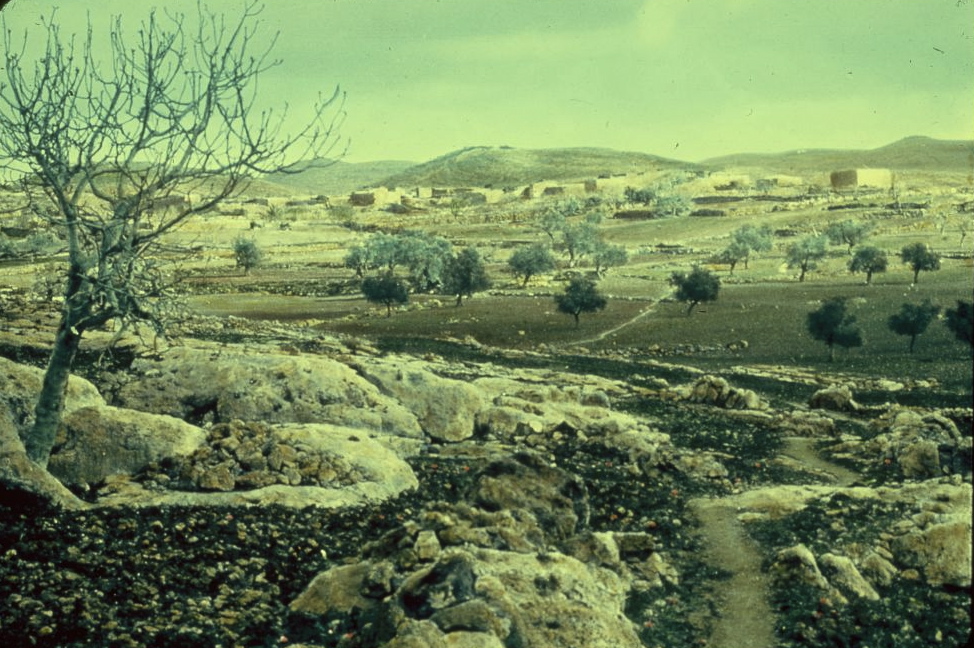
Lower Beth-horon was a town allotted to Ephraim and Dan, known for a battle where the sun stood still. (Multiple references, see article for details)
Lower Beth-horon was a town located in the border region between the tribes of Ephraim and Benjamin, in the central hill country of Israel. It is mentioned multiple times in the Bible, often in connection with its sister city, Upper Beth-horon.
The name Beth-horon means "house of caves" or "house of hollows" in Hebrew, possibly referring to the topography of the area. Lower Beth-horon was situated in a strategic location along the main road connecting the coastal plain with Jerusalem and the interior of the country.
In the book of Joshua, Lower Beth-horon is described as part of the border between Ephraim and Benjamin (Joshua 16:3; 18:13). It was allotted to the Kohathite clan of the Levites (Joshua 21:22; 1Ch.6.68).
The most famous biblical event associated with Lower Beth-horon is the battle between the Israelites and the Amorite kings, described in Joshua 10. As the Amorites fled before Israel, God cast down large hailstones on them, and Joshua prayed for the sun to stand still, allowing the Israelites to complete their victory (Joshua 10:10-11).
In later history, Lower Beth-horon was fortified by King Solomon (1Ki.9.17; 2Ch.8.5) and was the site of a battle between Judah and Israel during the reign of King Amaziah of Judah (2Ch.25.13).
The Philistines also used the Beth-horon road as one of their main routes for invading Israelite territory (1Sa.13.18).
Both Lower and Upper Beth-horon were rebuilt by Sheerah, the daughter of Ephraim (1Ch.7.24).
Today, the ancient site of Lower Beth-horon is identified with the modern Palestinian village of Beit Ur al-Tahta.
House of the hollow, or of the cavern, the name of two towns or villages (2 Chr. 8:5; 1 Chr. 7:24) in the territory of Ephraim, on the way from Jerusalem to Joppa. They are distinguished as Beth-horon “the upper” and Beth-horon “the nether.” They are about 2 miles apart, the former being about 10 miles north-west of Jerusalem. Between the two places was the ascent and descent of Beth-horon, leading from Gibeon down to the western plain (Josh. 10:10, 11; 18:13, 14), down which the five kings of the Amorites were driven by Joshua in that great battle, the most important in which the Hebrews had been as yet engaged, being their first conflict with their enemies in the open field. Jehovah interposed in behalf of Israel by a terrific hailstorm, which caused more deaths among the Canaanites than did the swords of the Israelites. Beth-horon is mentioned as having been taken by Shishak, B.C. 945, in the list of his conquests, and the pass was the scene of a victory of Judas Maccabeus. (Comp. Ex. 9:19, 25; Job 38:22, 23; Ps. 18:12-14; Isa. 30:30.) The modern name of these places is Beit-ur, distinguished by el-Foka, “the upper,” and el-Tahta, “the nether.” The lower was at the foot of the pass, and the upper, 500 feet higher, at the top, west of Gibeon.
Sources: OpenBible.info Bible Geocoding Data (CC BY 4.0, a75b45e) · STEPBible TIPNR (CC BY 4.0, Beth-horon_Lower@Jos.10.10-2Ch) · Theographic Bible Metadata (CC BY-SA 4.0, beth-horon_214) · Wikidata (CC0 1.0, Q2905332)