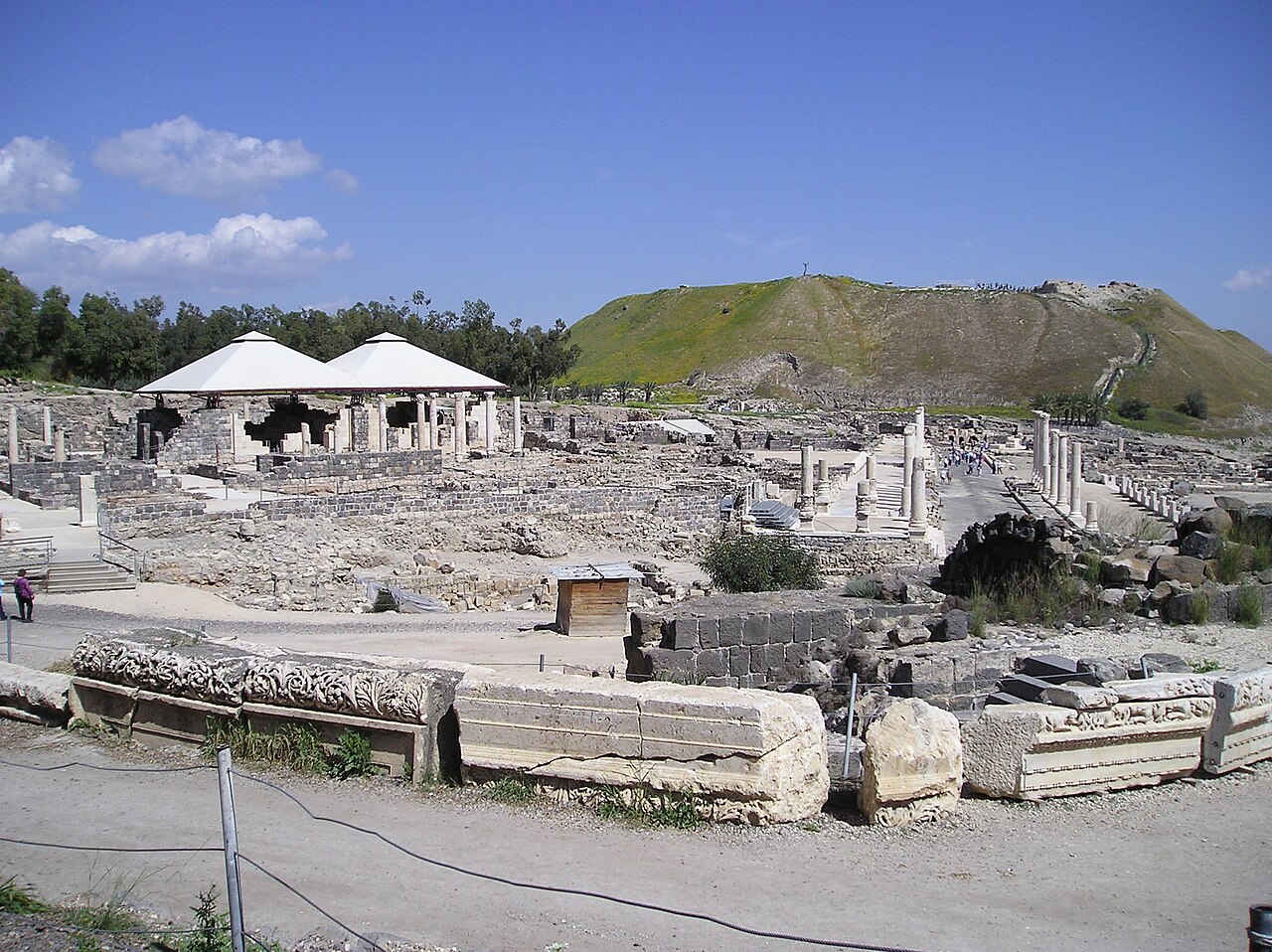
Beth-shean, also known as Beth-shan, was a city located in the territory allotted to the tribe of Manasseh, although it was situated within the borders of Issachar. The city was strategically positioned at the junction of the Jezreel and Jordan Valleys, controlling access to the Jezreel Valley from the east.
In Joshua 17:11 and 16, Beth-shean is listed among the cities and towns within Manasseh's inheritance that were not fully conquered by the Israelites. The Manassites were unable to drive out the inhabitants of Beth-shean and its villages, and the Canaanites persisted in dwelling in the land.
Judges 1:27 reiterates that Manasseh did not drive out the people of Beth-shean and its villages, and the Canaanites continued to live there.
During the reign of King Solomon, Beth-shean was included in the fifth administrative district overseen by Baana, son of Ahilud (1Ki.4.12). The city's inclusion in this list suggests its ongoing importance and the presence of a significant Israelite population.
The most notable event associated with Beth-shean in the Bible is the aftermath of the battle between the Israelites and the Philistines at Mount Gilboa. In 1Sa.31.10-12, after Saul and his sons were killed in battle, the Philistines fastened their bodies to the wall of Beth-shean. When the inhabitants of Jabesh-gilead heard about this, they travelled through the night, took down the bodies, and buried them in Jabesh.
Later, during David's reign, the bones of Saul and his son Jonathan were retrieved from Jabesh-gilead and buried in the tomb of Saul's father, Kish, in Benjamin (2Sa.21.12-14).
Beth-shean's strategic location made it a target for conquest throughout history. The city was eventually captured by the Egyptians and later by the Assyrians. It was known as Scythopolis during the Hellenistic and Roman periods, serving as the leading city of the Decapolis, a group of ten Hellenistic cities in the region.