Report an inaccuracy

Bethel (of Palestine)

Place

Important city in Israel, associated with Abraham and Jacob.

Names
  • en Bethel (of Palestine)
  • en Bethel
  • en Bethel · Also called
  • en Beth-el · Also called
  • en House of God · Also called
  • en Aven · Also called
  • en Bochim · Also called
  • en Bokim · Also called
  • en Luz · Also called
  • en El-bethel · Also called
  • en El-beth-el · Also called
  • en Beth-elite · Also called
  • en Bethelite · Also called
  • he בֵּֽיתְ־אֵל · H1008G
  • he בֵּית הָאֱלִי · H1017
  • he אָ֫וֶן · H0206H
  • he בֹּכִים · H1066
  • he לוּז · H3870H
  • he אֵל בֵּית־אֵל · H0416
  • bg Ветил (в Палестина)
Location
Kind: City
Modern name: Beitin
Certainty: Probable
31.930539, 35.221033 · Show on map

SDA Books

Awaiting permission to publish
Linked through an explicitly cited Bible passage

Loading book references…

Site of (1)
Place of death of (1)
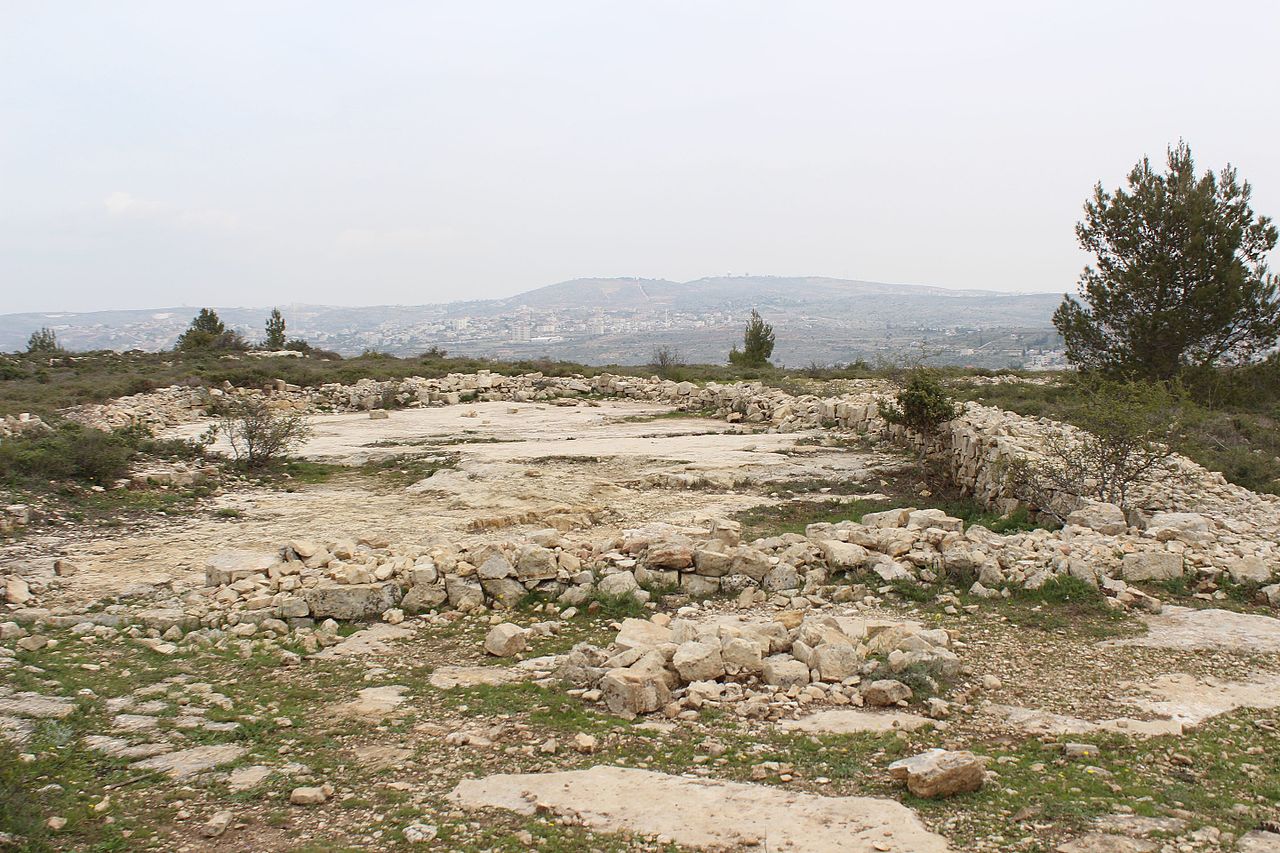
ruins at Beitin
ruins at Beitin · Deror_avi · CC BY-SA 4.0 · Official source
Bethel Summary STEPBible TIPNR

Bethel, also called Luz, was an important city in Israel, associated with the patriarchs Abraham and Jacob, later becoming a center of idolatry. (Multiple references, see article for details)

Bethel Article STEPBible TIPNR

Bethel, meaning "house of God" in Hebrew, was an important city in ancient Israel, located about 10 miles north of Jerusalem. It is mentioned numerous times throughout the Old Testament and is closely associated with the patriarchs Abraham and Israel (or 'Jacob').

The city was originally called Luz (Genesis 28:19; 35:6; 48:3; Judges 1:23) and was renamed Bethel by Jacob after his vision of a ladder reaching to heaven (Genesis 28:10-22). In this vision, God confirmed the covenant He had made with Abraham and promised to be with Jacob wherever he went. Jacob set up a stone pillar at the site, anointed it with oil, and made a vow to God.

Abraham had previously built an altar between Bethel and Ai (Genesis 12:8; 13:3), and Jacob later returned to Bethel, where he built an altar and received a renewed promise from God (Genesis 35:1-15). The place was also called El-bethel, meaning "God of Bethel" (Genesis 35:7).

During the period of the judges, Deborah held court under a palm tree between Ramah and Bethel (Judges 4:5), and the Israelites went up to Bethel to seek guidance from God (Judges 20:18, 26; 21:2). The Ark of the Covenant was temporarily located at Bethel (Judges 20:27).

After the division of the kingdom, Jeroboam I set up a golden calf at Bethel to prevent the people from going to Jerusalem to worship (1Ki.12.28-33). This act led to Bethel becoming a major center of idolatry, and the prophets Amos and Hosea condemned the worship there (Amo.3.14; 4:4; 5:5-6; 7:10, 13; Hosea 10:5, 8, 15).

The city was called Aven, meaning "wickedness," by Hosea (Hosea 10:8) and Beth-aven, meaning "house of wickedness," in other passages (Joshua 7:2; 18:12; 1Sa.13.5; 14:23), likely referring to its association with idolatry.

Bethel was destroyed by King Josiah during his religious reforms (2Ki.23.4, 15-19) but was later resettled after the Babylonian exile (Ezra 2:28; Nehemiah 7:32; 11:31).

The city was also known as Bochim, meaning "weepers," in Judges 2:1, 5, where an angel of the Lord rebuked the Israelites for their disobedience.

Bethel played a significant role in Israel's history, serving as a place of worship, a center of idolatry, and a symbol of God's presence and promises to His people.
Bethel 1 Dictionary Easton's Bible Dictionary (1897)

A place in Central Palestine, about 10 miles north of Jerusalem, at the head of the pass of Michmash and Ai. It was originally the royal Canaanite city of Luz (Gen. 28:19). The name Bethel was at first apparently given to the sanctuary in the neighbourhood of Luz, and was not given to the city itself till after its conquest by the tribe of Ephraim. When Abram entered Canaan he formed his second encampment between Bethel and Hai (Gen. 12:8); and on his return from Egypt he came back to it, and again “called upon the name of the Lord” (13:4). Here Jacob, on his way from Beersheba to Haran, had a vision of the angels of God ascending and descending on the ladder whose top reached unto heaven (28:10, 19); and on his return he again visited this place, “where God talked with him” (35:1-15), and there he “built an altar, and called the place El-beth-el” (q.v.). To this second occasion of God’s speaking with Jacob at Bethel, Hosea (12:4, 5) makes reference.

In troublous times the people went to Bethel to ask counsel of God (Judg. 20:18, 31; 21:2). Here the ark of the covenant was kept for a long time under the care of Phinehas, the grandson of Aaron (20:26-28). Here also Samuel held in rotation his court of justice (1 Sam. 7:16). It was included in Israel after the kingdom was divided, and it became one of the seats of the worship of the golden calf (1 Kings 12:28-33; 13:1). Hence the prophet Hosea (Hos. 4:15; 5:8; 10:5, 8) calls it in contempt Beth-aven, i.e., “house of idols.” Bethel remained an abode of priests even after the kingdom of Israel was desolated by the king of Assyria (2 Kings 17:28, 29). At length all traces of the idolatries were extirpated by Josiah, king of Judah (2 Kings 23:15-18); and the place was still in existence after the Captivity (Ezra 2:28; Neh. 7:32). It has been identified with the ruins of Beitin, a small village amid extensive ruins some 9 miles south of Shiloh.

Sources: OpenBible.info Bible Geocoding Data (CC BY 4.0, a64f355) · STEPBible TIPNR (CC BY 4.0, Bethel@Gen.12.8-Zec) · Theographic Bible Metadata (CC BY-SA 4.0, bethel_202)

Report an inaccuracy

Describe the inaccuracy and, if possible, provide the correct text or a source. The page address will be included automatically.

Page: /en/places/bethel-of-palestine

Up to 5000 characters. You do not need to log in.

Contact details (optional)

Leave only the details you wish to share. They are sent to the administrator with your report and are not displayed publicly.

Make a suggestion

Describe your idea for improving the site. The page address will be included automatically.

Page: /en/places/bethel-of-palestine

Up to 5000 characters. You do not need to log in.

Contact details (optional)

Leave only the details you wish to share. They are sent to the administrator with your report and are not displayed publicly.