Caesarea Summary
STEPBible TIPNR
Caesarea was a coastal city in Judea that served as a center of Roman administration.
Coastal city, center of Roman rule in Judea
Loading book references…
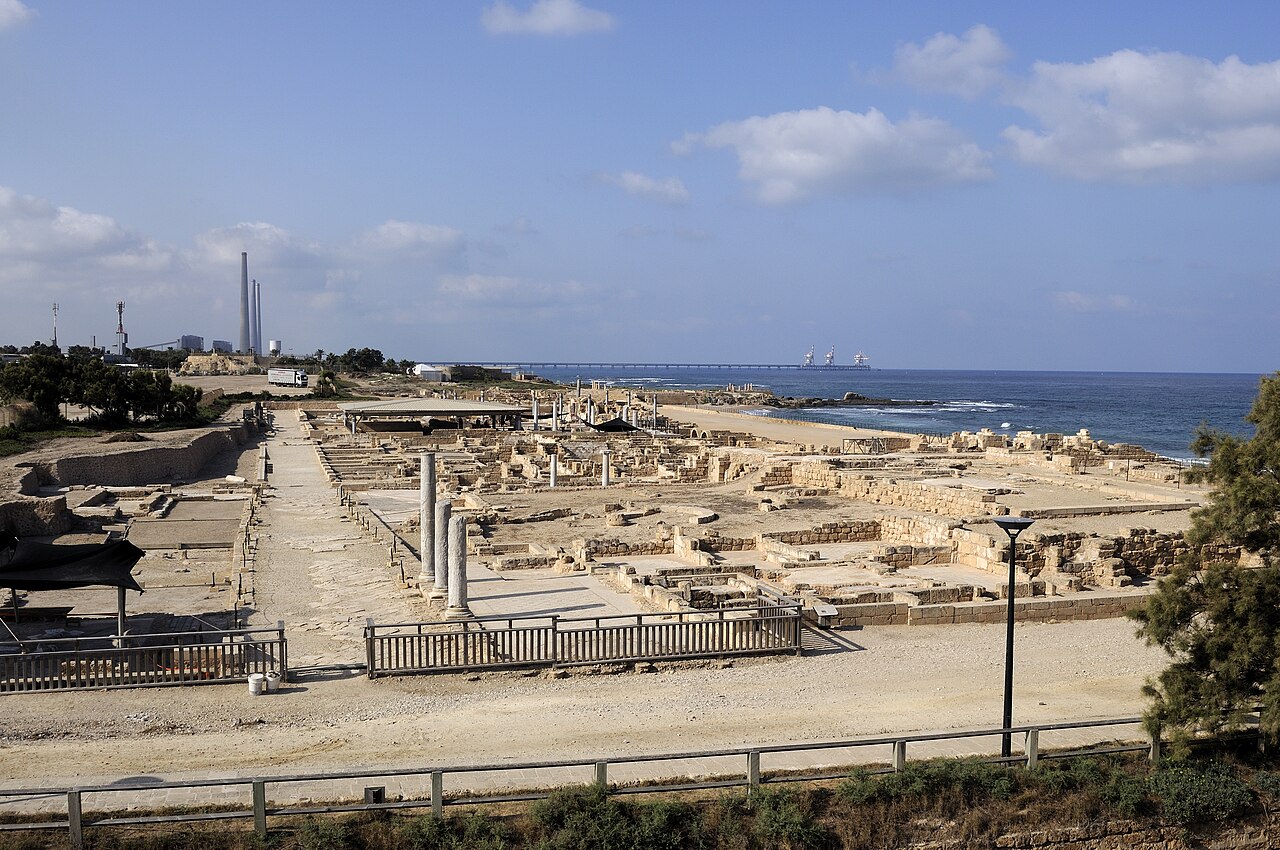
Caesarea was a coastal city in Judea that served as a center of Roman administration.
Caesarea was a coastal city located in Judea, approximately 30 miles (50 kilometers) north of Joppa. It was built by Herod the Great between 22 and 10 BC and named in honor of Augustus Caesar. Caesarea served as the capital of the Roman province of Judea and the official residence of the Roman governors.
In the New Testament, Caesarea is mentioned several times in the book of Acts. Philip the evangelist settled in Caesarea after baptizing the Ethiopian eunuch (Act.8.40). The apostle Peter visited Caesarea and preached to the Gentile centurion Cornelius, leading to his conversion (Act.10.1-48). Paul passed through Caesarea on his missionary journeys (Act.9.30; 18:22) and was later imprisoned there for two years before being sent to Rome for trial (Act.23.23-26:32).
Caesarea was known for its impressive harbor, which was constructed using advanced Roman engineering techniques. The city also featured a temple dedicated to Augustus, an amphitheater, a hippodrome, and a Roman aqueduct. As a center of Roman administration and a hub for trade, Caesarea played a significant role in the early spread of Christianity and the interaction between the Jewish and Gentile believers.
(Palestinae), a city on the shore of the Mediterranean, on the great road from Tyre to Egypt, about 70 miles northwest of Jerusalem, at the northern extremity of the plain of Sharon. It was built by Herod the Great (B.C. 10), who named it after Caesar Augustus, hence called Caesarea Sebaste (Gr. Sebastos = “Augustus”), on the site of an old town called “Strato’s Tower.” It was the capital of the Roman province of Judaea, the seat of the governors or procurators, and the headquarters of the Roman troops. It was the great Gentile city of Palestine, with a spacious artificial harbour. It was adorned with many buildings of great splendour, after the manner of the Roman cities of the West. Here Cornelius the centurion was converted through the instrumentality of Peter (Acts 10:1, 24), and thus for the first time the door of faith was opened to the Gentiles. Philip the evangelist resided here with his four daughters (21:8). From this place Saul sailed for his native Tarsus when forced to flee from Jerusalem (9:30), and here he landed when returning from his second missionary journey (18:22). He remained as a prisoner here for two years before his voyage to Rome (Acts 24:27; 25:1, 4, 6, 13). Here on a “set day,” when games were celebrated in the theatre in honour of the emperor Claudius, Herod Agrippa I. appeared among the people in great pomp, and in the midst of the idolatrous homage paid to him was suddenly smitten by an angel, and carried out a dying man. He was “eaten of worms” (12:19-23), thus perishing by the same loathsome disease as his granfather, Herod the Great. It still retains its ancient name Kaiseriyeh, but is now desolate. “The present inhabitants of the ruins are snakes, scorpions, lizards, wild boars, and jackals.” It is described as the most desolate city of all Palestine.
Sources: OpenBible.info Bible Geocoding Data (CC BY 4.0, a58735e) · STEPBible TIPNR (CC BY 4.0, Caesarea@Act.8.40-) · Theographic Bible Metadata (CC BY-SA 4.0, caesarea_266)