Caesarea Philippi Summary
STEPBible TIPNR
Caesarea Philippi was the location where Peter acknowledged Jesus as the Messiah and Son of God.
City where Peter confessed Jesus as Messiah
Loading book references…
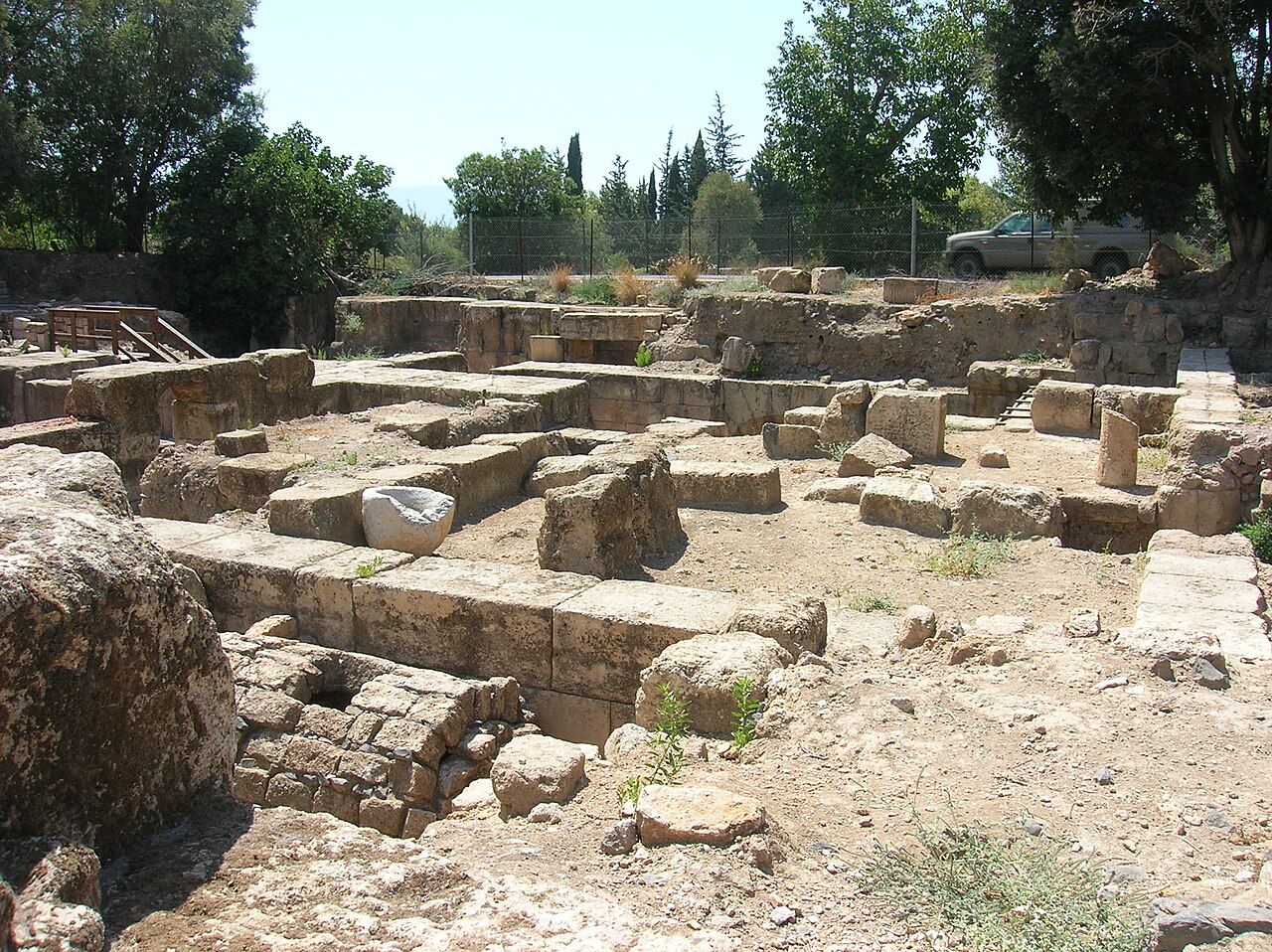
Caesarea Philippi was the location where Peter acknowledged Jesus as the Messiah and Son of God.
Caesarea Philippi was a city located in the northern part of Israel, near the base of Mount Hermon. It is mentioned in the New Testament as the place where Jesus asked his disciples, "Who do people say the Son of Man is?" (Matthew 16:13; Mrk.8.27). In response, Simon Peter acknowledged Jesus as the Messiah and the Son of the living God (Matthew 16:16).
The city was originally known as Paneas, named after the Greek god Pan. It was later rebuilt and renamed Caesarea Philippi by Philip the Tetrarch, son of Herod the Great, in honor of himself and the Roman emperor. The city was known for its temple dedicated to Pan and its proximity to a large spring that fed the Jordan River.
Jesus' conversation with his disciples at Caesarea Philippi marked a turning point in his ministry. It was here that he began to reveal more openly his identity as the Messiah and his impending death and resurrection (Matthew 16:21; Mrk.8.31). The location, with its pagan associations and Gentile population, also symbolized the expanding mission of the gospel beyond the Jewish people.
A city on the northeast of the marshy plain of el-Huleh, 120 miles north of Jerusalem, and 20 miles north of the Sea of Galilee, at the “upper source” of the Jordan, and near the base of Mount Hermon. It is mentioned in Matt. 16:13 and Mark 8:27 as the northern limit of our Lord’s public ministry. According to some its original name was Baal-Gad (Josh. 11:17), or Baal-Hermon (Judg. 3:3; 1 Chr. 5:23), when it was a Canaanite sanctuary of Baal. It was afterwards called Panium or Paneas, from a deep cavern full of water near the town. This name was given to the cavern by the Greeks of the Macedonian kingdom of Antioch because of its likeness to the grottos of Greece, which were always associated with the worship of their god Pan. Its modern name is Banias. Here Herod built a temple, which he dedicated to Augustus Caesar. This town was afterwards enlarged and embellished by Herod Philip, the tetrarch of Trachonitis, of whose territory it formed a part, and was called by him Caesarea Philippi, partly after his own name, and partly after that of the emperor Tiberius Caesar. It is thus distinguished from the Caesarea of Palestine.
Sources: OpenBible.info Bible Geocoding Data (CC BY 4.0, ab7bf48) · STEPBible TIPNR (CC BY 4.0, Caesarea_Philippi@Mat.16.13-Mrk) · Theographic Bible Metadata (CC BY-SA 4.0, caesarea_philippi_267) · Wikidata (CC0 1.0, Q2484244)