Calah Summary
STEPBible TIPNR
Calah was an ancient Assyrian city built by Nimrod, along with Nineveh and Resen.
Ancient Assyrian city built by Nimrod
Loading book references…
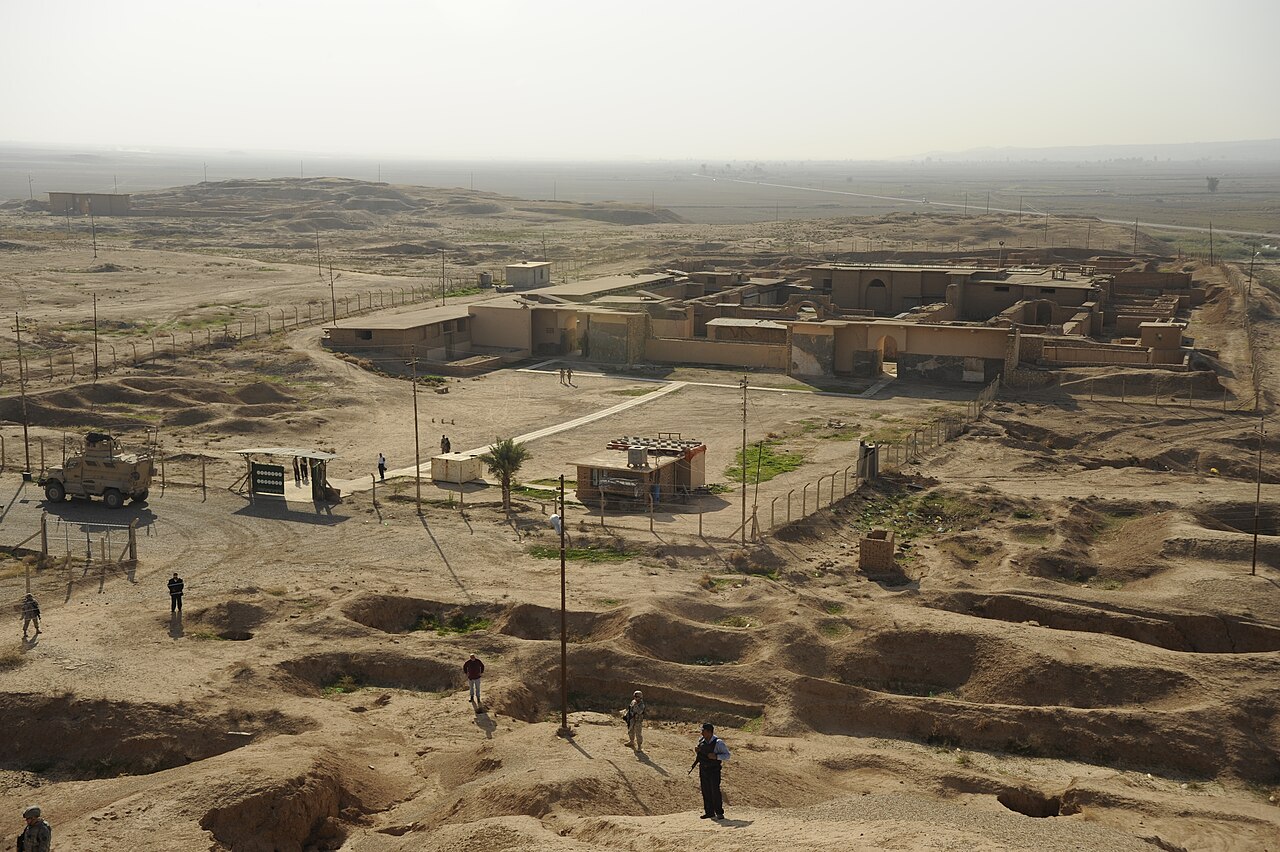
Calah was an ancient Assyrian city built by Nimrod, along with Nineveh and Resen.
Calah was one of the ancient cities built by Nimrod, the great-grandson of Noah, in the land of Assyria (Genesis 10:11-12). It was located along the Tigris River, south of Nineveh, in what is now northern Iraq. Calah, together with Nineveh and Resen, formed a complex of major Assyrian cities known for their power and influence in the ancient Near East.
The city of Calah served as the capital of the Assyrian Empire during the reigns of several powerful kings, including Ashurnasirpal II and Tiglath-pileser III. It was known for its impressive palaces, temples, and artistic achievements. Archaeological excavations at the site, known today as Nimrud, have uncovered significant remains of the ancient city, including royal inscriptions, reliefs, and statues.
In the Bible, Calah is mentioned only in the context of Nimrod's kingdom and the early development of Assyria. Its inclusion in the list of Nimrod's cities highlights the importance and antiquity of the Assyrian civilization, which would later play a significant role in the history of Israel and Judah.
One of the most ancient cities of Assyria. “Out of that land he [i.e., Nimrod] went forth into Assyria, and built Nineveh, Rehoboth-Ir, and Calah, and Resen” (Gen. 10:11, R.V.). Its site is now marked probably by the Nimrud ruins on the left bank of the Tigris. These cover an area of about 1,000 acres, and are second only in size and importance to the mass of ruins opposite Mosul. This city was at one time the capital of the empire, and was the residence of Sardanapalus and his successors down to the time of Sargon, who built a new capital, the modern Khorsabad. It has been conjectured that these four cities mentioned in Gen. 10:11 were afterwards all united into one and called Nineveh (q.v.).
Sources: OpenBible.info Bible Geocoding Data (CC BY 4.0, ae1f807) · STEPBible TIPNR (CC BY 4.0, Calah@Gen.10.11-) · Theographic Bible Metadata (CC BY-SA 4.0, calah_268) · Wikidata (CC0 1.0, Q237614)