Canaan Summary
STEPBible TIPNR
Canaan was the ancient region between the Jordan River and the Mediterranean Sea, named after Noah's grandson and later promised to Abraham's descendants.
Ancient region; descendants of Ham; promised to Abraham's descendants
Loading book references…
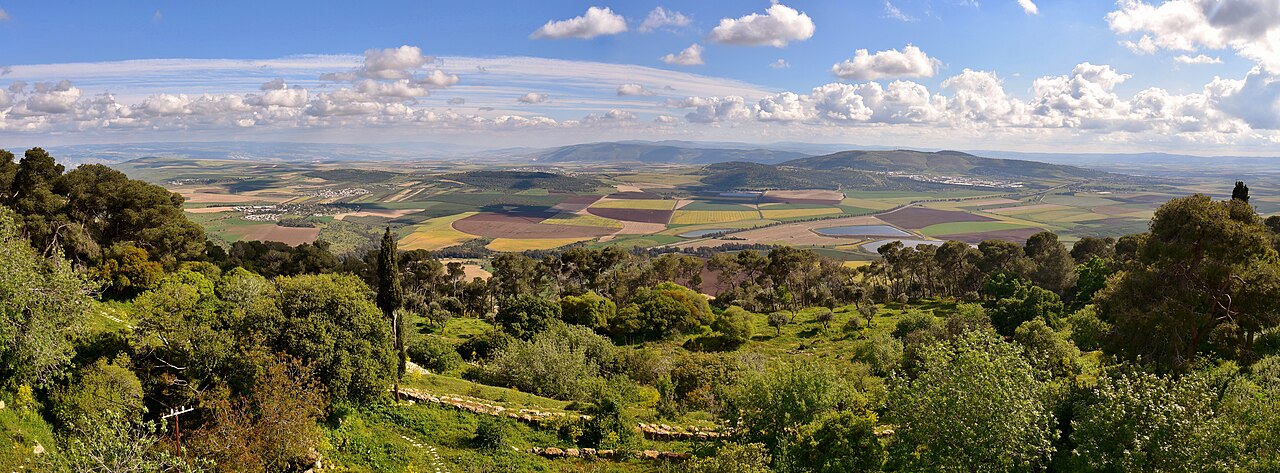
Canaan was the ancient region between the Jordan River and the Mediterranean Sea, named after Noah's grandson and later promised to Abraham's descendants.
Canaan refers to both a region and a people group in the Bible. As a region, Canaan was the ancient name for the area between the Jordan River and the Mediterranean Sea, roughly corresponding to modern-day Israel, Palestine, Lebanon, and parts of Syria and Jordan. It was the land God promised to give to Abraham and his descendants (Genesis 12:5-7; 17:8).
The Canaanites were the descendants of Canaan, the grandson of Noah through Ham (Genesis 10:18-19). They were known for their idolatry and wickedness, which led to God commanding the Israelites to drive them out of the land (Deu.20.17). The term "Canaanite" was also used to refer to merchants or traders (Job.41.6; Proverbs 31:24), possibly due to their reputation for trading.
After the Exodus, the Israelites conquered parts of Canaan under Joshua's leadership, but they failed to completely drive out the Canaanites (Judges 1:27-36). This led to ongoing conflicts and religious influences throughout Israel's history. The prophets often rebuked Israel for adopting Canaanite practices and worshipping their gods (Ezk.16.3).
The country which derived its name from the preceding. The name as first used by the Phoenicians denoted only the maritime plain on which Sidon was built. But in the time of Moses and Joshua it denoted the whole country to the west of the Jordan and the Dead Sea (Deut. 11:30). In Josh. 5:12 the LXX. read, “land of the Phoenicians,” instead of “land of Canaan.”
The name signifies “the lowlands,” as distinguished from the land of Gilead on the east of Jordan, which was a mountainous district. The extent and boundaries of Canaan are fully set forth in different parts of Scripture (Gen. 10:19; 17:8; Num. 13:29; 34:8).
Sources: OpenBible.info Bible Geocoding Data (CC BY 4.0, a581f0c) · STEPBible TIPNR (CC BY 4.0, Canaan@Gen.10.18-Act) · Theographic Bible Metadata (CC BY-SA 4.0, canaan_272) · Wikidata (CC0 1.0, Q163329)