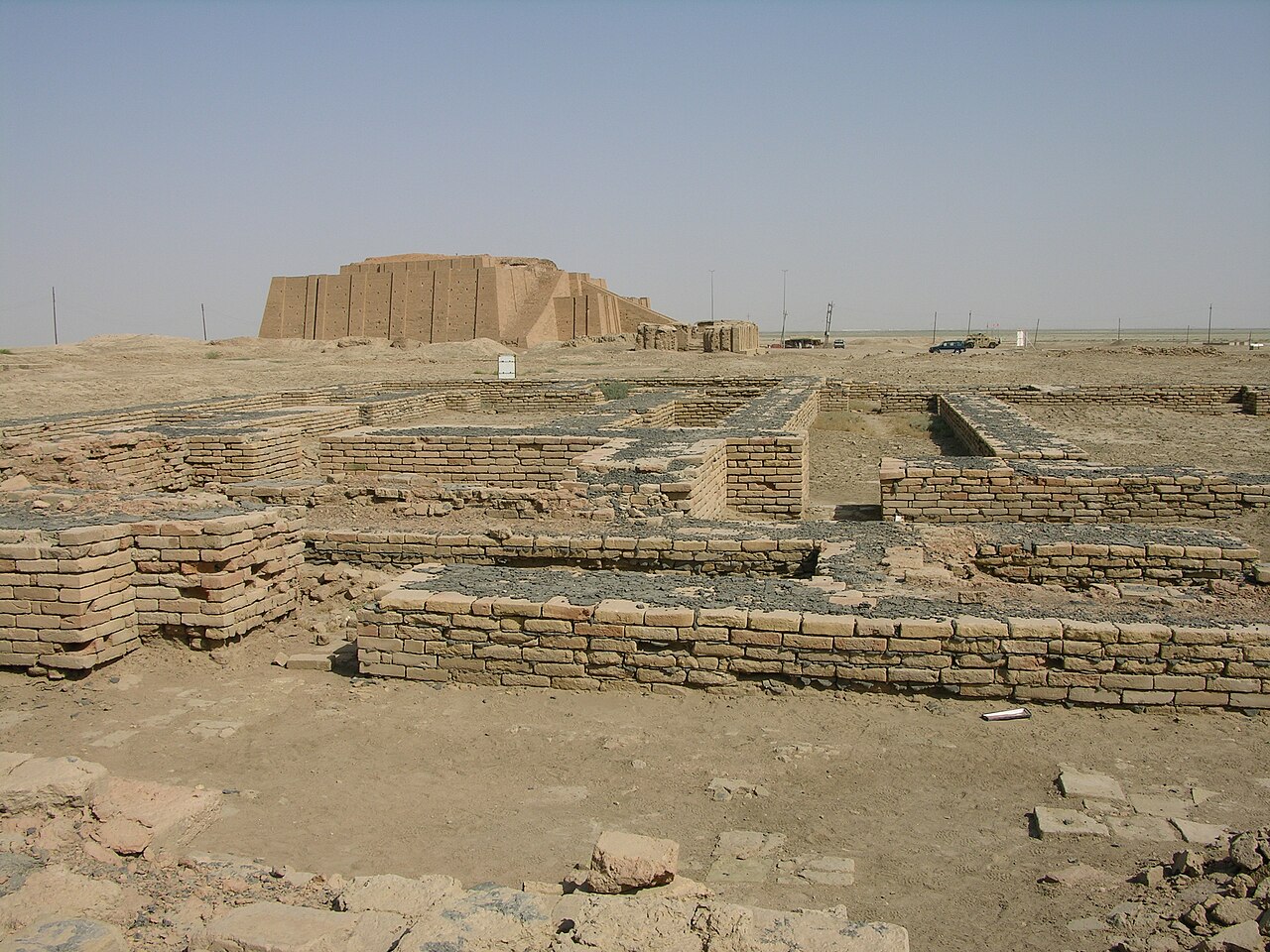
The southern portion of Babylonia, Lower Mesopotamia, lying chiefly on the right bank of the Euphrates, but commonly used of the whole of the Mesopotamian plain. The Hebrew name is Kasdim, which is usually rendered “Chaldeans” (Jer. 50:10; 51:24, 35).
The country so named is a vast plain formed by the deposits of the Euphrates and the Tigris, extending to about 400 miles along the course of these rivers, and about 100 miles in average breadth. “In former days the vast plains of Babylon were nourished by a complicated system of canals and water-courses, which spread over the surface of the country like a network. The wants of a teeming population were supplied by a rich soil, not less bountiful than that on the banks of the Egyptian Nile. Like islands rising from a golden sea of waving corn stood frequent groves of palm-trees and pleasant gardens, affording to the idler or traveller their grateful and highly-valued shade. Crowds of passengers hurried along the dusty roads to and from the busy city. The land was rich in corn and wine.”
Recent discoveries, more especially in Babylonia, have thrown much light on the history of the Hebrew patriarchs, and have illustrated or confirmed the Biblical narrative in many points. The ancestor of the Hebrew people, Abram, was, we are told, born at “Ur of the Chaldees.” “Chaldees” is a mistranslation of the Hebrew Kasdim, Kasdim being the Old Testament name of the Babylonians, while the Chaldees were a tribe who lived on the shores of the Persian Gulf, and did not become a part of the Babylonian population till the time of Hezekiah. Ur was one of the oldest and most famous of the Babylonian cities. Its site is now called Mugheir, or Mugayyar, on the western bank of the Euphrates, in Southern Babylonia. About a century before the birth of Abram it was ruled by a powerful dynasty of kings. Their conquests extended to Elam on the one side, and to the Lebanon on the other. They were followed by a dynasty of princes whose capital was Babylon, and who seem to have been of South Arabian origin. The founder of the dynasty was Sumu-abi (“Shem is my father”). But soon afterwards Babylonia fell under Elamite dominion. The kings of Babylon were compelled to acknowledge the supremacy of Elam, and a rival kingdom to that of Babylon, and governed by Elamites, sprang up at Larsa, not far from Ur, but on the opposite bank of the river. In the time of Abram the king of Larsa was Eri-Aku, the son of an Elamite prince, and Eri-Aku, as has long been recognized, is the Biblical “Arioch king of Ellasar” (Gen. 14:1). The contemporaneous king of Babylon in the north, in the country termed Shinar in Scripture, was Khammu-rabi.