Colossae Summary
STEPBible TIPNR
Colossae was a city in the region of Phrygia in Asia Minor, to which Paul addressed one of his epistles.
City in Phrygia; recipient of Paul's epistle
Loading book references…
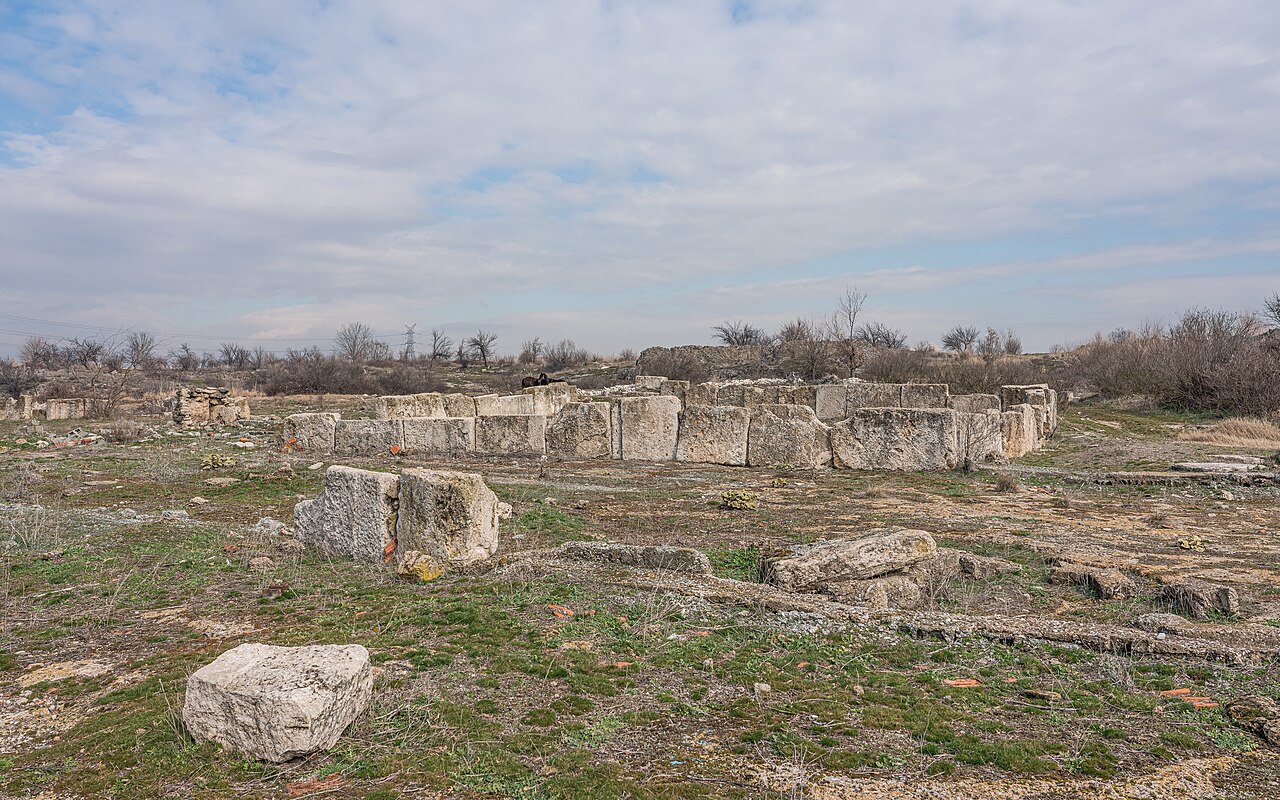
Colossae was a city in the region of Phrygia in Asia Minor, to which Paul addressed one of his epistles.
Colossae was an ancient city located in the Lycus Valley in the region of Phrygia, in western Asia Minor (modern-day Turkey). It is most notably known as the recipient of one of Paul's epistles, the Letter to the Colossians.
In the opening of the epistle (Col.1.2), Paul addresses the letter to the saints and faithful brethren in Christ who are in Colossae. The church in Colossae was likely established during Paul's third missionary journey, as he spent two years teaching in Ephesus, and the gospel spread throughout the region (Act.19.10).
Although Paul had not personally visited Colossae (Col.2.1), he had heard about the faith and love of the Colossian believers through Epaphras, who was likely the founder of the church (Col.1.7-8). Epaphras had informed Paul of some concerns regarding false teachings that were influencing the Colossian church, prompting Paul to write the epistle.
In the letter, Paul emphasizes the supremacy and sufficiency of Christ, warning against false philosophies and human traditions that could lead believers astray (Col.2.8-23). He also provides practical instructions for Christian living, including relationships within families and between slaves and masters (Col.3.1-4:6).
The closing of the letter (Col.4.18) includes a personal greeting from Paul, written in his own hand, and a request for the Colossians to exchange letters with the church in Laodicea, another nearby city.
Colossae was known for its wool and dye industry, particularly a unique purple dye called colossinus. The city was also located near the important trade routes that connected Ephesus to the Euphrates River. However, by the time of Paul's writing, Colossae had declined in importance compared to the nearby cities of Laodicea and Hierapolis.
Or Colosse, a city of Phrygia, on the Lycus, which is a tributary of the Maeander. It was about 12 miles above Laodicea, and near the great road from Ephesus to the Euphrates, and was consequently of some mercantile importance. It does not appear that Paul had visited this city when he wrote his letter to the church there (Col. 1:2). He expresses in his letter to Philemon (ver. 1:22) his hope to visit it on being delivered from his imprisonment. From Col. 1:7; 4:12 it has been concluded that Epaphras was the founder of the Colossian church. This town afterwards fell into decay, and the modern town of Chonas or Chonum occupies a site near its ruins.
Sources: OpenBible.info Bible Geocoding Data (CC BY 4.0, a4e5a69) · STEPBible TIPNR (CC BY 4.0, Colossae@Col.1.2-) · Theographic Bible Metadata (CC BY-SA 4.0, colossae_305) · Wikidata (CC0 1.0, Q1001370)