Caphtor Summary
STEPBible TIPNR
Caphtor, identified as the island of Crete, was the original homeland of the Philistines and a place visited by the apostle Paul.
Island home of the Philistines; visited by Paul
Loading book references…
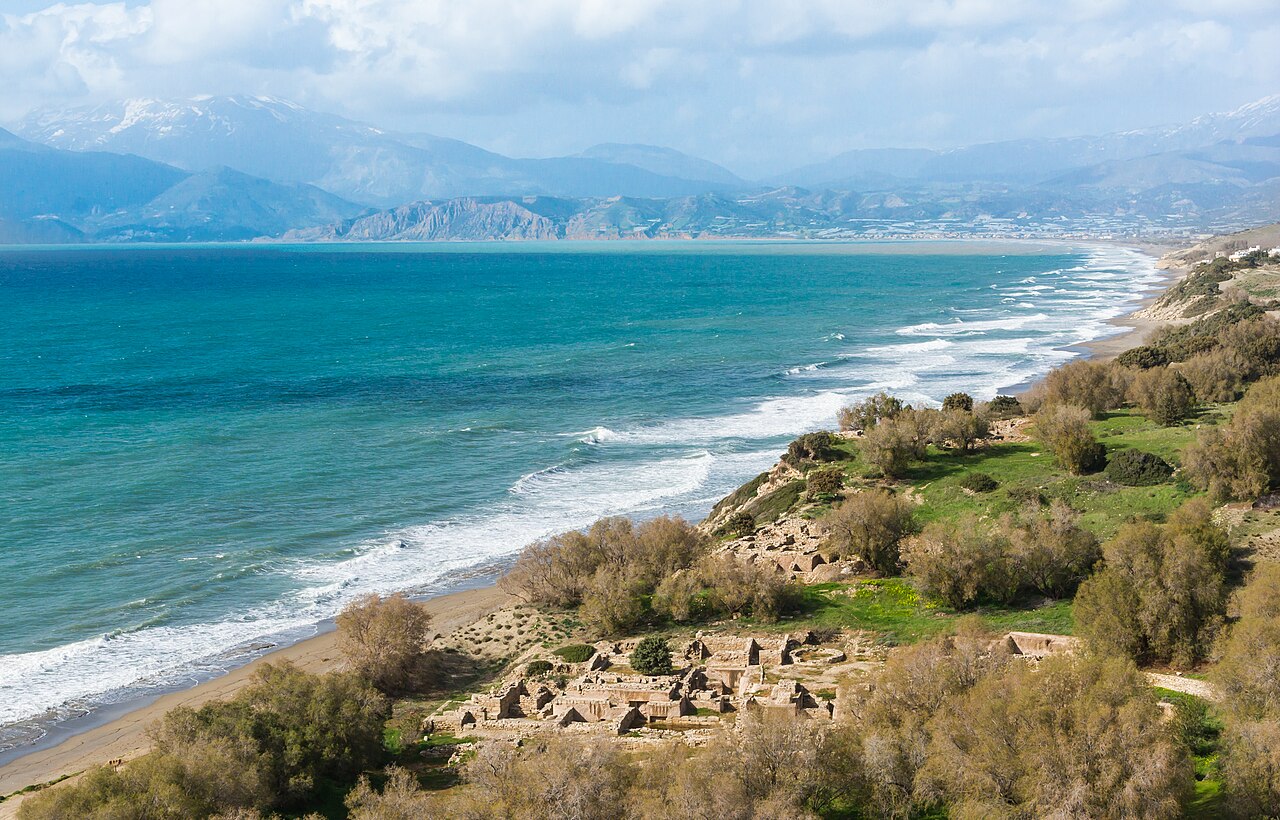
Caphtor, identified as the island of Crete, was the original homeland of the Philistines and a place visited by the apostle Paul.
Caphtor, mentioned in the Old Testament, is generally identified as the island of Crete in the Mediterranean Sea. According to Amo.9.7, the Philistines originated from Caphtor, and Jeremiah 47:4 refers to "the remnant of the country of Caphtor," linking the Philistines to this island.
In Deu.2.23, the Caphtorim, who came from Caphtor, are described as destroying the Avvim, who lived in villages as far as Gaza, and settling in their place. This suggests that the Philistines, who are known to have settled in the coastal region of Canaan, trace their ancestry back to Caphtor.
In the New Testament, Crete is mentioned several times in connection with the apostle Paul's travels. During his journey to Rome, Paul's ship sailed along the southern coast of Crete (Act.27.7-13), and they sought to winter in the Cretan harbor of Phoenix (Act.27.12). After the ship encountered a storm and was wrecked on the island of Malta, Paul continued his journey and eventually passed by Crete again (Act.27.21).
Paul also left his companion Titus on Crete to organize the church and appoint elders in every town (Titus 1:5). In his letter to Titus, Paul quotes a Cretan prophet who described Cretans as "always liars, evil beasts, lazy gluttons" (Titus 1:12), indicating the challenges Titus faced in ministering to the people of Crete.
On the day of Pentecost, Cretans were among the people present in Jerusalem who heard the apostles speaking in their own languages (Act.2.11).
Now called Candia, one of the largest islands in the Meditterranean, about 140 miles long and 35 broad. It was at one time a very prosperous and populous island, having a “hundred cities.” The character of the people is described in Paul’s quotation from “one of their own poets” (Epimenides) in his epistle to Titus: “The Cretans are alway liars, evil beasts, slow bellies” (Titus 1:12). Jews from Crete were in Jerusalem on the day of Pentecost (Acts 2:11). The island was visited by Paul on his voyage to Rome (Acts 27). Here Paul subsequently left Titus (1:5) “to ordain elders.” Some have supposed that it was the original home of the Caphtorim (q.v.) or Philistines.
Sources: OpenBible.info Bible Geocoding Data (CC BY 4.0, a26aa94) · STEPBible TIPNR (CC BY 4.0, Caphtor@Deu.2.23-Tit) · Theographic Bible Metadata (CC BY-SA 4.0, crete_310)