Dan Summary
STEPBible TIPNR
Dan, an Israelite tribe and a city in northern Israel, formerly called Laish or Leshem.
Israelite tribe; city in northern Israel; originally called Laish/Leshem.
Loading book references…
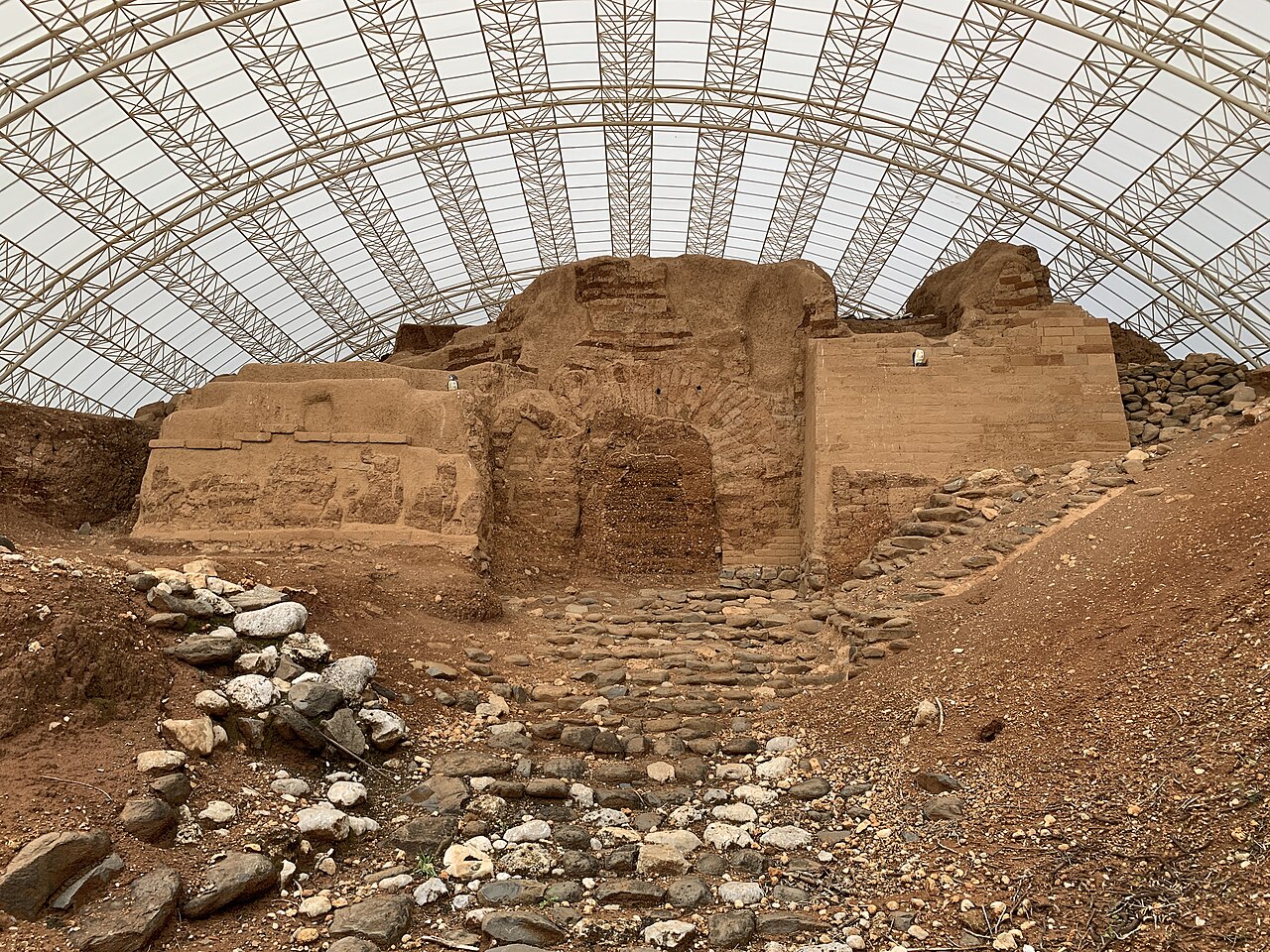
Dan, an Israelite tribe and a city in northern Israel, formerly called Laish or Leshem.
Dan was one of the twelve tribes of Israel, descended from Jacob's fifth son, Dan (Genesis 30:6). The tribe was allotted territory in the northern part of Canaan (Joshua 19:40-48). The city of Dan, originally known as Laish or Leshem, was conquered by the Danites (Joshua 19:47; Judges 18:29). It became the northernmost city of Israel, often used in the phrase "from Dan to Beersheba" to describe the entire land (Judges 20:1; 1Sa.3.20). Jeroboam set up one of his golden calves in Dan (1Ki.12.29-30), leading to idolatry. The city was also known for its skilled craftsmen (2Ch.2.14). Dan was one of the first places to fall to foreign invaders due to its northern location (Jeremiah 4:15; 8:16).
The fifth son of Jacob. His mother was Bilhah, Rachel’s maid (Gen. 30:6, “God hath judged me”, Heb. dananni). The blessing pronounced on him by his father was, “Dan shall judge his people” (49:16), probably in allusion to the judgeship of Samson, who was of the tribe of Dan.
The tribe of Dan had their place in the march through the wilderness on the north side of the tabernacle (Num. 2:25, 31; 10:25). It was the last of the tribes to receive a portion in the Land of Promise. Its position and extent are described in Josh. 19:40-48.
The territory of Dan extended from the west of that of Ephraim and Benjamin to the sea. It was a small territory, but was very fertile. It included in it, among others, the cities of Lydda, Ekron, and Joppa, which formed its northern boundary. But this district was too limited. “Squeezed into the narrow strip between the mountains and the sea, its energies were great beyond its numbers.” Being pressed by the Amorites and the Philistines, whom they were unable to conquer, they longed for a wider space. They accordingly sent out five spies from two of their towns, who went north to the sources of the Jordan, and brought back a favourable report regarding that region. “Arise,” they said, “be not slothful to go, and to possess the land,” for it is “a place where there is no want of any thing that is in the earth” (Judg. 18:10). On receiving this report, 600 Danites girded on their weapons of war, and taking with them their wives and their children, marched to the foot of Hermon, and fought against Leshem, and took it from the Sidonians, and dwelt therein, and changed the name of the conquered town to Dan (Josh. 19:47). This new city of Dan became to them a new home, and was wont to be spoken of as the northern limit of Palestine, the length of which came to be denoted by the expression “from Dan to Beersheba”, i.e., about 144 miles.
“But like Lot under a similar temptation, they seem to have succumbed to the evil influences around them, and to have sunk down into a condition of semi-heathenism from which they never emerged. The mounds of ruins which mark the site of the city show that it covered a considerable extent of ground. But there remains no record of any noble deed wrought by the degenerate tribe. Their name disappears from the roll-book of the natural and the spiritual Israel.”, Manning’s Those Holy Fields.
This old border city was originally called Laish. Its modern name is Tell el-Kady, “Hill of the Judge.” It stands about four miles below Caesarea Philippi, in the midst of a region of surpassing richness and beauty.
Sources: OpenBible.info Bible Geocoding Data (CC BY 4.0, a513646) · STEPBible TIPNR (CC BY 4.0, Dan@Gen.14.14-Amo) · Theographic Bible Metadata (CC BY-SA 4.0, dan_323) · Wikidata (CC0 1.0, Q1346856)