Gebal Summary
STEPBible TIPNR
Gebal, a Phoenician city known for its skilled builders, was allied against Israel and provided materials for Solomon's temple.
Phoenician city; skilled builders; allied against Israel
Loading book references…
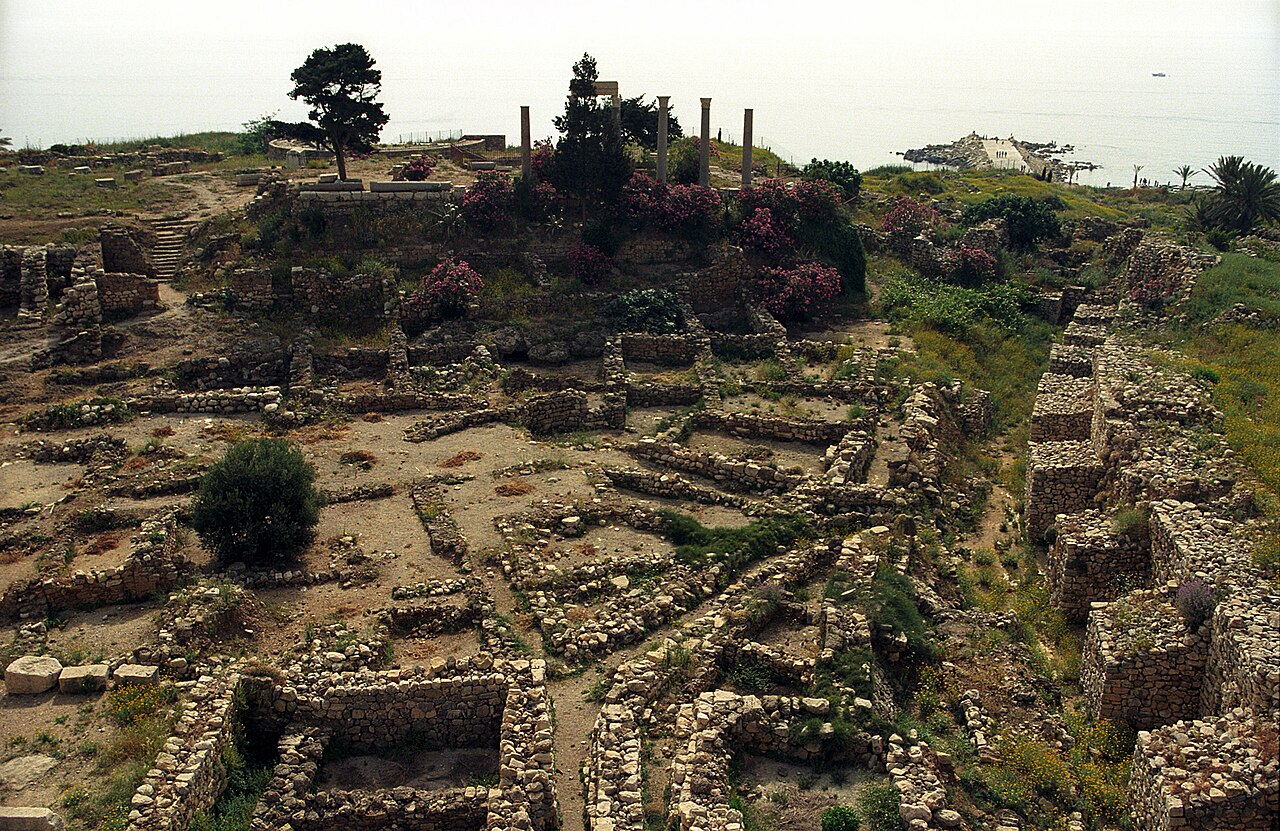
Gebal, a Phoenician city known for its skilled builders, was allied against Israel and provided materials for Solomon's temple.
Gebal, also known as Byblos, was an important Phoenician city located on the Mediterranean coast, north of modern-day Beirut. The city is mentioned in several contexts in the Bible, highlighting its significance in the region.
In Ezk.27.9, Gebal is described as a source of skilled shipbuilders and wise men who helped repair the ships of Tyre, indicating the city's reputation for craftsmanship and maritime expertise. The "elders" and "wise men" of Gebal are specifically mentioned as being employed on Tyrian ships.
Gebal is also listed in Psalm 83:7 among the nations that formed a coalition against Israel, along with Edom, Moab, and others. This suggests that Gebal, at times, was hostile towards Israel and aligned with its enemies.
However, in 1Ki.5.18, the Gebalites (people of Gebal) are mentioned alongside the Sidonians as skilled stonecutters who helped prepare the stones for the construction of Solomon's temple in Jerusalem. This indicates that Gebal also had a role in providing materials and labor for this important project.
The city of Gebal has a long history, with evidence of occupation dating back to the Bronze Age. It was an important center of trade and religion, particularly associated with the worship of the goddess Baalat Gebal. The city's strategic location and its valuable resources, such as cedar wood and skilled artisans, made it a significant player in the region's political and economic landscape.
A Phoenician city, not far from the sea coast, to the north of Beyrout (Ezek. 27:9); called by the Greeks Byblos. Now Jibeil. Mentioned in the Amarna tablets.
An important Phoenician text, referring to the temple of Baalath, on a monument of Yehu-melek, its king (probably B.C. 600), has been discovered.
Sources: OpenBible.info Bible Geocoding Data (CC BY 4.0, a9a2541) · STEPBible TIPNR (CC BY 4.0, Gebal@Jos.13.5-Ezk) · Theographic Bible Metadata (CC BY-SA 4.0, gebal_449) · Wikidata (CC0 1.0, Q78355363)