Report an inaccuracy

Hamath

Place

A major city and kingdom in Syria, often mentioned in the Bible.

Names
  • en Hamath
    anger; heat; a wall
  • en Hamath Rabbah · Also called
  • en Hamath the great · Also called
  • en Lebo-hamath · Also called
  • en Lebo/-hamath · Also called
  • en Hamath-Rabbah · Also called
  • he חֲמָת · H2574G
  • he חֲמַת רַבָּה · H2579
  • he לְב֥וֹא · H0935O
  • he חֲמָת+H0935H«H0935=בּוֹא · H2579
  • bg Емат
Location
Kind: City
Modern name: Hama
Certainty: Probable
35.135900, 36.749500 · Show on map

SDA Books

Awaiting permission to publish
Linked through an explicitly cited Bible passage

Loading book references…

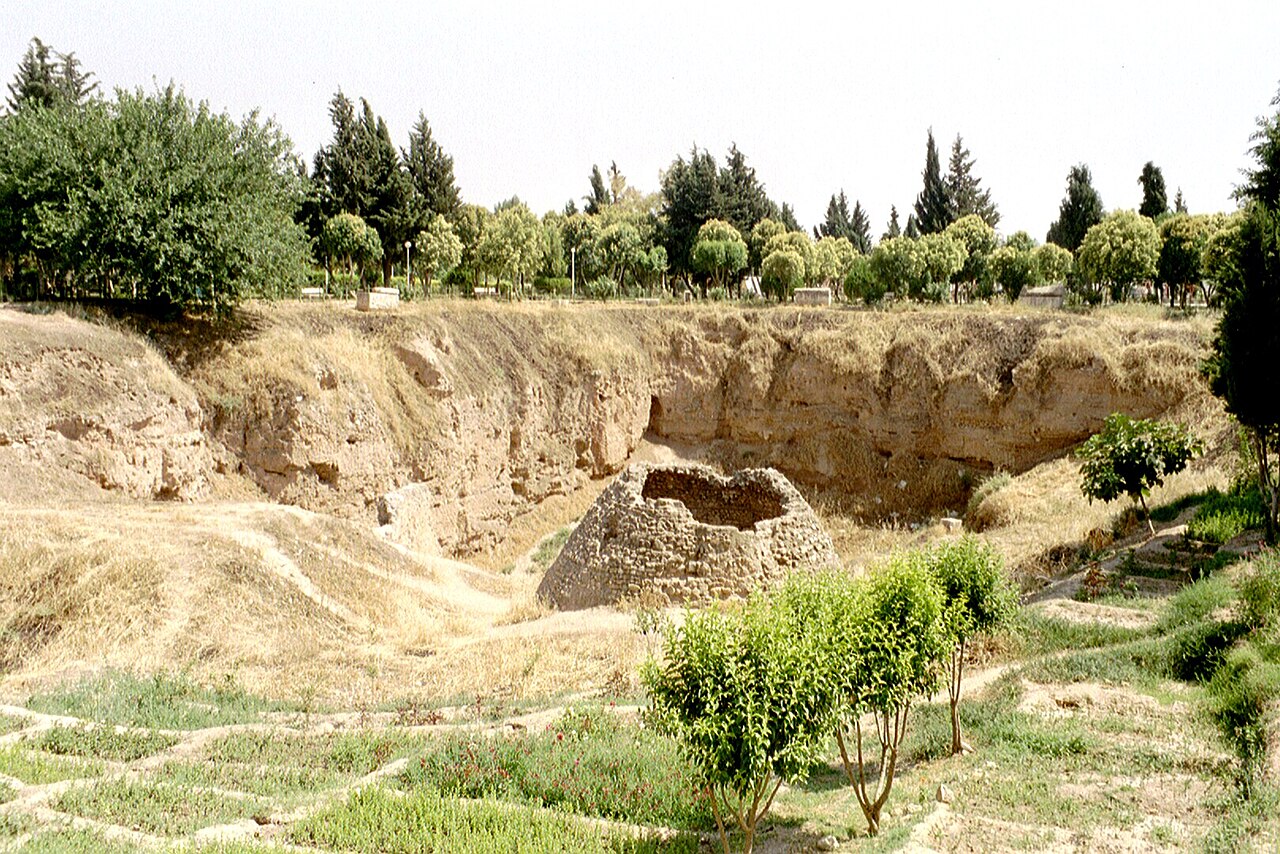
ruins at Hama
ruins at Hama · TheRealHuldra · Public domain · Official source
Hamath Summary STEPBible TIPNR

Hamath, also known as Hamath Rabbah or Lebo-hamath, was a significant city and kingdom in Syria, frequently mentioned in the Bible as a reference point for the northern border of Israel and in the context of political and military events (Num.13:21; Judges 3:3; 2Ki.14.25, 28; Jeremiah 39:5; 49:23; 52:9, 27).

Hamath Article STEPBible TIPNR

Hamath, also referred to as Hamath Rabbah or Lebo-hamath, was a prominent city and kingdom located in Syria, north of Israel. It is mentioned numerous times throughout the Old Testament, often serving as a reference point for the northern extent of Israel's territory (Numbers 13:21; 34:8; Joshua 13:5; Judges 3:3; 1Ki.8.65; 2Ch.7.8; Ezk.47.15-17, 20; 48:1; Amo.6.14).

Hamath had its own kings, such as Toi, who sent his son Joram to congratulate David on his victories over Hadadezer (2Sa.8.9-10; 1Ch.18.9-10). The city was known for its military strength and strategic importance, as evidenced by its mentions in the context of conflicts and conquests (2Ki.14.28; 17:24, 30; 18:34; 19:13; Isaiah 10:9; 36:19; 37:13; Jeremiah 39:5; 49:23; 52:9, 27).

During the reigns of various Israelite kings, Hamath served as a marker of the extent of their dominion. Jeroboam II, king of Israel, is said to have restored the border of Israel from Lebo-hamath to the Sea of the Arabah (2Ki.14.25). Solomon, known for his expansive kingdom, is described as having ruled over all the kingdoms from the Euphrates River to the land of the Philistines, as far as the border of Egypt, including Tiphsah and Gaza (1Ki.4.21, 24).

The Assyrians conquered Hamath in the 8th century BC and deported some of its inhabitants to Samaria (2Ki.17.24, 30). The fall of Hamath is mentioned in the prophetic oracles of Isaiah, Jeremiah, and Amos, often in the context of judgment against the city for its pride and wickedness (Isaiah 10:9; Jeremiah 49:23; Amo.6.2).

In the prophetic visions of Ezekiel, Hamath is mentioned as one of the boundaries of the restored land of Israel (Ezk.47.15-17, 20; 48:1), indicating its continued significance as a geographical marker.

The exact location of Hamath is believed to be near the modern-day city of Hama in western Syria, situated along the Orontes River. Its strategic location along trade routes and its proximity to Israel made it a city of great importance in the ancient Near East.
Hamath Dictionary Easton's Bible Dictionary (1897)

Fortress, the capital of one of the kingdoms of Upper Syria of the same name, on the Orontes, in the valley of Lebanon, at the northern boundary of Palestine (Num. 13:21; 34:8), at the foot of Hermon (Josh. 13:5) towards Damascus (Zech. 9:2; Jer. 49:23). It is called “Hamath the great” in Amos 6:2, and “Hamath-zobah” in 2 Chr. 8:3.

Hamath, now Hamah, had an Aramaean population, but Hittite monuments discovered there show that it must have been at one time occupied by the Hittites. It was among the conquests of the Pharaoh Thothmes III. Its king, Tou or Toi, made alliance with David (2 Sam. 8:10), and in B.C. 740 Azariah formed a league with it against Assyria. It was, however, conquered by the Assyrians, and its nineteen districts placed under Assyrian governors. In B.C. 720 it revolted under a certain Yahu-bihdi, whose name, compounded with that of the God of Israel (Yahu), perhaps shows that he was of Jewish origin. But the revolt was suppressed, and the people of Hamath were transported to Samaria (2 Kings 17:24, 30), where they continued to worship their god Ashima. Hamah is beautifully situated on the Orontes, 32 miles north of Emesa, and 36 south of the ruins of Assamea.

The kingdom of Hamath comprehended the great plain lying on both banks of the Orontes from the fountain near Riblah to Assamea on the north, and from Lebanon on the west to the desert on the east. The “entrance of Hamath” (Num. 34:8), which was the north boundary of Palestine, led from the west between the north end of Lebanon and the Nusairiyeh mountains.

Sources: OpenBible.info Bible Geocoding Data (CC BY 4.0, ac62cbc) · STEPBible TIPNR (CC BY 4.0, Hamath@Num.13.21-Zec) · Theographic Bible Metadata (CC BY-SA 4.0, hamath_516) · Wikidata (CC0 1.0, Q130160)

Report an inaccuracy

Describe the inaccuracy and, if possible, provide the correct text or a source. The page address will be included automatically.

Page: /en/places/hamath

Up to 5000 characters. You do not need to log in.

Contact details (optional)

Leave only the details you wish to share. They are sent to the administrator with your report and are not displayed publicly.

Make a suggestion

Describe your idea for improving the site. The page address will be included automatically.

Page: /en/places/hamath

Up to 5000 characters. You do not need to log in.

Contact details (optional)

Leave only the details you wish to share. They are sent to the administrator with your report and are not displayed publicly.