Jericho Summary
STEPBible TIPNR
Jericho, an ancient Canaanite city famously conquered by the Israelites under Joshua's leadership.
An ancient city in Canaan, famously conquered by Israel
Loading book references…
Jericho, an ancient Canaanite city famously conquered by the Israelites under Joshua's leadership.
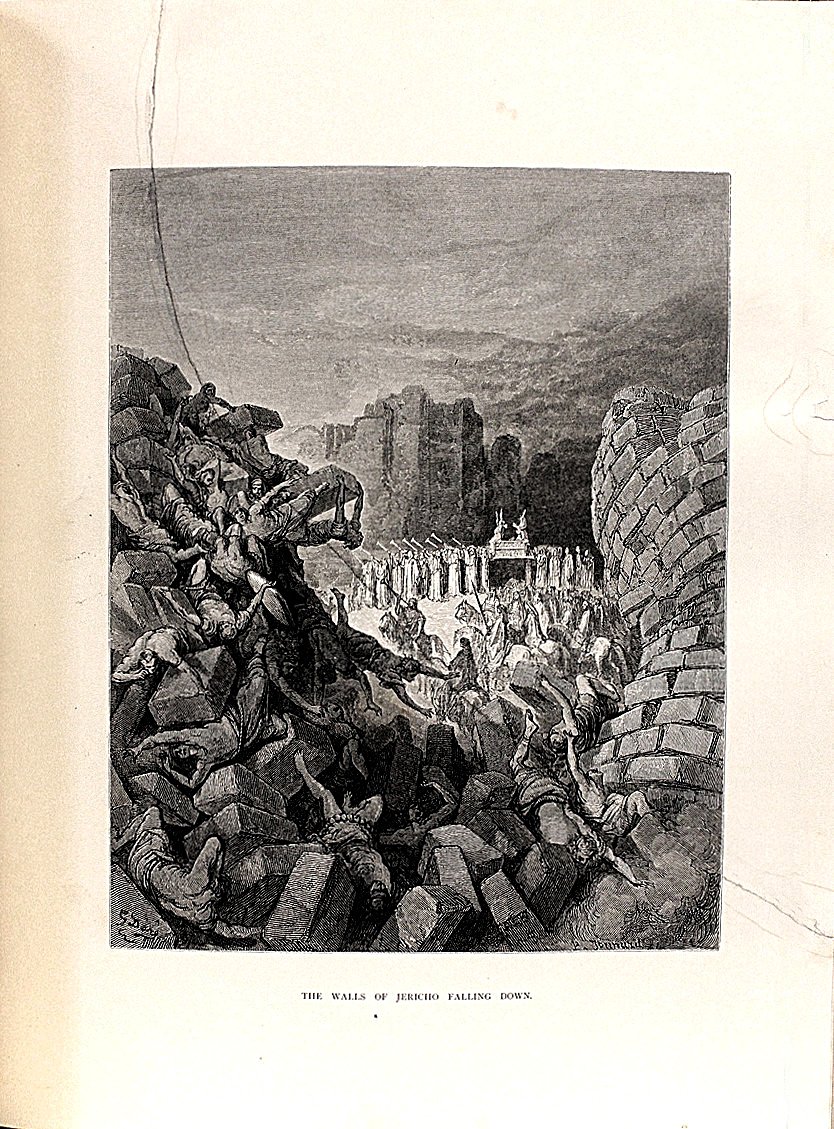
Jericho, also known as the "City of Palms," was a prominent city in the Jordan Valley near the Jordan River. It is one of the oldest continuously inhabited cities in the world, with archaeological evidence dating back to 9000 BC. In the Bible, Jericho is most famous as the first city conquered by the Israelites after they crossed the Jordan River into the Promised Land (Joshua 2-6). The city's walls miraculously fell after the Israelites marched around it for seven days, allowing them to destroy the city. Jericho was allotted to the tribe of Benjamin (Joshua 18:21) and was later rebuilt during the time of Ahab (1Ki.16.34). The city also played a role in several other biblical events, such as being the location where the Israelites camped before entering Canaan (Numbers 22:1; 26:3, 63), where Eglon, king of Moab, oppressed Israel (Judges 3:12-14), and where Zedekiah was captured by the Babylonians (Jeremiah 39:5; 52:8). In the New Testament, Jericho is mentioned as the place where Jesus healed blind Bartimaeus (Mrk.10.46) and where he encountered Zacchaeus (Luke 19:1-10).
Place of fragrance, a fenced city in the midst of a vast grove of palm trees, in the plain of Jordan, over against the place where that river was crossed by the Israelites (Josh. 3:16). Its site was near the ‘Ain es-Sultan, Elisha’s Fountain (2 Kings 2:19-22), about 5 miles west of Jordan. It was the most important city in the Jordan valley (Num. 22:1; 34:15), and the strongest fortress in all the land of Canaan. It was the key to Western Palestine.
This city was taken in a very remarkable manner by the Israelites (Josh. 6). God gave it into their hands. The city was “accursed” (Heb. herem, “devoted” to Jehovah), and accordingly (Josh. 6:17; comp. Lev. 27:28, 29; Deut. 13:16) all the inhabitants and all the spoil of the city were to be destroyed, “only the silver, and the gold, and the vessels of brass and of iron” were reserved and “put into the treasury of the house of Jehovah” (Josh. 6:24; comp. Num. 31:22, 23, 50-54). Only Rahab “and her father’s household, and all that she had,” were preserved from destruction, according to the promise of the spies (Josh. 2:14). In one of the Amarna tablets Adoni-zedec (q.v.) writes to the king of Egypt informing him that the ‘Abiri (Hebrews) had prevailed, and had taken the fortress of Jericho, and were plundering “all the king’s lands.” It would seem that the Egyptian troops had before this been withdrawn from Palestine.
This city was given to the tribe of Benjamin (Josh. 18:21), and it was inhabited in the time of the Judges (Judg. 3:13; 2 Sam. 10:5). It is not again mentioned till the time of David (2 Sam. 10:5). “Children of Jericho” were among the captives who returned under Zerubbabel Ezra 2:34; Neh. 7:36). Hiel (q.v.) the Bethelite attempted to make it once more a fortified city (1 Kings 16:34). Between the beginning and the end of his undertaking all his children were cut off.
In New Testament times Jericho stood some distance to the south-east of the ancient one, and near the opening of the valley of Achor. It was a rich and flourishing town, having a considerable trade, and celebrated for the palm trees which adorned the plain around. It was visited by our Lord on his last journey to Jerusalem. Here he gave sight to two blind men (Matt. 20:29-34; Mark 10:46-52), and brought salvation to the house of Zacchaeus the publican (Luke 19:2-10).
The poor hamlet of er-Riha, the representative of modern Jericho, is situated some two miles farther to the east. It is in a ruinous condition, having been destroyed by the Turks in 1840. “The soil of the plain,” about the middle of which the ancient city stood, “is unsurpassed in fertility; there is abundance of water for irrigation, and many of the old aqueducts are almost perfect; yet nearly the whole plain is waste and desolate...The climate of Jericho is exceedingly hot and unhealthy. This is accounted for by the depression of the plain, which is about 1,200 feet below the level of the sea.”
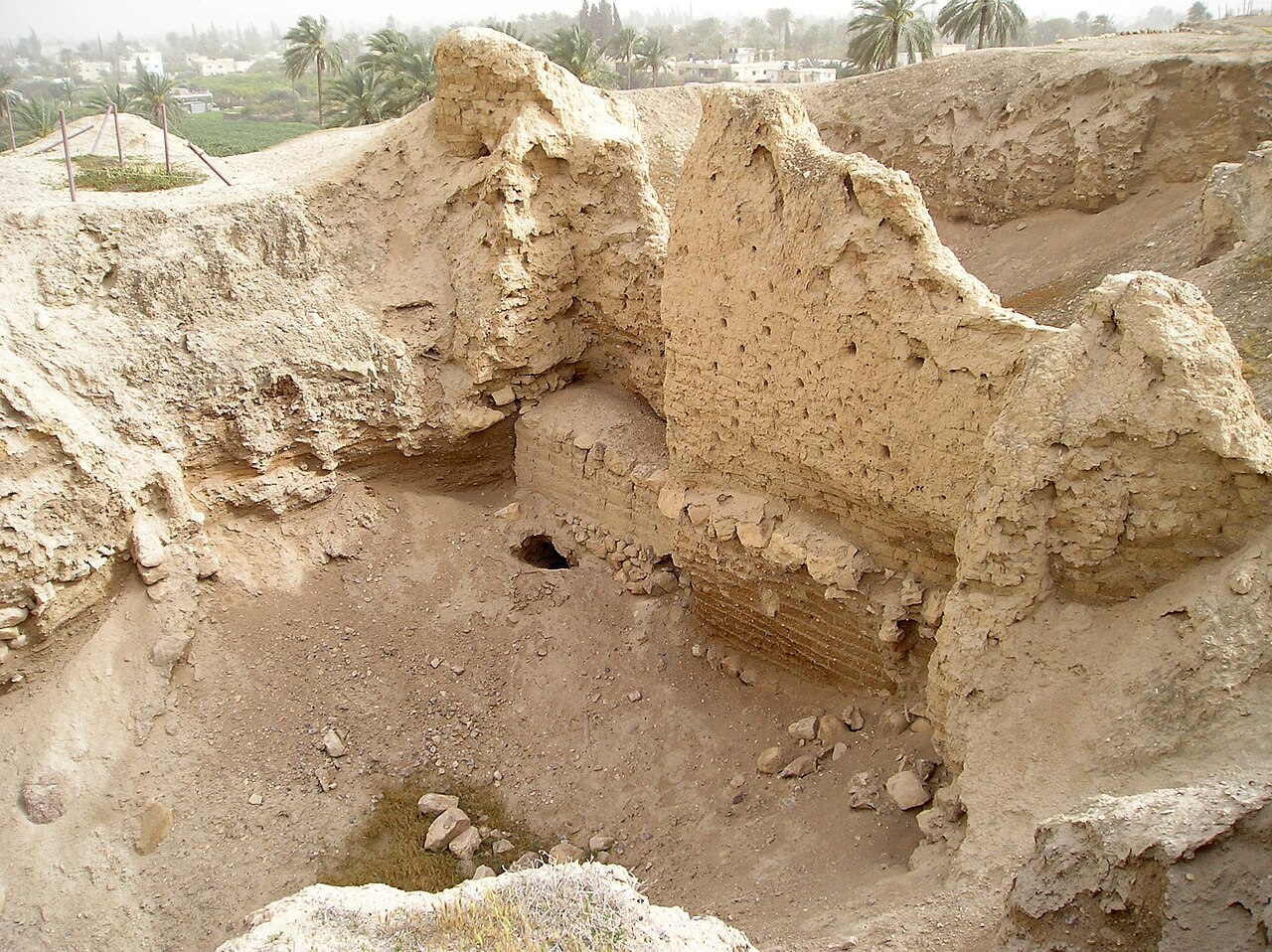
There were three different Jerichos, on three different sites, the Jericho of Joshua, the Jericho of Herod, and the Jericho of the Crusades. Er-Riha, the modern Jericho, dates from the time of the Crusades. Dr. Bliss has found in a hollow scooped out for some purpose or other near the foot of the biggest mound above the Sultan’s Spring specimens of Amorite or pre-Israelitish pottery precisely identical with what he had discovered on the site of ancient Lachish. He also traced in this place for a short distance a mud brick wall in situ, which he supposes to be the very wall that fell before the trumpets of Joshua. The wall is not far from the foot of the great precipice of Quarantania and its numerous caverns, and the spies of Joshua could easily have fled from the city and been speedily hidden in these fastnesses.
Sources: OpenBible.info Bible Geocoding Data (CC BY 4.0, a231f80) · STEPBible TIPNR (CC BY 4.0, Jericho@Num.22.1-Heb) · Theographic Bible Metadata (CC BY-SA 4.0, jericho_634)