Joppa Summary
STEPBible TIPNR
Joppa, an ancient seaport on the Mediterranean coast, served as the main port for Jerusalem in biblical times.
An ancient seaport, the main port for Jerusalem
Loading book references…
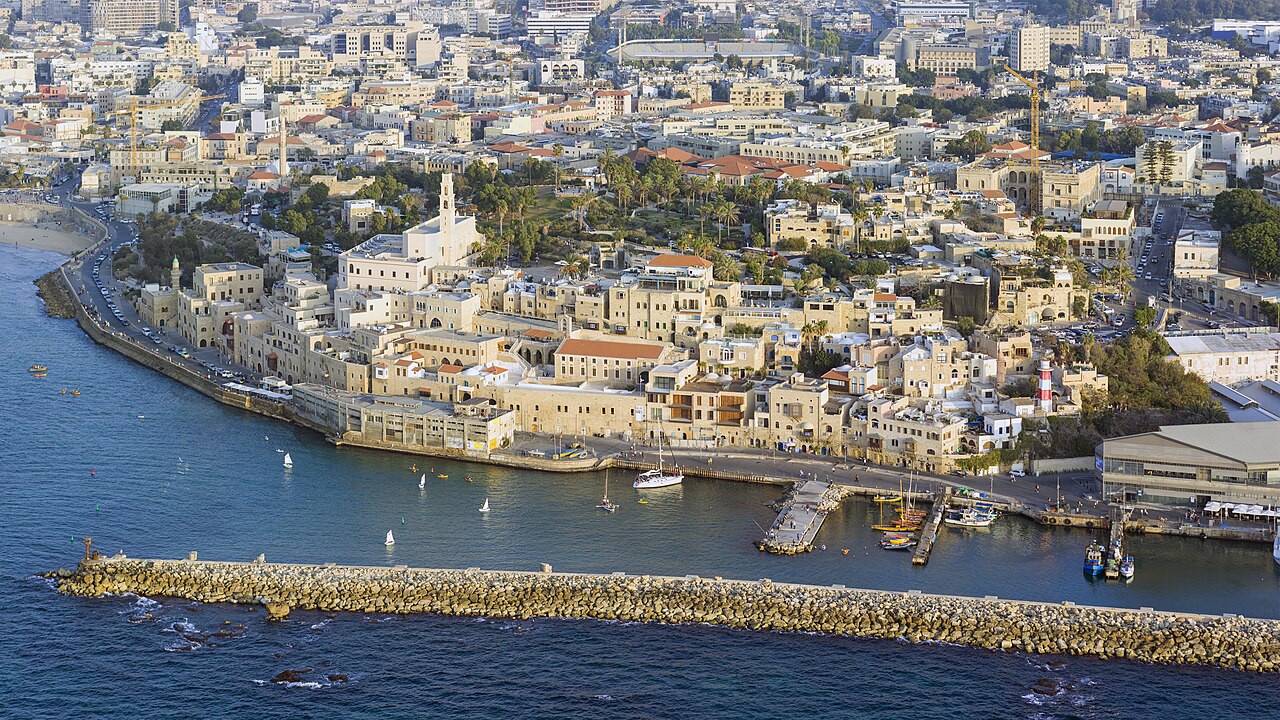
Joppa, an ancient seaport on the Mediterranean coast, served as the main port for Jerusalem in biblical times.
Joppa, also known as Japho in the Old Testament and modern-day Jaffa, is one of the oldest cities in the world, located on the Mediterranean coast of Israel. It is first mentioned as part of the inheritance of the tribe of Dan (Joshua 19:46). Joppa served as the main seaport for Jerusalem, and it was here that the cedar wood from Lebanon arrived for the construction of Solomon's Temple (2Ch.2.16) and later for the Second Temple (Ezra 3:7). The prophet Jonah set sail from Joppa when he tried to flee from God's command to preach in Nineveh (Jonah 1:3). In the New Testament, Joppa is significant as the place where Peter stayed with Simon the tanner and had a vision that led him to preach to the Gentiles (Act.9.36-43; 10:5-23). It was also the home of Tabitha (Dorcas), whom Peter raised from the dead (Act.9.36-42). Joppa has a long and rich history, and its strategic location made it an important city throughout biblical times.
Beauty, a town in the portion of Dan (Josh. 19:46; A.V., “Japho”), on a sandy promontory between Caesarea and Gaza, and at a distance of 30 miles north-west from Jerusalem. It is one of the oldest towns in Asia. It was and still is the chief sea-port of Judea. It was never wrested from the Phoenicians. It became a Jewish town only in the second century B.C. It was from this port that Jonah “took ship to flee from the presence of the Lord” (Jonah 1:3). To this place also the wood cut in Lebanon by Hiram’s men for Solomon was brought in floats (2 Chr. 2:16); and here the material for the building of the second temple was also landed (Ezra 3:7). At Joppa, in the house of Simon the tanner, “by the sea-side,” Peter resided “many days,” and here, “on the house-top,” he had his “vision of tolerance” (Acts 9:36-43). It bears the modern name of Jaffa, and exibituds all the decrepitude and squalor of cities ruled over by the Turks. “Scarcely any other town has been so often overthrown, sacked, pillaged, burned, and rebuilt.” Its present population is said to be about 16,000. It was taken by the French under Napoleon in 1799, who gave orders for the massacre here of 4,000 prisoners. It is connected with Jerusalem by the only carriage road that exists in the country, and also by a railway completed in 1892. It is noticed on monuments B.C. 1600-1300, and was attacked by Sannacharib B.C. 702.
Sources: OpenBible.info Bible Geocoding Data (CC BY 4.0, ae023a9) · STEPBible TIPNR (CC BY 4.0, Joppa@Jos.19.46-Act) · Theographic Bible Metadata (CC BY-SA 4.0, joppa_652) · Wikidata (CC0 1.0, Q7083682)