Kidron Summary
STEPBible TIPNR
The Kidron Valley, also known as the Valley of Jehoshaphat, is located east of Jerusalem and was the site of several significant events in the Bible.
A valley east of Jerusalem, site of significant events
Loading book references…
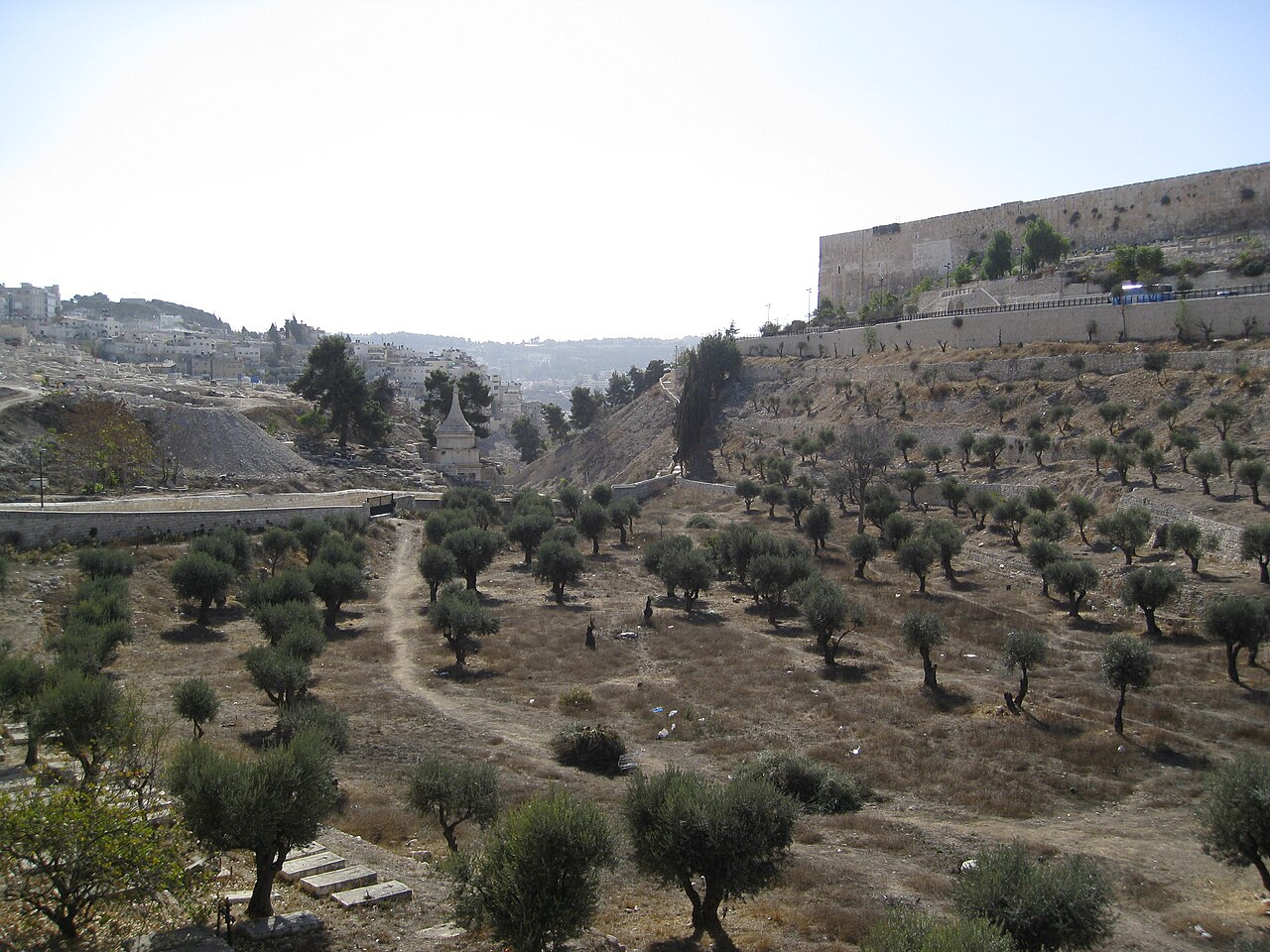
The Kidron Valley, also known as the Valley of Jehoshaphat, is located east of Jerusalem and was the site of several significant events in the Bible.
The Kidron Valley, also referred to as the Valley of Jehoshaphat, is a deep ravine located east of Jerusalem, separating the city from the Mount of Olives. The valley is mentioned several times in the Bible as the location of important events. King David crossed the Kidron Valley when fleeing from his son Absalom (2Sa.15.23). King Asa burned the idol of his mother, Maacah, in the Kidron Valley (1Ki.15.13; 2Ch.15.16). During the religious reforms of King Josiah, the objects used for idol worship were burned and their ashes thrown into the Kidron Valley (2Ki.23.4, 6, 12). The valley is also associated with the prophetic visions of Joel, who referred to it as the Valley of Jehoshaphat, where God would gather the nations for judgment (Jol.3.2, 12). In the New Testament, Jesus crossed the Kidron Valley with his disciples to enter the Garden of Gethsemane on the night of his betrayal (Jhn.18.1). The Kidron Valley has been used as a burial place for thousands of years, and it holds great significance for Jews, Christians, and Muslims.
'= Kedron = Cedron, turbid, the winter torrent which flows through the Valley of Jehoshaphat, on the eastern side of Jerusalem, between the city and the Mount of Olives. This valley is known in Scripture only by the name “the brook Kidron.” David crossed this brook bare-foot and weeping, when fleeing from Absalom (2 Sam. 15:23, 30), and it was frequently crossed by our Lord in his journeyings to and fro (John 18:1). Here Asa burned the obscene idols of his mother (1 Kings 15:13), and here Athaliah was executed (2 Kings 11:16). It afterwards became the receptacle for all manner of impurities (2 Chr. 29:16; 30:14); and in the time of Josiah this valley was the common cemetery of the city (2 Kings 23:6; comp. Jer. 26:23).
Through this mountain ravine no water runs, except after heavy rains in the mountains round about Jerusalem. Its length from its head to en-Rogel is 2 3/4 miles. Its precipitous, rocky banks are filled with ancient tombs, especially the left bank opposite the temple area. The greatest desire of the Jews is to be buried there, from the idea that the Kidron is the “valley of Jehoshaphat” mentioned in Joel 3:2.
Below en-Rogel the Kidron has no historical or sacred interest. It runs in a winding course through the wilderness of Judea to the north-western shore of the Dead Sea. Its whole length, in a straight line, is only some 20 miles, but in this space its descent is about 3,912 feet.
Recent excavations have brought to light the fact that the old bed of the Kidron is about 40 feet lower than its present bed, and about 70 feet nearer the sanctuary wall.
Sources: OpenBible.info Bible Geocoding Data (CC BY 4.0, a553110) · STEPBible TIPNR (CC BY 4.0, Kidron@2Sa.15.23-Jhn) · Theographic Bible Metadata (CC BY-SA 4.0, kidron_687) · Wikidata (CC0 1.0, Q531729)