Laodicea Summary
STEPBible TIPNR
Laodicea, a city in Asia Minor, known for its lukewarm faith (Revelation 3:14-16).
A city in Asia Minor
Loading book references…
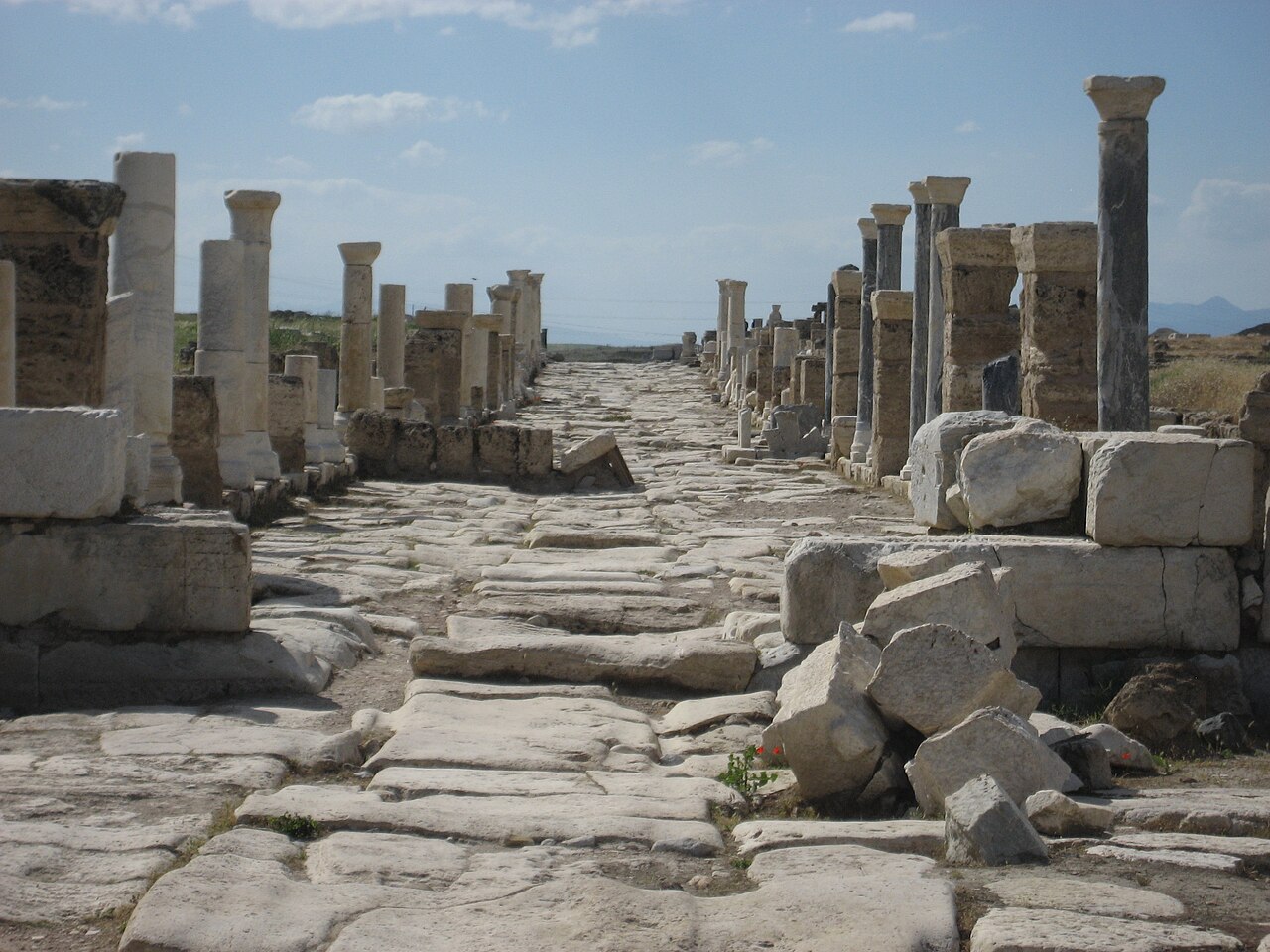
Laodicea, a city in Asia Minor, known for its lukewarm faith (Revelation 3:14-16).
Laodicea was a city located in the Lycus Valley in the Roman province of Asia Minor (modern-day Turkey). The city is mentioned several times in the New Testament, particularly in Paul's letter to the Colossians and in the book of Revelation. Paul mentions his concern for the believers in Laodicea, even though he had not personally visited the city (Col.2.1). He also sends greetings to the Laodicean church and instructs the Colossians to share his letter with them (Col.4.13, 15-16). In the book of Revelation, Laodicea is one of the seven churches addressed by Jesus Christ. The Laodicean church is rebuked for being lukewarm in their faith, neither hot nor cold, and for their self-sufficiency and spiritual complacency (Revelation 3:14-16). Despite their material wealth, Jesus declares them to be spiritually poor, blind, and naked, urging them to repent and seek true spiritual riches from Him (Revelation 3:17-18).
The city of this name mentioned in Scripture lay on the confines of Phrygia and Lydia, about 40 miles east of Ephesus (Rev. 3:14), on the banks of the Lycus. It was originally called Diospolis and then Rhoas, but afterwards Laodicea, from Laodice, the wife of Antiochus II., king of Syria, who rebuilt it. It was one of the most important and flourishing cities of Asia Minor. At a very early period it became one of the chief seats of Christianity (Col. 2:1; 4:15; Rev. 1:11, etc.). It is now a deserted place, called by the Turks Eski-hissar or “old castle.”
Sources: OpenBible.info Bible Geocoding Data (CC BY 4.0, a83fb1e) · STEPBible TIPNR (CC BY 4.0, Laodicea@Col.2.1-Rev) · Theographic Bible Metadata (CC BY-SA 4.0, laodicea_716) · Wikidata (CC0 1.0, Q849709)