Lebanon Summary
STEPBible TIPNR
Lebanon, a mountainous region north of Israel, known for its cedar trees and as a symbol of strength and beauty (1Ki.4.33; Psalm 92:12).
A mountainous region known for its cedar trees
Loading book references…
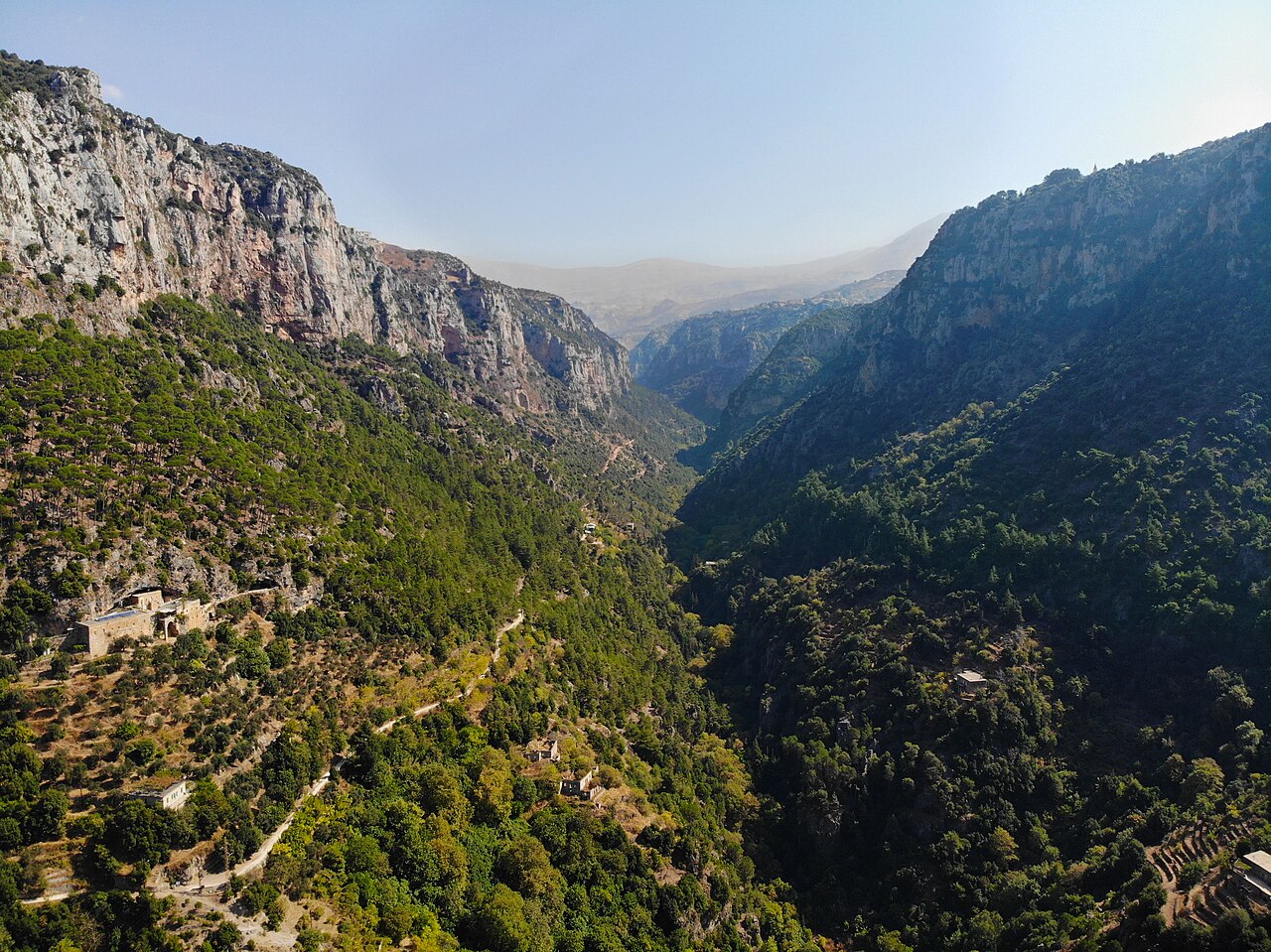
Lebanon, a mountainous region north of Israel, known for its cedar trees and as a symbol of strength and beauty (1Ki.4.33; Psalm 92:12).
Lebanon is a mountainous region located north of Israel, known for its majestic cedar trees and natural beauty. It is mentioned numerous times throughout the Old Testament. The cedars of Lebanon were highly prized for their quality and were used in the construction of the Temple and other important buildings (1Ki.5.6, 9, 14; 2Ch.2.8, 16; Ezra 3:7). Lebanon is often used as a symbol of strength, prosperity, and beauty (Psalm 72:16; 92:12; Sng.4.11, 15; 5:15). It is also mentioned in the context of God's power and judgment (Psalm 29:5, 6; Isaiah 2:13; 10:34; Jeremiah 22:6, 23; Habakkuk 2:17). Lebanon is described as part of the Promised Land (Deu.1.7; 11:24; Joshua 1:4) and was a region where some Canaanite inhabitants remained (Judges 3:3). The beauty and majesty of Lebanon are used to illustrate the glory and splendor of the future kingdom of God (Isaiah 35:2; 60:13; Hosea 14:5-7).
White, “the white mountain of Syria,” is the loftiest and most celebrated mountain range in Syria. It is a branch running southward from the Caucasus, and at its lower end forking into two parallel ranges, the eastern or Anti-Lebanon, and the western or Lebanon proper. They enclose a long valley (Josh. 11:17) of from 5 to 8 miles in width, called by Roman writers Coele-Syria, now called el-Buka’a, “the valley,” a prolongation of the valley of the Jordan.
Lebanon proper, Jebel es-Sharki, commences at its southern extremity in the gorge of the Leontes, the ancient Litany, and extends north-east, parallel to the Mediterranean coast, as far as the river Eleutherus, at the plain of Emesa, “the entering of Hamath” (Num. 34:8; 1 Kings 8:65), in all about 90 geographical miles in extent. The average height of this range is from 6,000 to 8,000 feet; the peak of Jebel Mukhmel is about 10,200 feet, and the Sannin about 9,000. The highest peaks are covered with perpetual snow and ice. In the recesses of the range wild beasts as of old still abound (2 Kings 14:9; Cant. 4:8). The scenes of the Lebanon are remarkable for their grandeur and beauty, and supplied the sacred writers with many expressive similes (Ps. 29:5, 6; 72:16; 104:16-18; Cant. 4:15; Isa. 2:13; 35:2; 60:13; Hos. 14:5). It is famous for its cedars (Cant. 5:15), its wines (Hos. 14:7), and its cool waters (Jer. 18:14). The ancient inhabitants were Giblites and Hivites (Josh. 13:5; Judg. 3:3). It was part of the Phoenician kingdom (1 Kings 5:2-6).
The eastern range, or Anti-Lebanon, or “Lebanon towards the sunrising,” runs nearly parallel with the western from the plain of Emesa till it connects with the hills of Galilee in the south. The height of this range is about 5,000 feet. Its highest peak is Hermon (q.v.), from which a number of lesser ranges radiate.
Lebanon is first mentioned in the description of the boundary of Palestine (Deut. 1:7; 11:24). It was assigned to Israel, but was never conquered (Josh. 13:2-6; Judg. 3:1-3).
The Lebanon range is now inhabited by a population of about 300,000 Christians, Maronites, and Druses, and is ruled by a Christian governor. The Anti-Lebanon is inhabited by Mohammedans, and is under a Turkish ruler.
Sources: OpenBible.info Bible Geocoding Data (CC BY 4.0, a730058) · STEPBible TIPNR (CC BY 4.0, Lebanon@Deu.1.7-Zec) · Theographic Bible Metadata (CC BY-SA 4.0, lebanon_720) · Wikidata (CC0 1.0, Q25910)