Report an inaccuracy

Midian

Place

A nation descended from Abraham; oppressed Israel in the time of the judges

Names
  • en Midian
    judgment; covering; habit
  • en Midian,Midianite · Also called
  • en Midianite · Also called
  • en Madian · Also called
  • en Midianites · Also called
  • he מִדְיָן · H4080H
  • he מִדְיָנִי · H4084
  • he מְדָנִי · H4092
  • el Μαδιάν · G3099
  • bg Мадиам
Location
Kind: Region
Modern name: Al Bad
Certainty: Disputed
28.750000, 34.750000 · Show on map

SDA Books

Awaiting permission to publish
Linked through an explicitly cited Bible passage

Loading book references…

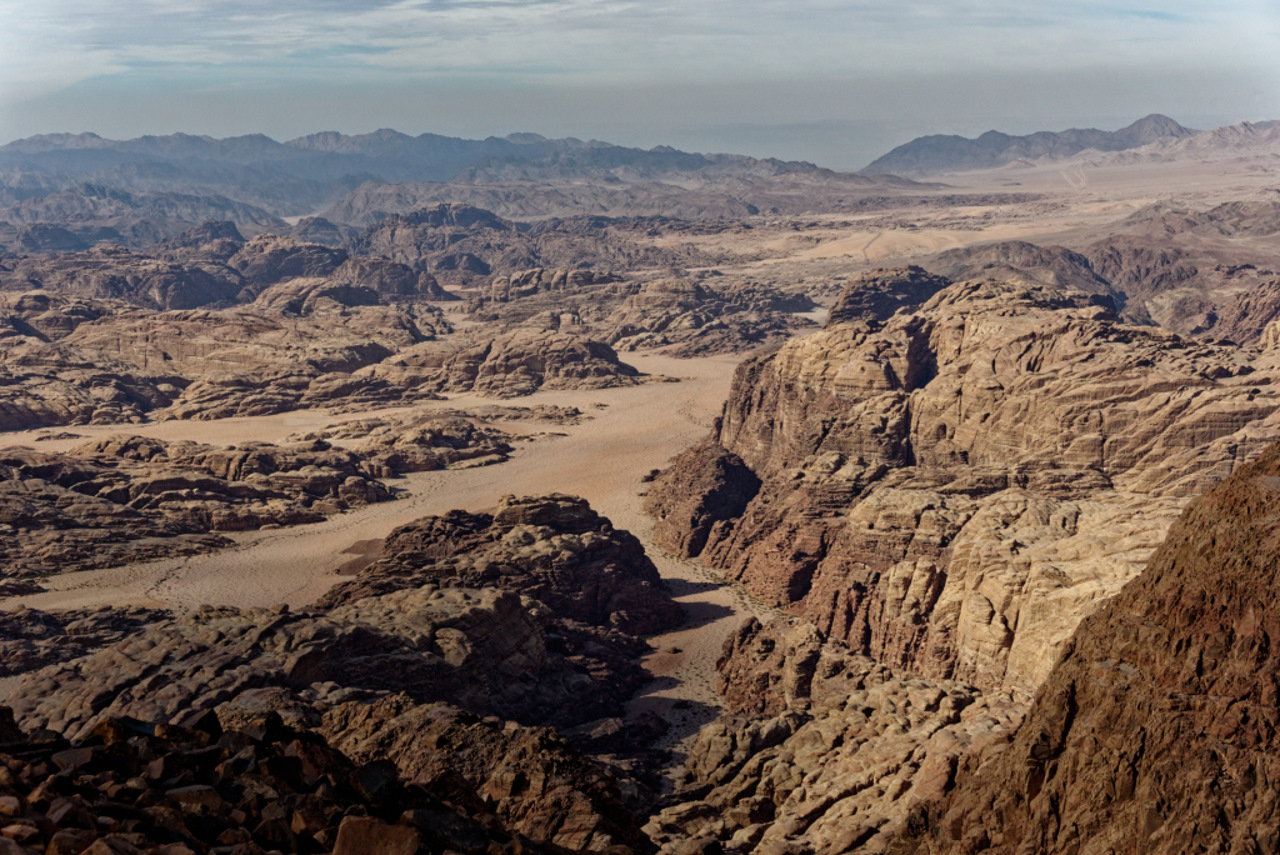
panorama of hills in Midian
panorama of hills in Midian · Roupicou · CC BY-SA 4.0 · Official source
Midian Summary STEPBible TIPNR

Midian, a nation descended from Abraham through Keturah (Genesis 25:2), which oppressed Israel during the time of the judges (Judges 6-8) and was later defeated by Gideon (Judges 7-8).

Midian Article STEPBible TIPNR

Midian was a nation descended from Abraham through his wife Keturah (Genesis 25:2). The Midianites lived in the desert regions of the Arabian Peninsula, particularly in the area east of the Gulf of Aqaba. Moses fled to Midian after killing an Egyptian and married Zipporah, the daughter of Jethro, a Midianite priest (Exodus 2:15-22). Jethro later visited Moses and offered him wise counsel (Exodus 18:1-27).

During the time of the judges, the Midianites, along with the Amalekites and other eastern peoples, oppressed Israel for seven years (Judges 6:1-6). God raised up Gideon to deliver Israel from the Midianites (Judges 6:11-24). Gideon, with a small army of 300 men, defeated the Midianites and their allies, who were "as numerous as locusts" (Judges 7-8).

The Midianites were involved in the incident at Peor, where Israelite men were enticed into sexual immorality and idolatry (Numbers 25:1-18). As a result, God commanded Moses to take vengeance on the Midianites (Numbers 25:17-18; 31:1-54).

In later biblical history, the Midianites are mentioned as traders who bought Joseph from his brothers and sold him into slavery in Egypt (Genesis 37:28, 36). The prophet Isaiah refers to the defeat of Midian as a symbol of God's power to deliver his people (Isaiah 9:4; 10:26). The Midianites are also mentioned in the genealogy of Edom (Genesis 36:35; 1Ch.1.46) and in a psalm calling for God's judgment on Israel's enemies (Psalm 83:9).

Midianite Dictionary Easton's Bible Dictionary (1897)

An Arabian tribe descended from Midian. They inhabited principally the desert north of the peninsula of Arabia. The peninsula of Sinai was the pasture-ground for their flocks. They were virtually the rulers of Arabia, being the dominant tribe. Like all Arabians, they were a nomad people. They early engaged in commercial pursuits. It was to one of their caravans that Joseph was sold (Gen. 37:28, 36). The next notice of them is in connection with Moses’ flight from Egypt (Ex. 2:15-21). Here in Midian Moses became the servant and afterwards the son-in-law of Reuel or Jethro, the priest. After the Exodus, the Midianites were friendly to the Israelites so long as they traversed only their outlying pasture-ground on the west of the Arabah; but when, having passed the southern end of Edom, they entered into the land of Midian proper, they joined with Balak, the king of Moab, in a conspiracy against them (Num. 22:4-7). Balaam, who had been sent for to curse Israel, having utterly failed to do so, was dismissed by the king of Moab; nevertheless he still tarried among the Midianites, and induced them to enter into correspondence with the Israelites, so as to bring them into association with them in the licentious orgies connected with the worship of Baal-Peor. This crafty counsel prevailed. The Israelites took part in the heathen festival, and so brought upon themselves a curse indeed. Their apostasy brought upon them a severe punishment. A plague broke out amongst them, and more than twenty-four thousand of the people perished (Num. 25:9). But the Midianites were not to be left unpunished. A terrible vengeance was denounced against them. A thousand warriors from each tribe, under the leadership of Phinehas, went forth against them. The Midianites were utterly routed. Their cities were consumed by fire, five of their kings were put to death, and the whole nation was destroyed (Josh. 13:21, 22). Balaam also perished by the sword, receiving the “wages of his unrighteousness” (Num. 31:8; 2 Pet. 2:15). The whole of the country on the east of Jordan, now conquered by the Israelites (see SIHON; OG), was divided between the two tribes of Reuben and Gad and the half tribe of Manasseh.

Some two hundred and fifty years after this the Midianites had regained their ancient power, and in confederation with the Amalekites and the “children of the east” they made war against their old enemies the Israelites, whom for seven years they oppressed and held in subjection. They were at length assailed by Gideon in that ever-memorable battle in the great plain of Esdraelon, and utterly destroyed (Judg. 6:1-ch. 7). Frequent allusions are afterwards made to this great victory (Ps. 83:10, 12; Isa. 9:4; 10:6). They now wholly pass away from the page of history both sacred and profane.
Sources: OpenBible.info Bible Geocoding Data (CC BY 4.0, acc6d8e) · STEPBible TIPNR (CC BY 4.0, Midian@Gen.36.35-Act) · Theographic Bible Metadata (CC BY-SA 4.0, midian_796)

Report an inaccuracy

Describe the inaccuracy and, if possible, provide the correct text or a source. The page address will be included automatically.

Page: /en/places/midian

Up to 5000 characters. You do not need to log in.

Contact details (optional)

Leave only the details you wish to share. They are sent to the administrator with your report and are not displayed publicly.

Make a suggestion

Describe your idea for improving the site. The page address will be included automatically.

Page: /en/places/midian

Up to 5000 characters. You do not need to log in.

Contact details (optional)

Leave only the details you wish to share. They are sent to the administrator with your report and are not displayed publicly.