Report an inaccuracy

Mizpah

Place

A city in Benjamin; a place of gathering and judgment

Corrected source descriptions

English article incorrectly conflates Mizpah with Ramah and Arimathea. Separate the places and retain the documented Samuel/Joseph references.

Preserved original text

Mizpah

Mizpah, also known as Mizpeh, Ramah, Ramathaim-zophim, or Arimathea, was a city located in the tribal territory of Benjamin, near the border with Ephraim. It was an important religious and political center during the period of the judges and the early monarchy.

During the time of the judges, the Israelites gathered at Mizpah to address the crisis involving the tribe of Benjamin and the concubine at Gibeah (Judges 20:1, 3; 21:1, 5, 8). Later, the prophet Samuel summoned the people to Mizpah for prayer, repentance, and deliverance from the Philistines (1Sa.7.5-7, 11-12, 16). Samuel also gathered the Israelites at Mizpah to appoint Saul as their first king (1Sa.10.17).

Mizpah was the hometown and burial place of Samuel (1Sa.1.19; 2:11; 7:17; 8:4; 15:34; 16:13; 19:18-23; 20:1; 25:1; 28:3). It was also the city of Joseph of Arimathea, the wealthy disciple who provided the tomb for Jesus' burial (Matthew 27:57; Mrk.15.43; Luke 23:50-51; Jhn.19.38).

During the divided monarchy, King Asa of Judah fortified Mizpah using materials from the dismantled fortifications of Ramah (1Ki.15.22; 2Ch.16.6). After the Babylonian destruction of Jerusalem, Mizpah served as the administrative center for the remnant of Judah under Gedaliah (2Ki.25.23, 25; Jeremiah 40:6, 8, 10, 12-13, 15; 41:1, 3, 6, 10, 14, 16).
Names
  • en Mizpah
    Mizpeh, a watch-tower; speculation
  • en Mizpeh · Also called
  • en Ramah · Also called
  • en Ramathaim-zophim · Also called
  • en Ramathaim a Zuphite · Also called
  • en Arimathea · Also called
  • he מִצְפָּה · H4709G
  • he מִצְפֶּה · H4708I
  • he רָמָה · H7414J
  • he רָמָתַיִם צוֹפִים · H7436
  • el Ἀριμαθαία · G0707
  • bg Масфа
Location
Kind: City
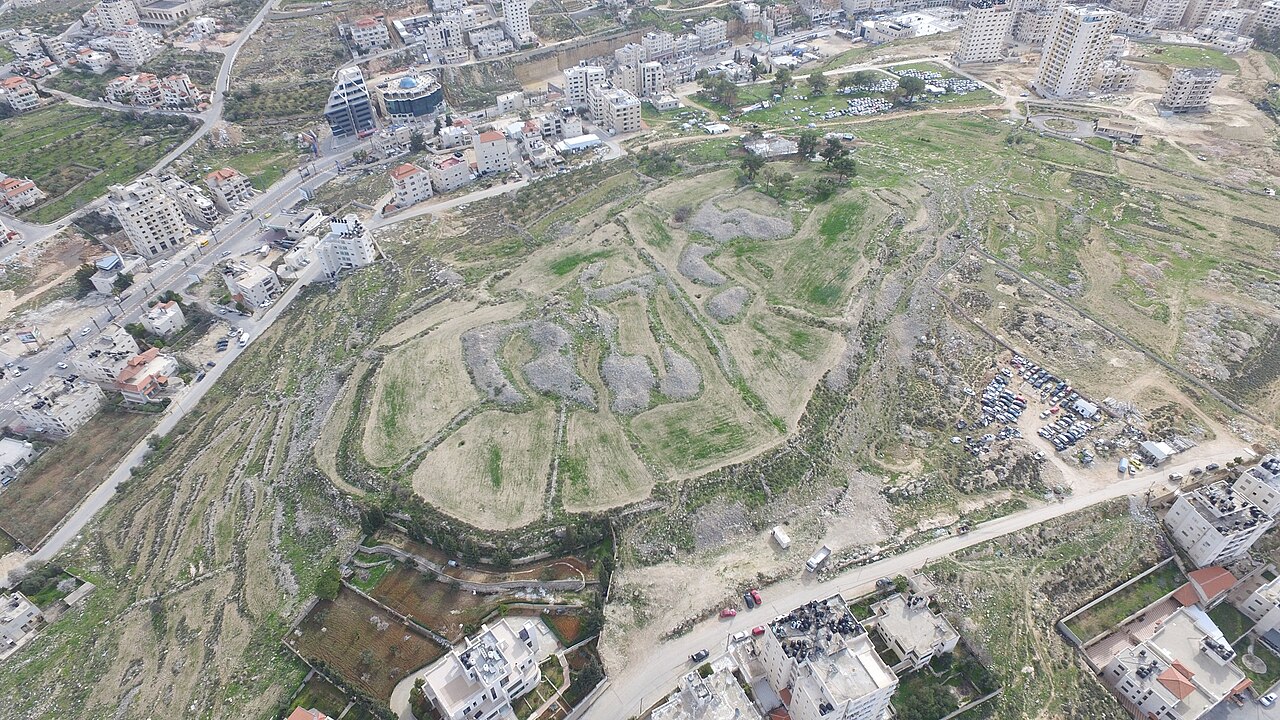
Modern name: Tell en Nasbeh
Certainty: Probable
31.832739, 35.180163 · Show on map

SDA Books

Awaiting permission to publish
Linked through an explicitly cited Bible passage

Loading book references…

aerial panorama of Tell en Nasbeh
aerial panorama of Tell en Nasbeh · דניאל צבי · CC BY-SA 4.0 · Official source
Mizpah Article STEPBible TIPNR

Mizpah, also known as Mizpeh, was a city located in the tribal territory of Benjamin, near the border with Ephraim. It was an important religious and political center during the period of the judges and the early monarchy.

During the time of the judges, the Israelites gathered at Mizpah to address the crisis involving the tribe of Benjamin and the concubine at Gibeah (Judges 20:1, 3; 21:1, 5, 8). Later, the prophet Samuel summoned the people to Mizpah for prayer, repentance, and deliverance from the Philistines (1Sa.7.5-7, 11-12, 16). Samuel also gathered the Israelites at Mizpah to appoint Saul as their first king (1Sa.10.17).

Ramah, rather than Mizpah, was the hometown and burial place of Samuel (1Sa.1.19; 2:11; 7:17; 8:4; 15:34; 16:13; 19:18-23; 20:1; 25:1; 28:3). Joseph, the wealthy disciple who provided the tomb for Jesus' burial, came from Arimathea (Matthew 27:57; Mrk.15.43; Luke 23:50-51; Jhn.19.38); these Gospel passages do not identify Arimathea with Mizpah.

During the divided monarchy, King Asa of Judah fortified Mizpah using materials from the dismantled fortifications of Ramah (1Ki.15.22; 2Ch.16.6). After the Babylonian destruction of Jerusalem, Mizpah served as the administrative center for the remnant of Judah under Gedaliah (2Ki.25.23, 25; Jeremiah 40:6, 8, 10, 12-13, 15; 41:1, 3, 6, 10, 14, 16).

Mizpah 5 Dictionary Easton's Bible Dictionary (1897)

A city of Benjamin, “the watch-tower”, where the people were accustomed to meet in great national emergencies (Josh. 18:26; Judg. 20:1, 3; 21:1, 5; 1 Sam. 7:5-16). It has been supposed to be the same as Nob (1 Sam. 21:1; 22:9-19). It was some 4 miles north-west of Jerusalem, and was situated on the loftiest hill in the neighbourhood, some 600 feet above the plain of Gibeon. This village has the modern name of Neby Samwil, i.e., the prophet Samuel, from a tradition that Samuel’s tomb is here.

Samuel inaugurated the reformation that characterized his time by convening a great assembly of all Israel at Mizpeh, now the politico-religious centre of the nation. There, in deep humiliation on account of their sins, they renewed their vows and entered again into covenant with the God of their fathers. It was a period of great religious awakening and of revived national life. The Philistines heard of this assembly, and came up against Israel. The Hebrews charged the Philistine host with great fury, and they were totally routed. Samuel commemorated this signal victory by erecting a memorial-stone, which he called “Ebenezer” (q.v.), saying, “Hitherto hath the Lord helped us” (1 Sam. 7:7-12).

Sources: OpenBible.info Bible Geocoding Data (CC BY 4.0, a736f6c) · STEPBible TIPNR (CC BY 4.0, Mizpah@Jos.18.26-Jhn) · Theographic Bible Metadata (CC BY-SA 4.0, mizpah_811) · Wikidata (CC0 1.0, Q7697543)

Report an inaccuracy

Describe the inaccuracy and, if possible, provide the correct text or a source. The page address will be included automatically.

Page: /en/places/mizpah-3

Up to 5000 characters. You do not need to log in.

Contact details (optional)

Leave only the details you wish to share. They are sent to the administrator with your report and are not displayed publicly.

Make a suggestion

Describe your idea for improving the site. The page address will be included automatically.

Page: /en/places/mizpah-3

Up to 5000 characters. You do not need to log in.

Contact details (optional)

Leave only the details you wish to share. They are sent to the administrator with your report and are not displayed publicly.