Pharpar Summary
STEPBible TIPNR
Pharpar was one of the rivers of Damascus, mentioned by Naaman the leper when comparing them to the Jordan River in Israel.
A river in Damascus, Syria
Loading book references…
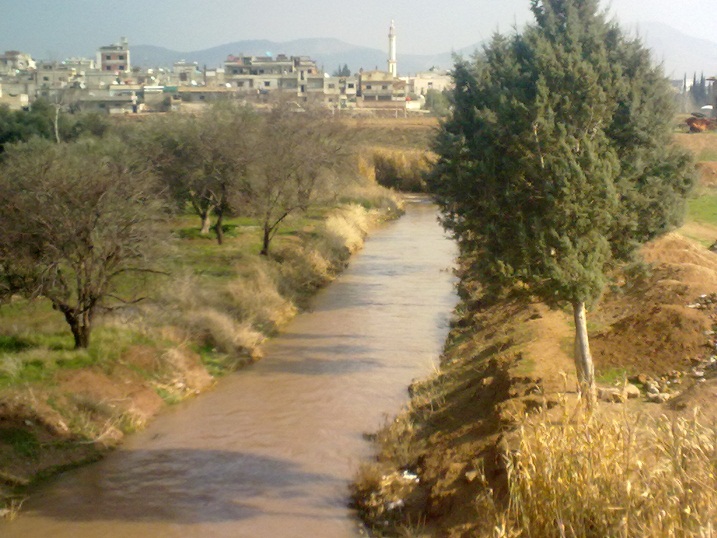
Pharpar was one of the rivers of Damascus, mentioned by Naaman the leper when comparing them to the Jordan River in Israel.
Pharpar, along with the Abana (or Amana), was one of the two rivers of Damascus mentioned in the Bible (2Kgs. 5:12). When Naaman, the commander of the Syrian army, sought healing from his leprosy, the prophet Elisha instructed him to wash seven times in the Jordan River (2Kgs. 5:10). Naaman was initially angry at this suggestion, exclaiming, "Are not Abana and Pharpar, the rivers of Damascus, better than all the waters of Israel? Could I not wash in them and be clean?" (2Kgs. 5:12). However, after being persuaded by his servants, Naaman followed Elisha's instructions and was healed of his leprosy (2Kgs. 5:13-14). The Pharpar River, which still exists today, flows from the Anti-Lebanon mountains and runs through the city of Damascus before emptying into a lake east of the city. Naaman's initial reluctance to wash in the Jordan highlights the pride and prejudice that can hinder people from experiencing God's healing and blessing.
Swift, one of the rivers of Damascus (2 Kings 5:12). It has been identified with the ‘Awaj, “a small lively river.” The whole of the district watered by the ‘Awaj is called the Wady el-‘Ajam, i.e., “the valley of the Persians”, so called for some unknown reason. This river empties itself into the lake or marsh Bahret Hijaneh, on the east of Damascus. One of its branches bears the modern name of Wady Barbar, which is probably a corruption of Pharpar.
Sources: OpenBible.info Bible Geocoding Data (CC BY 4.0, a8d054a) · STEPBible TIPNR (CC BY 4.0, Pharpar@2Ki.5.12) · Theographic Bible Metadata (CC BY-SA 4.0, pharpar_940) · Wikidata (CC0 1.0, Q4829689)