Philippi Summary
STEPBible TIPNR
Philippi was a city in Macedonia where Paul founded a church and experienced persecution, imprisonment, and a miraculous deliverance.
A city in Macedonia visited by Paul
Loading book references…
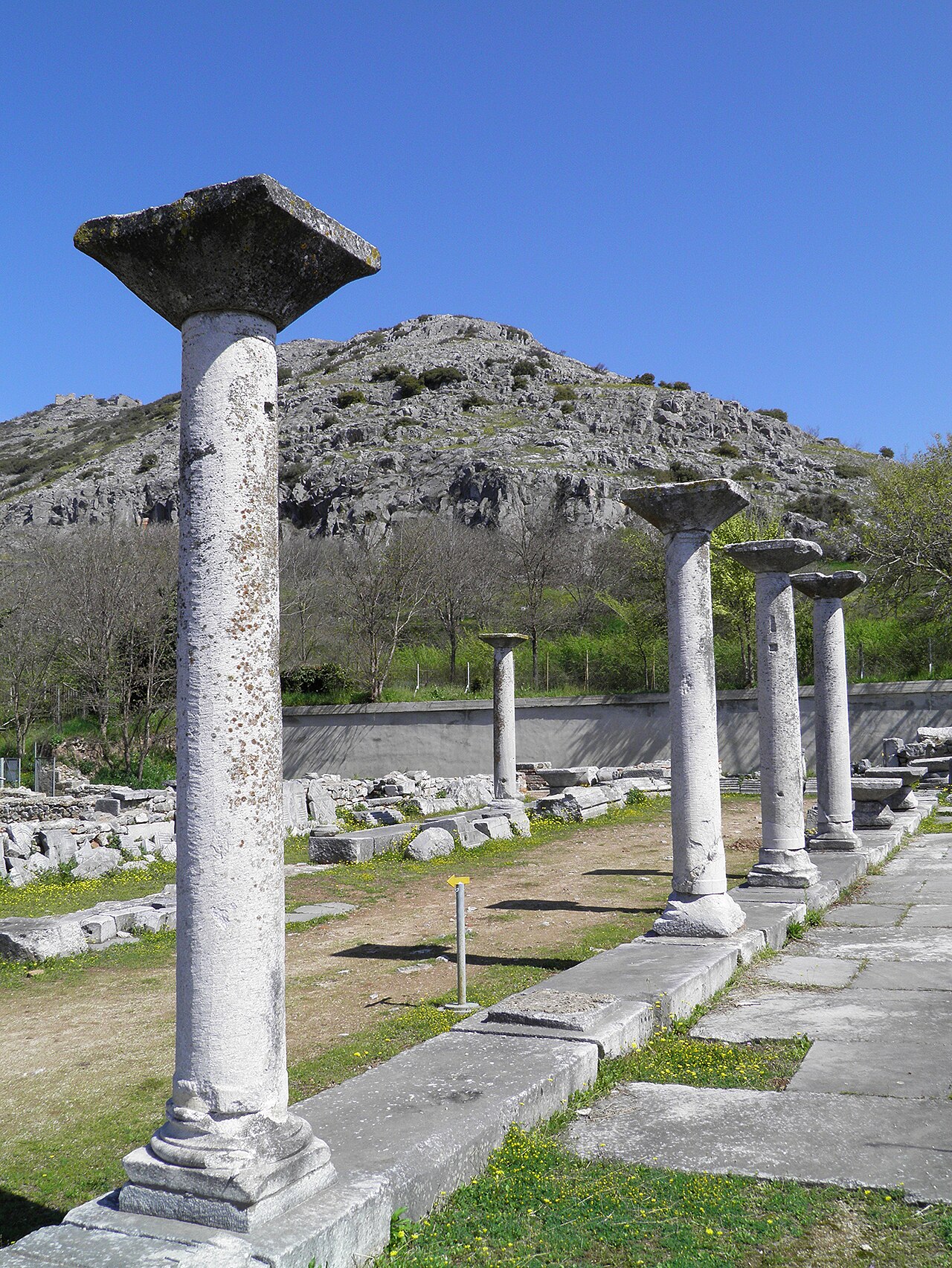
Philippi was a city in Macedonia where Paul founded a church and experienced persecution, imprisonment, and a miraculous deliverance.
Philippi was a prominent city in the region of Macedonia (modern-day Greece) and played a significant role in the early spread of Christianity. The city is first mentioned in the New Testament in connection with Paul's second missionary journey (Act.16.12). In Philippi, Paul and his companions met a group of women praying by the river, including Lydia, a merchant who became the first convert in Europe (Act.16.13-15). However, Paul and Silas were soon imprisoned after casting out a spirit of divination from a slave girl (Act.16.16-24). While in prison, they experienced a miraculous earthquake that led to the conversion of the jailer and his household (Act.16.25-34).
Paul visited Philippi again on his third missionary journey (Act.20.6) and later wrote a letter to the church, known as the Epistle to the Philippians. In this letter, Paul expresses his deep affection for the Philippian believers and thanks them for their support and partnership in the gospel (Phil. 1:3-7; 4:15-19). He also encourages them to remain united, humble, and joyful in the face of adversity (Phil. 1:27-2:18; 4:4-7). The church in Philippi is portrayed as a faithful and generous community, supporting Paul's ministry even in his imprisonment (Phil. 4:10-20).
Formerly Crenides, “the fountain,” the capital of the province of Macedonia. It stood near the head of the Sea, about 8 miles north-west of Kavalla. It is now a ruined village, called Philibedjik. Philip of Macedonia fortified the old Thracian town of Crenides, and called it after his own name Philippi (B.C. 359-336). In the time of the Emperor Augustus this city became a Roman colony, i.e., a military settlement of Roman soldiers, there planted for the purpose of controlling the district recently conquered. It was a “miniature Rome,” under the municipal law of Rome, and governed by military officers, called duumviri, who were appointed directly from Rome. Having been providentially guided thither, here Paul and his companion Silas preached the gospel and formed the first church in Europe. This success stirred up the enmity of the people, and they were “shamefully entreated” (Acts 16:9-40; 1 Thess. 2:2). Paul and Silas at length left this city and proceeded to Amphipolis (q.v.).
Sources: OpenBible.info Bible Geocoding Data (CC BY 4.0, a49e1d0) · STEPBible TIPNR (CC BY 4.0, Philippi@Act.16.12-1Th) · Theographic Bible Metadata (CC BY-SA 4.0, philippi_942) · Wikidata (CC0 1.0, Q379652)