Pithom Summary
STEPBible TIPNR
Pithom was one of the store cities built by the Israelites during their enslavement in Egypt, along with Rameses.
A store city built by the Israelites in Egypt
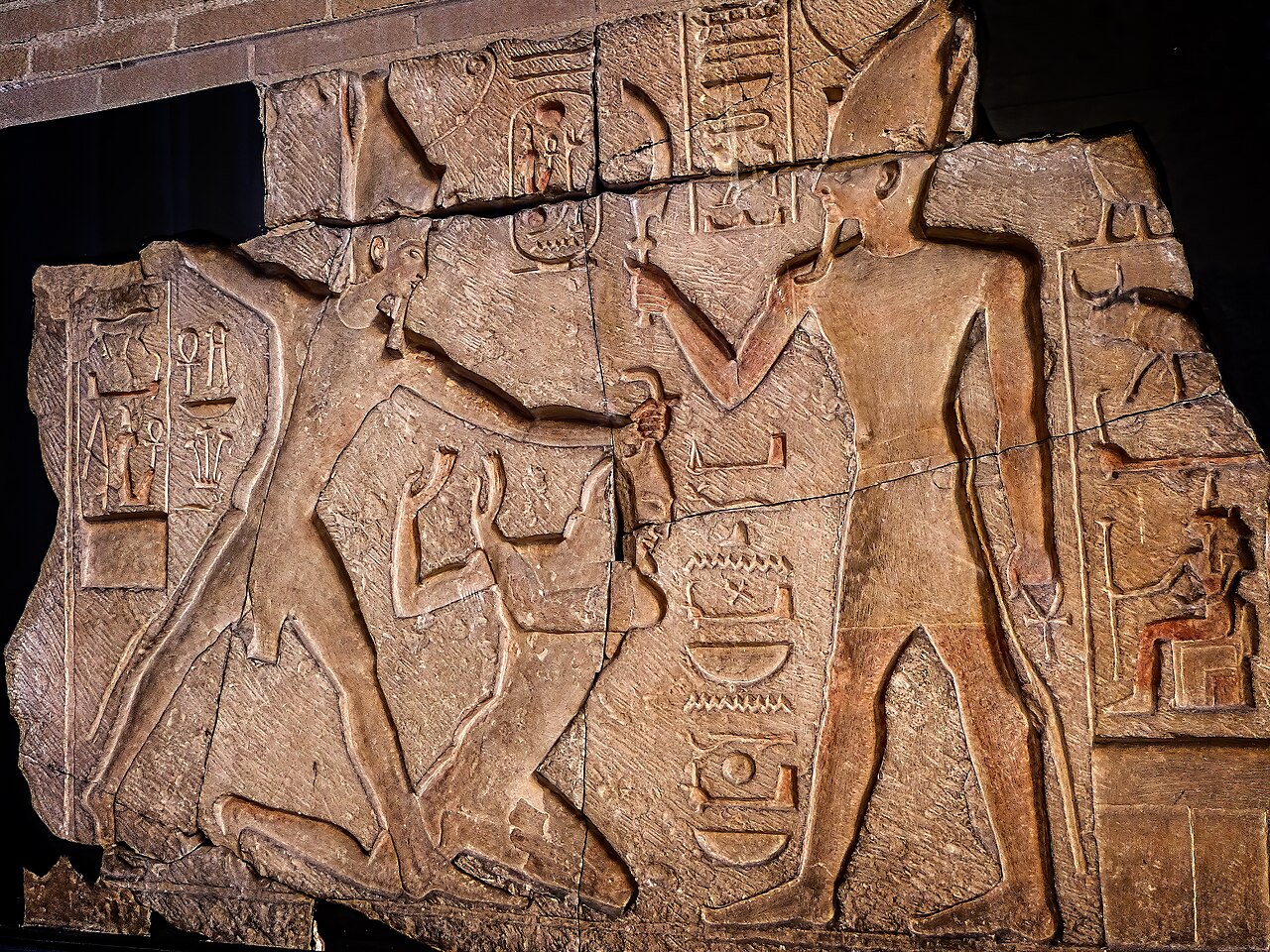
Pithom was one of the store cities built by the Israelites during their enslavement in Egypt, along with Rameses.
Pithom was one of the store cities built by the Israelites during their time of slavery in Egypt (Exod. 1:11). The Egyptians appointed taskmasters over the Israelites to oppress them with forced labor, and they built Pithom and Rameses as store cities for Pharaoh. The construction of these cities was part of the Egyptians' plan to subdue the growing Israelite population and prevent them from joining forces with Egypt's enemies in case of war (Exod. 1:9-10). The exact location of Pithom is uncertain, but it is believed to have been situated in the eastern Nile Delta region, possibly near the modern-day city of Tell el-Maskhuta. The name "Pithom" is thought to be derived from the Egyptian "Per-Atum," meaning "House of Atum," referring to the Egyptian god Atum. The mention of Pithom in the book of Exodus serves to illustrate the harsh conditions and oppression experienced by the Israelites in Egypt, setting the stage for God's miraculous deliverance of His people.
Egyptian, Pa-Tum, “house of Tum,” the sun-god, one of the “treasure” cities built for Pharaoh Rameses II. by the Israelites (Ex. 1:11). It was probably the Patumos of the Greek historian Herodotus. It has now been satisfactorily identified with Tell-el-Maskhuta, about 12 miles west of Ismailia, and 20 east of Tel-el-Kebir, on the southern bank of the present Suez Canal. Here have recently (1883) been discovered the ruins of supposed grain-chambers, and other evidences to show that this was a great “store city.” Its immense ruin-heaps show that it was built of bricks, and partly also of bricks without straw. Succoth (Ex. 12:37) is supposed by some to be the secular name of this city, Pithom being its sacred name. This was the first halting-place of the Israelites in their exodus. It has been argued (Dr. Lansing) that these “store” cities “were residence cities, royal dwellings, such as the Pharaohs of old, the Kings of Israel, and our modern Khedives have ever loved to build, thus giving employment to the superabundant muscle of their enslaved peoples, and making a name for themselves.”
Sources: OpenBible.info Bible Geocoding Data (CC BY 4.0, a3870fe) · STEPBible TIPNR (CC BY 4.0, Pithom@Exo.1.11) · Theographic Bible Metadata (CC BY-SA 4.0, pithom_953)