Rome Summary
STEPBible TIPNR
Rome was the capital of the Roman Empire, where Paul was imprisoned and wrote several epistles (Act.28.16; Rom. 1:7).
Capital city of the Roman Empire
Loading book references…
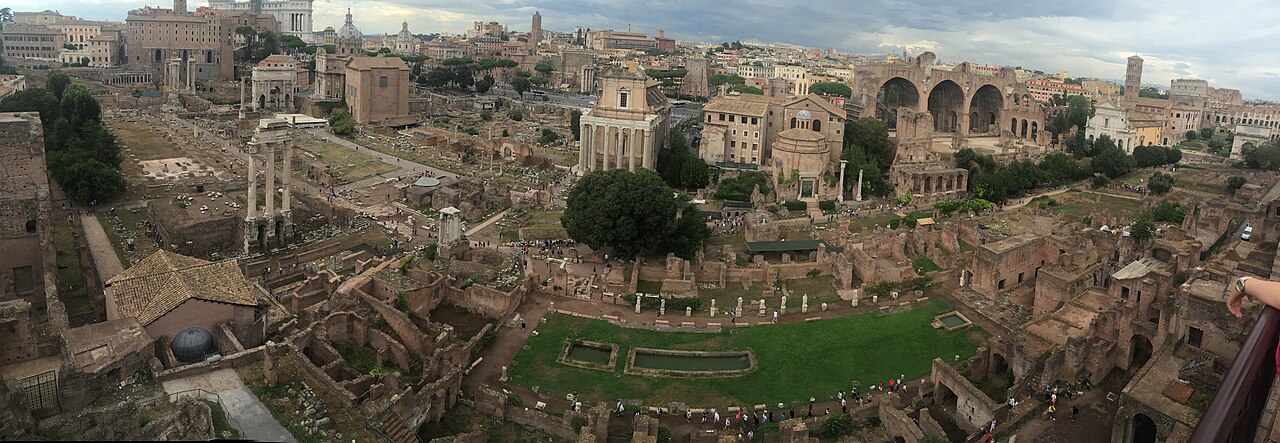
Rome was the capital of the Roman Empire, where Paul was imprisoned and wrote several epistles (Act.28.16; Rom. 1:7).
Rome, the capital city of the Roman Empire, plays a significant role in the New Testament. It was the seat of power for the vast empire that ruled over much of the known world during the time of Jesus and the early church. Rome is mentioned in various contexts throughout the book of Acts and the epistles. Paul, as a Roman citizen, appealed to Caesar and was brought to Rome to stand trial (Act.25.11-12; 28:16). He spent at least two years under house arrest in Rome, during which time he wrote several epistles (Act.28.30-31; Eph. 6:20; Phil. 1:13; Col. 4:18; Philem. 1:1). Paul also expressed his desire to visit the church in Rome (Act.19.21; Rom. 1:10-15; 15:23-24). The church in Rome, though not founded by Paul, was well-established and included both Jewish and Gentile believers (Act.28.17-28; Rom. 1:7; 16:3-16). Rome was also the place where Emperor Claudius had expelled the Jews, including Aquila and Priscilla, leading them to settle in Corinth (Act.18.2). Tradition holds that both Paul and Peter were martyred in Rome during the reign of Emperor Nero. The city of Rome, with its political and cultural significance, served as a strategic center for the spread of the gospel and the growth of the early church.
The most celebrated city in the world at the time of Christ. It is said to have been founded B.C. 753. When the New Testament was written, Rome was enriched and adorned with the spoils of the world, and contained a population estimated at 1,200,000, of which the half were slaves, and including representatives of nearly every nation then known. It was distinguished for its wealth and luxury and profligacy. The empire of which it was the capital had then reached its greatest prosperity.
On the day of Pentecost there were in Jerusalem “strangers from Rome,” who doubtless carried with them back to Rome tidings of that great day, and were instrumental in founding the church there. Paul was brought to this city a prisoner, where he remained for two years (Acts 28:30, 31) “in his own hired house.” While here, Paul wrote his epistles to the Philippians, to the Ephesians, to the Colossians, to Philemon, and probably also to the Hebrews. He had during these years for companions Luke and Aristarchus (Acts 27:2), Timothy (Phil. 1:1; Col. 1:1), Tychicus (Eph. 6: 21), Epaphroditus (Phil. 4:18), and John Mark (Col. 4:10).
Beneath this city are extensive galleries, called “catacombs,” which were used from about the time of the apostles (one of the inscriptions found in them bears the date A.D. 71) for some three hundred years as places of refuge in the time of persecution, and also of worship and burial. About four thousand inscriptions have been found in the catacombs. These give an interesting insight into the history of the church at Rome down to the time of Constantine.
Sources: OpenBible.info Bible Geocoding Data (CC BY 4.0, afc8e7a) · STEPBible TIPNR (CC BY 4.0, Rome@Jhn.11.48-Phm) · Theographic Bible Metadata (CC BY-SA 4.0, rome_1013)