Samaria Summary
STEPBible TIPNR
Samaria was the capital city of the northern kingdom of Israel, and its inhabitants were known as Samaritans (1Ki. 16:24; 2Ki. 17:24; Jhn. 4:9; Act.8.5).
Capital city of the northern kingdom of Israel; Samaritan inhabitants
Loading book references…
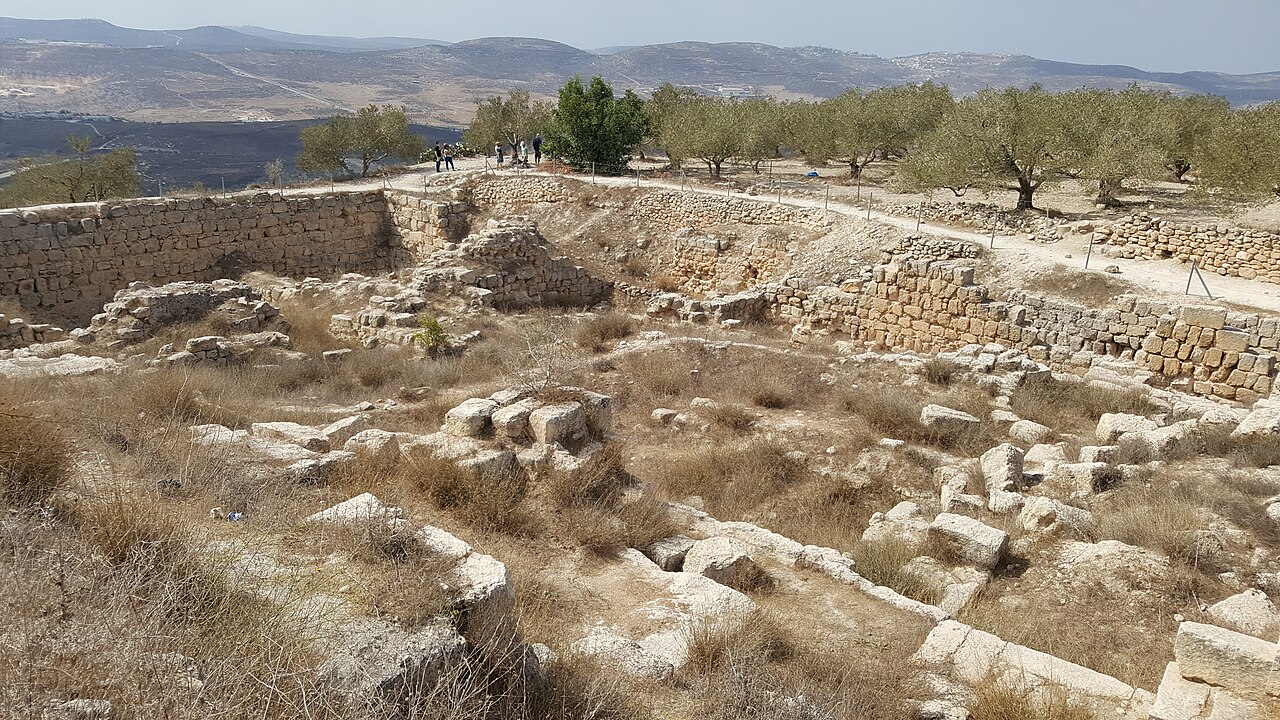
Samaria was the capital city of the northern kingdom of Israel, and its inhabitants were known as Samaritans (1Ki. 16:24; 2Ki. 17:24; Jhn. 4:9; Act.8.5).
Samaria, the capital city of the northern kingdom of Israel, was built by King Omri around 880 BC (1Ki. 16:24). The city served as the royal residence and the center of political power for the northern kingdom until its fall to the Assyrians in 722 BC (2Ki. 17:5-6). After the Assyrian conquest, the region of Samaria was repopulated with people from various parts of the Assyrian Empire (2Ki. 17:24), who intermarried with the remaining Israelites and became known as Samaritans.
The Samaritans developed their own religious practices, which combined elements of Israelite tradition with foreign customs (2Ki. 17:26-28). They worshipped at Mount Gerizim instead of Jerusalem (Jhn. 4:20) and accepted only the first five books of the Bible as authoritative.
In the New Testament, Jesus encountered a Samaritan woman at Jacob's well (Jhn. 4:7-26) and used a Samaritan as an example of compassion in the parable of the Good Samaritan (Luk. 10:33). The early church spread to Samaria through the ministry of Philip (Act.8.5-25), and the apostles Peter and John later visited the region (Act.8.14-17).
Throughout the Bible, Samaria and the Samaritans are often portrayed as being in tension with the Jews due to religious and cultural differences (Jhn. 4:9; 8:48). However, Jesus and the early church demonstrated that the gospel was meant for all people, including the Samaritans.
A watch-mountain or a watch-tower. In the heart of the mountains of Israel, a few miles north-west of Shechem, stands the “hill of Shomeron,” a solitary mountain, a great “mamelon.” It is an oblong hill, with steep but not inaccessible sides, and a long flat top. Omri, the king of Israel, purchased this hill from Shemer its owner for two talents of silver, and built on its broad summit the city to which he gave the name of “Shomeron”, i.e., Samaria, as the new capital of his kingdom instead of Tirzah (1 Kings 16:24). As such it possessed many advantages. Here Omri resided during the last six years of his reign. As the result of an unsuccessful war with Syria, he appears to have been obliged to grant to the Syrians the right to “make streets in Samaria”, i.e., probably permission to the Syrian merchants to carry on their trade in the Israelite capital. This would imply the existence of a considerable Syrian population. “It was the only great city of Palestine created by the sovereign. All the others had been already consecrated by patriarchal tradition or previous possession. But Samaria was the choice of Omri alone. He, indeed, gave to the city which he had built the name of its former owner, but its especial connection with himself as its founder is proved by the designation which it seems Samaria bears in Assyrian inscriptions, Beth-khumri (‘the house or palace of Omri’).”, Stanley.
Samaria was frequently besieged. In the days of Ahab, Benhadad II. came up against it with thirty-two vassal kings, but was defeated with a great slaughter (1 Kings 20:1-21). A second time, next year, he assailed it; but was again utterly routed, and was compelled to surrender to Ahab (20:28-34), whose army, as compared with that of Benhadad, was no more than “two little flocks of kids.”
In the days of Jehoram this Benhadad again laid siege to Samaria, during which the city was reduced to the direst extremities. But just when success seemed to be within their reach, they suddenly broke up the seige, alarmed by a mysterious noise of chariots and horses and a great army, and fled, leaving their camp with all its contents behind them. The famishing inhabitants of the city were soon relieved with the abundance of the spoil of the Syrian camp; and it came to pass, according to the word of Elisha, that “a measure of fine flour was sold for a shekel, and two measures of barely for a shekel, in the gates of Samaria” (2 Kings 7:1-20).
Shalmaneser invaded Israel in the days of Hoshea, and reduced it to vassalage. He laid siege to Samaria (B.C. 723), which held out for three years, and was at length captured by Sargon, who completed the conquest Shalmaneser had begun (2 Kings 18:9-12; 17:3), and removed vast numbers of the tribes into captivity.
This city, after passing through various vicissitudes, was given by the emperor Augustus to Herod the Great, who rebuilt it, and called it Sebaste (Gr. form of Augustus) in honour of the emperor. In the New Testament the only mention of it is in Acts 8:5-14, where it is recorded that Philip went down to the city of Samaria and preached there.
It is now represented by the hamlet of Sebustieh, containing about three hundred inhabitants. The ruins of the ancient town are all scattered over the hill, down the sides of which they have rolled. The shafts of about one hundred of what must have been grand Corinthian columns are still standing, and attract much attention, although nothing definite is known regarding them. (Comp. Micah 1:6.)
In the time of Christ, Western Palestine was divided into three provinces, Judea, Samaria, and Galilee. Samaria occupied the centre of Palestine (John 4:4). It is called in the Talmud the “land of the Cuthim,” and is not regarded as a part of the Holy Land at all.
It may be noticed that the distance between Samaria and Jerusalem, the respective capitals of the two kingdoms, is only 35 miles in a direct line.
Sources: OpenBible.info Bible Geocoding Data (CC BY 4.0, a041bb3) · STEPBible TIPNR (CC BY 4.0, Samaria@1Ki.13.32-Act) · Theographic Bible Metadata (CC BY-SA 4.0, samaria_1022) · Wikidata (CC0 1.0, Q1757438)