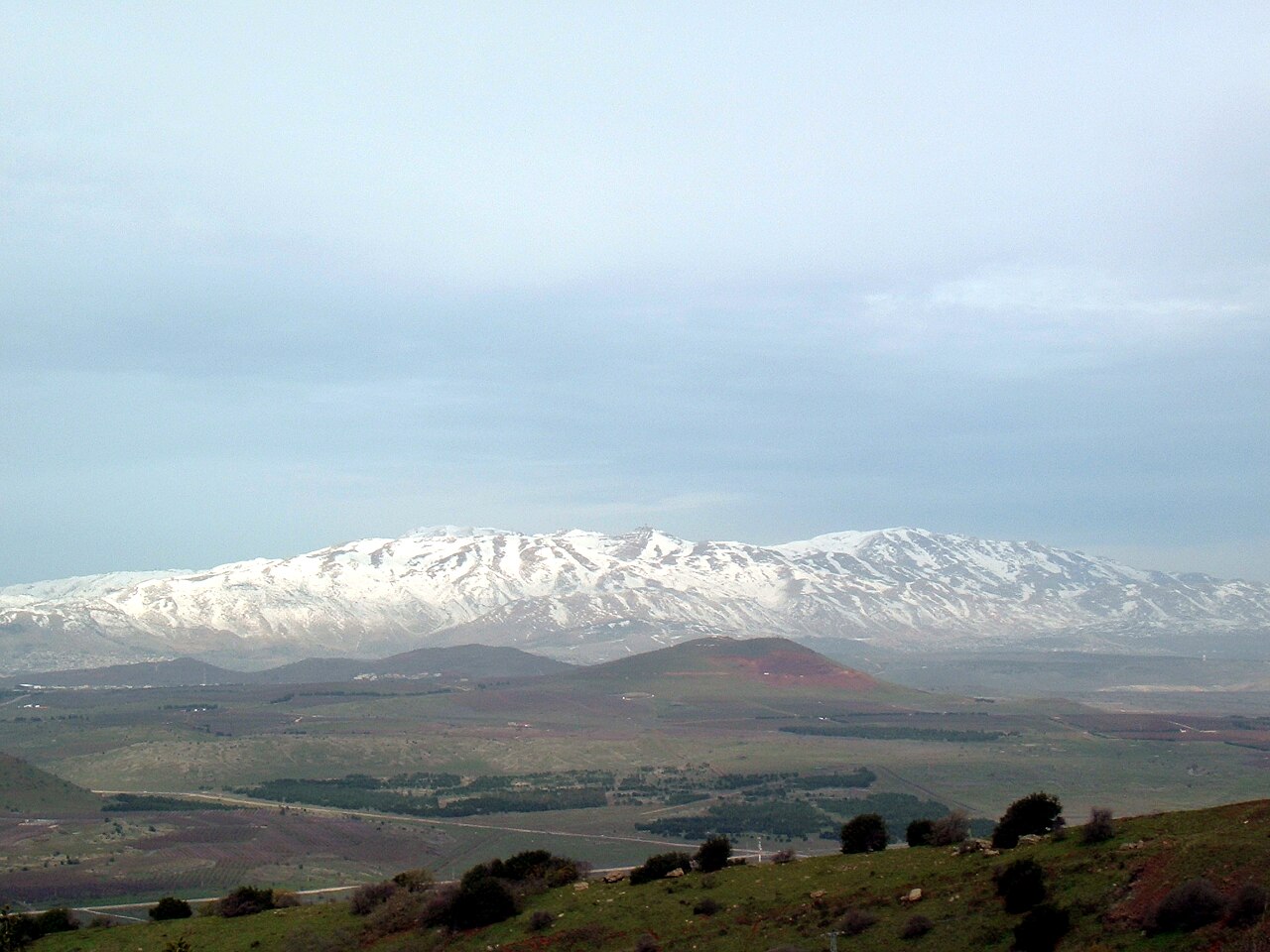
Mount Hermon, located on the northern border of Israel, is the highest peak in the Anti-Lebanon mountain range. It is also referred to by various names, including Baal-hermon, Baal-hamon, Baal-gad, Senir, and Sirion (Deut 3:8-9; 4:48; Josh 11:3,17; 12:1,5,7; 13:5,11; 1Ch.5.23; Psa.29.6; 42:6; 89:12; 133:3; Sng.4.8; 8:11; Jer.18.14; Ezk.27.5). The mountain marked the northern extent of the Promised Land conquered by Joshua (Josh 11:17; 12:1,5). It was also the northern limit of the territory allocated to the half-tribe of Manasseh (Josh 13:11; 1Ch.5.23). The Sidonians called the mountain Sirion, while the Amorites called it Senir (Deut 3:9; Ezk.27.5). Mount Hermon was known for its abundant dew (Psa.133.3) and was a source of refreshment for the surrounding lands (Jer.18.14). The mountain was also associated with the Canaanite god Baal, as evidenced by the names Baal-hermon, Baal-hamon, and Baal-gad (Judg 3:3; Sng.8.11). Its majestic appearance is celebrated in the Psalms (Psa.29.6; 89:12), and it is mentioned as a place of beauty and fertility (Sng.4.8).
Bible dictionary
Easton's Bible Dictionary (1897)
'=Shenir, the name given to Hermon by the Amorites (Deut. 3:9). It means “coat of mail” or “breastplate,” and is equivalent to “Sirion.” Some interpret the word as meaning “the prominent” or “the snowy mountain.” It is properly the name of the central of the three summits of Hermon (q.v.).