Report an inaccuracy

Shechem

Place

City in Canaan, later allotted to Ephraim

Names
  • en Shechem
    part; portion; back early in the morning
  • en Moreh · Also called
    stretching
  • en Sichem,consent · Also called
  • en Sychem · Also called
  • en Shechemites · Also called
  • en Sichem · Also called
  • he שְׁכֶם · H7927G
  • el Συχέμ · G4966
  • bg Сихем
Location
Kind: City
Modern name: Tell Balatah
Certainty: Probable
32.221110, 35.254440 · Show on map

SDA Books

Awaiting permission to publish
Linked through an explicitly cited Bible passage

Loading book references…

Site of (1)
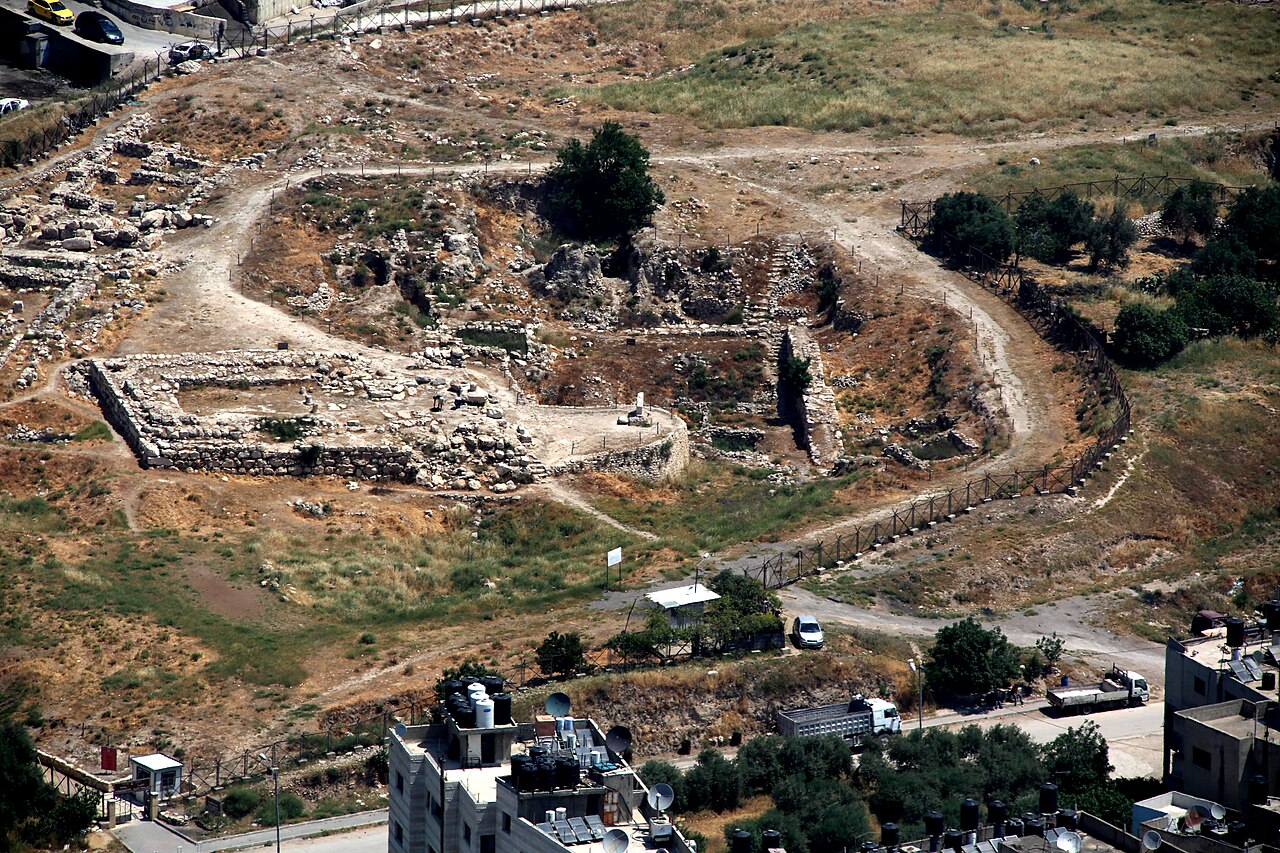
aerial panorama of Tell Balatah
aerial panorama of Tell Balatah · יאיר דב · CC BY-SA 4.0 · Official source
Shechem Article STEPBible TIPNR

Shechem was an important city in central Canaan, located in the hill country between Mount Ebal and Mount Gerizim. It is mentioned numerous times throughout the Bible, often in connection with significant events in Israel's history.

Shechem first appears in the account of Abraham's journey to Canaan, where he built an altar to the Lord (Gen. 12:6-7). Later, Israel (or 'Jacob') settled near Shechem and purchased a piece of land, setting up an altar there (Gen. 33:18-20). However, the city also became the site of violence when Jacob's daughter Dinah was violated by Shechem, the son of Hamor, leading to the massacre of the city's male inhabitants by Jacob's sons Simeon and Levi (Gen. 34).

During the conquest of Canaan, Shechem was allotted to the tribe of Ephraim and designated as a city of refuge (Josh. 20:7; 21:21). Joshua gathered the tribes at Shechem to renew the covenant and set up a stone of remembrance (Josh. 24:1, 25-26). The city later became the site of Abimelech's short-lived kingdom (Judg. 9) and was rebuilt by Jeroboam as the capital of the northern kingdom of Israel (1Ki. 12:25).

Shechem held religious significance, as evidenced by the blessings and curses pronounced from Mount Gerizim and Mount Ebal (Deut. 11:29; 27:12; Josh. 8:33). The city is also mentioned in the Psalms as a symbol of God's dominion over Israel (Ps. 60:6; 108:7).

In the New Testament, Stephen's speech before the Sanhedrin mentions Shechem as the burial place of Jacob and his sons (Act.7.16), although this differs from the Old Testament account of their burial at Hebron (Gen. 49:29-33; 50:13).

Shechem's location at the crossroads of major trade routes contributed to its strategic and economic importance. The city's history, marked by both sacred events and periods of violence, reflects the complex dynamics of Israelite settlement and inter-tribal relations in Canaan.

Shechem 3 Dictionary Easton's Bible Dictionary (1897)

A city in Samaria (Gen. 33:18), called also Sichem (12:6), Sychem (Acts 7:16). It stood in the narrow sheltered valley between Ebal on the north and Gerizim on the south, these mountains at their base being only some 500 yards apart. Here Abraham pitched his tent and built his first altar in the Promised Land, and received the first divine promise (Gen. 12:6, 7). Here also Jacob “bought a parcel of a field at the hands of the children of Hamor” after his return from Mesopotamia, and settled with his household, which he purged from idolatry by burying the teraphim of his followers under an oak tree, which was afterwards called “the oak of the sorcerer” (Gen. 33:19; 35:4; Judg. 9:37). Here too, after a while, he dug a well, which bears his name to this day (John 4:5, 39-42). To Shechem Joshua gathered all Israel “before God,” and delivered to them his second parting address (Josh. 24:1-15). He “made a covenant with the people that day” at the very place where, on first entering the land, they had responded to the law from Ebal and Gerizim (Josh. 24:25), the terms of which were recorded “in the book of the law of God”, i.e., in the roll of the law of Moses; and in memory of this solemn transaction a great stone was set up “under an oak” (comp. Gen. 28:18; 31:44-48; Ex. 24:4; Josh. 4:3, 8, 9), possibly the old “oak of Moreh,” as a silent witness of the transaction to all coming time.

Shechem became one of the cities of refuge, the central city of refuge for Western Palestine (Josh. 20:7), and here the bones of Joseph were buried (24:32). Rehoboam was appointed king in Shechem (1 Kings 12:1, 19), but Jeroboam afterwards took up his residence here. This city is mentioned in connection with our Lord’s conversation with the woman of Samaria (John 4:5); and thus, remaining as it does to the present day, it is one of the oldest cities of the world. It is the modern Nablus, a contraction for Neapolis, the name given to it by Vespasian. It lies about a mile and a half up the valley on its southern slope, and on the north of Gerizim, which rises about 1,100 feet above it, and is about 34 miles north of Jerusalem. It contains about 10,000 inhabitants, of whom about 160 are Samaritans and 100 Jews, the rest being Christians and Mohammedans.

The site of Shechem is said to be of unrivalled beauty. Stanley says it is “the most beautiful, perhaps the only very beautiful, spot in Central Palestine.”

Gaza, near Shechem, only mentioned 1 Chr. 7:28, has entirely disappeared. It was destroyed at the time of the Conquest, and its place was taken by Shechem.
Sources: OpenBible.info Bible Geocoding Data (CC BY 4.0, adf74d4) · STEPBible TIPNR (CC BY 4.0, Shechem@Gen.12.6-Act) · Theographic Bible Metadata (CC BY-SA 4.0, shechem_1069)

Report an inaccuracy

Describe the inaccuracy and, if possible, provide the correct text or a source. The page address will be included automatically.

Page: /en/places/shechem

Up to 5000 characters. You do not need to log in.

Contact details (optional)

Leave only the details you wish to share. They are sent to the administrator with your report and are not displayed publicly.

Make a suggestion

Describe your idea for improving the site. The page address will be included automatically.

Page: /en/places/shechem

Up to 5000 characters. You do not need to log in.

Contact details (optional)

Leave only the details you wish to share. They are sent to the administrator with your report and are not displayed publicly.