Shiloh was an important Israelite sanctuary and assembly point during the period of the judges, where the tabernacle was set up and the land was allotted to the tribes (Josh. 18:1, 8-10; 1Sam. 1:3, 9, 24; 2:14; 3:21; Jer. 7:12, 14).
Shiloh
PlaceIsraelite sanctuary and assembly point during the judges' period
-
en
Shiloh
sent
- en Shilonite · Also called
- he שִׁלוֹ · H7887
- he שִׁילֹנִי · H7888
- bg Сило
SDA Books
Awaiting permission to publishLoading book references…
Shiloh was an important religious center and assembly point for the Israelites during the period of the judges. After the conquest of Canaan, the tabernacle was set up at Shiloh, and it served as the central place of worship for the nation (Josh. 18:1; 19:51). It was at Shiloh that the land was allotted to the tribes of Israel (Josh. 18:8-10; 21:2) and where the Reubenites, Gadites, and half-tribe of Manasseh were dismissed to their territories east of the Jordan (Josh. 22:9, 12).
During the time of the judges, Shiloh continued to be a significant religious site. The tabernacle remained at Shiloh throughout this period (Judg. 18:31), and annual festivals were held there (Judg. 21:19, 21). It was at Shiloh that Hannah prayed for a son and dedicated Samuel to the Lord's service (1Sam. 1:3, 9, 24). The priest Eli and his sons ministered at the tabernacle in Shiloh (1Sam. 2:14; 3:21; 4:3, 4, 12), and the Ark of the Covenant was kept there until it was captured by the Philistines (1Sam. 4:3, 4).
Shiloh's importance declined after the Ark was taken and the tabernacle was destroyed (Ps. 78:60; Jer. 7:12, 14; 26:6, 9). The prophet Ahijah, who prophesied the division of the kingdom, was from Shiloh (1Ki. 11:29; 14:2, 4). The town was eventually destroyed, and its ruins served as a warning against disobedience to God (Jer. 7:12, 14; 26:6, 9).
Shiloh's significance in the biblical narrative lies in its role as a religious and political center during the formative years of Israel's history. Its central location in the hill country of Ephraim made it a convenient meeting place for the tribes and a symbol of their unity under the worship of the Lord.
Generally understood as denoting the Messiah, “the peaceful one,” as the word signifies (Gen. 49:10). The Vulgate Version translates the word, “he who is to be sent,” in allusion to the Messiah; the Revised Version, margin, “till he come to Shiloh;” and the LXX., “until that which is his shall come to Shiloh.” It is most simple and natural to render the expression, as in the Authorized Version, “till Shiloh come,” interpreting it as a proper name (comp. Isa. 9:6).
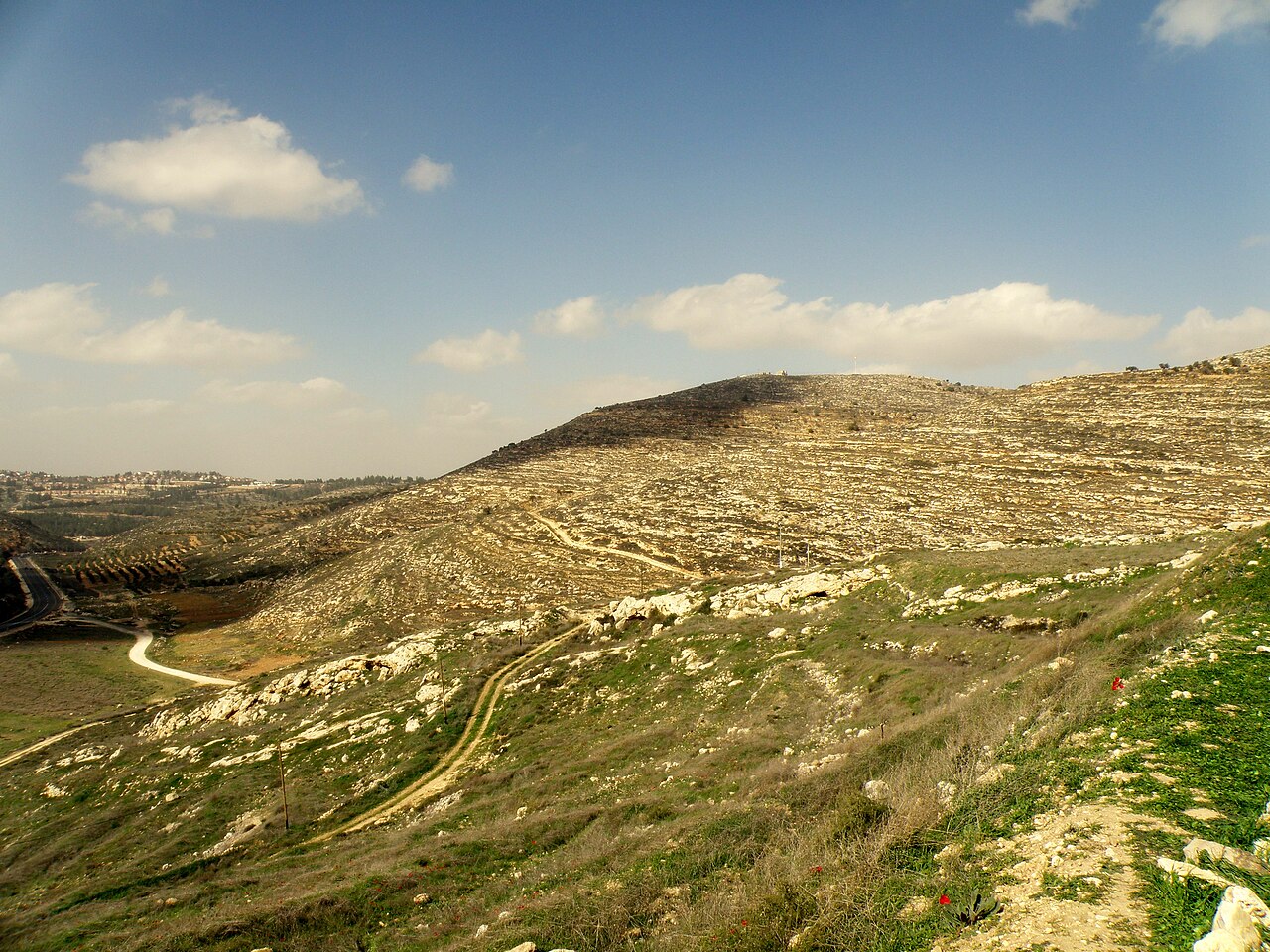
Shiloh, a place of rest, a city of Ephraim, “on the north side of Bethel,” from which it is distant 10 miles (Judg. 21:19); the modern Seilun (the Arabic for Shiloh), a “mass of shapeless ruins.” Here the tabernacle was set up after the Conquest (Josh. 18:1-10), where it remained during all the period of the judges till the ark fell into the hands of the Philistines. “No spot in Central Palestine could be more secluded than this early sanctuary, nothing more featureless than the landscape around; so featureless, indeed, the landscape and so secluded the spot that from the time of St. Jerome till its re-discovery by Dr. Robinson in 1838 the very site was forgotten and unknown.” It is referred to by Jeremiah (7:12, 14; 26:4-9) five hundred years after its destruction.
Sources: OpenBible.info Bible Geocoding Data (CC BY 4.0, aa4680a) · STEPBible TIPNR (CC BY 4.0, Shiloh@Jos.18.1-Jer) · Theographic Bible Metadata (CC BY-SA 4.0, shiloh_1081) · Wikidata (CC0 1.0, Q985542)