Shelah, also called Shiloah, the King's Pool, or Siloam, was a pool in Jerusalem fed by the Gihon Spring via Hezekiah's Tunnel (Neh. 3:15; Isa. 8:6; Neh. 2:14; Luke 13:4; Jhn.9.7, 11).
Siloam
PlacePool and tunnel in Jerusalem
- en Siloam
- en Shelah
- en Siloam · Also called
- en Siloah · Also called
- en Shiloah · Also called
- en King's Pool · Also called
- en King's/ Pool · Also called
- en King’s Pool · Also called
- he שֶׁ֫לַח · H7975A
- he שִׁלֹחַ · H7975B
- he מֶ֫לֶךְ+H1295G«H1295=בְּרֵכָה · H4428J
- el Σιλωάμ · G4611
- bg Силоам
SDA Books
Awaiting permission to publishLoading book references…
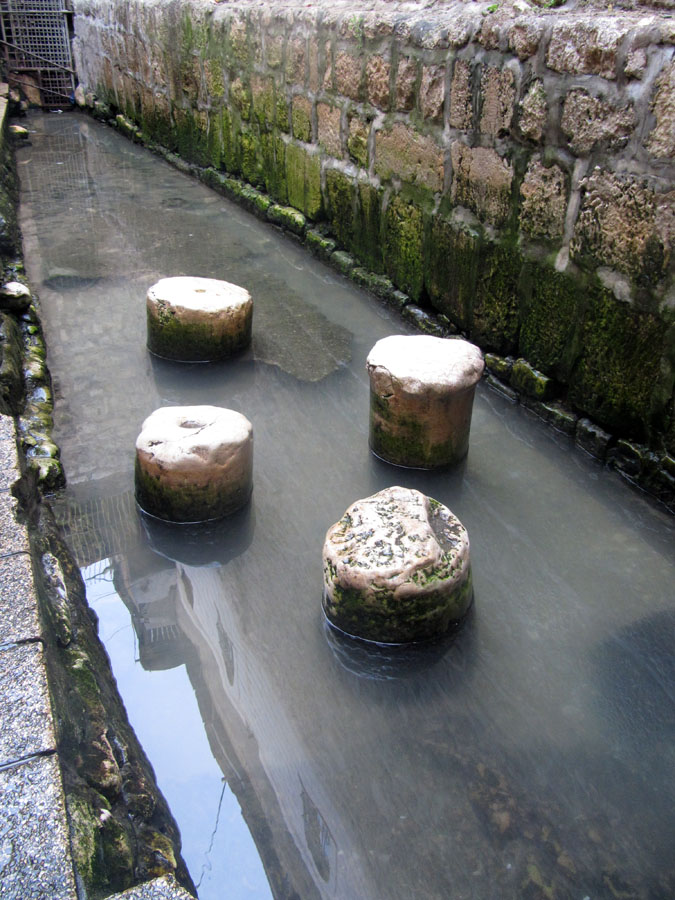
Shelah, also known as Shiloah, the King's Pool, or Siloam, was a pool located in the southeastern part of Jerusalem, near the City of David. It was fed by the waters of the Gihon Spring, which were diverted through Hezekiah's Tunnel, a remarkable engineering feat of the 8th century BC (2Chr. 32:30; Isa. 22:11).
The pool is mentioned in various contexts throughout the Bible. In the time of Nehemiah, the wall of Jerusalem was repaired near the Pool of Shelah (Neh. 3:15), and Nehemiah himself inspected the walls by the King's Pool (Neh. 2:14). The prophet Isaiah used the gently flowing waters of Shiloah as a metaphor for the calm and trust in God, in contrast to the mighty waters of the Euphrates, symbolizing the Assyrian threat (Isa. 8:6).
In the New Testament, Jesus healed a man born blind by sending him to wash in the Pool of Siloam (Jhn.9.7, 11). This miracle not only demonstrated Jesus' power but also served as a spiritual lesson about faith and the true identity of the Messiah. The Gospel of Luke also records an incident where eighteen people were killed when the tower of Siloam fell on them (Luke 13:4), using this event to teach about the need for repentance.
The Pool of Siloam has been identified with the archaeological site known as the Siloam Pool, which was discovered in 2004. Excavations have revealed a large pool from the Second Temple period, consistent with the biblical descriptions and historical accounts of the site.
Sent or sending. Here a notable miracle was wrought by our Lord in giving sight to the blind (John 9:7-11). It has been identified with the Birket Silwan in the lower Tyropoeon valley, to the south-east of the hill of Zion.
The water which flows into this pool intermittingly by a subterranean channel springs from the “Fountain of the Virgin” (q.v.). The length of this channel, which has several windings, is 1,750 feet, though the direct distance is only 1,100 feet. The pool is 53 feet in length from north to south, 18 feet wide, and 19 deep. The water passes from it by a channel cut in the rock into the gardens below.
Many years ago (1880) a youth, while wading up the conduit by which the water enters the pool, accidentally discovered an inscription cut in the rock, on the eastern side, about 19 feet from the pool. This is the oldest extant Hebrew record of the kind. It has with great care been deciphered by scholars, and has been found to be an account of the manner in which the tunnel was constructed. Its whole length is said to be “twelve hundred cubits;” and the inscription further notes that the workmen, like the excavators of the Mont Cenis Tunnel, excavated from both ends, meeting in the middle.
Some have argued that the inscription was cut in the time of Solomon; others, with more probability, refer it to the reign of Hezekiah. A more ancient tunnel was discovered in 1889 some 20 feet below the ground. It is of smaller dimensions, but more direct in its course. It is to this tunnel that Isaiah (8:6) probably refers.
The Siloam inscription above referred to was surreptitiously cut from the wall of the tunnel in 1891 and broken into fragments. These were, however, recovered by the efforts of the British Consul at Jerusalem, and have been restored to their original place.
Sources: OpenBible.info Bible Geocoding Data (CC BY 4.0, a294859) · STEPBible TIPNR (CC BY 4.0, Shelah@Neh.2.14-Jhn) · Theographic Bible Metadata (CC BY-SA 4.0, siloam_1096)