Trachonitis Summary
STEPBible TIPNR
Trachonitis, a rugged, rocky region northeast of the Jordan River, part of Philip's tetrarchy during the time of John the Baptist (Luke 3:1).
A rugged region northeast of the Jordan River
Loading book references…
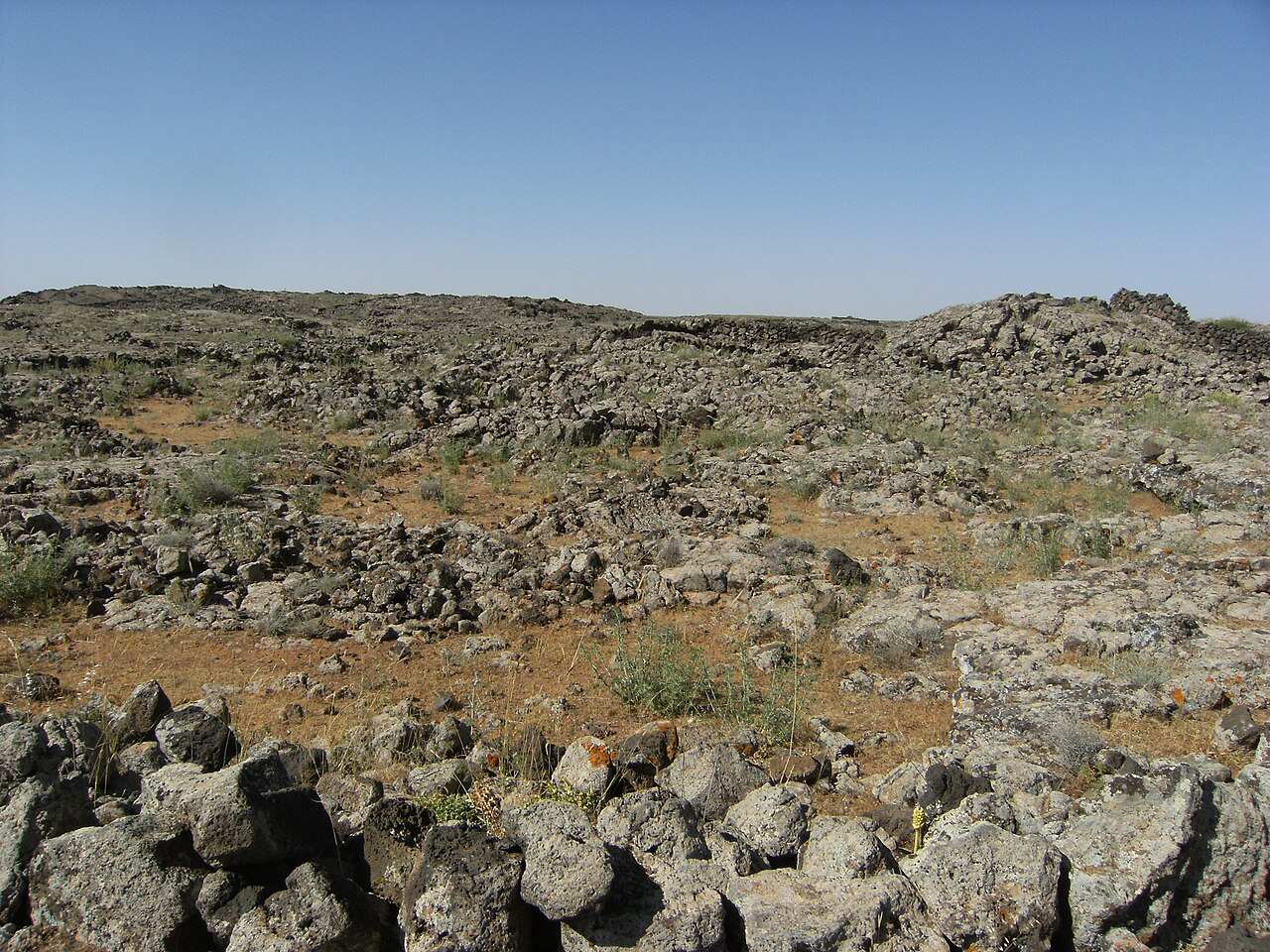
Trachonitis, a rugged, rocky region northeast of the Jordan River, part of Philip's tetrarchy during the time of John the Baptist (Luke 3:1).
Trachonitis was a rugged, rocky region located northeast of the Jordan River, known for its numerous caves and difficult terrain. The name "Trachonitis" is derived from the Greek word "trachon," meaning "a rugged or stony place." In the New Testament, Trachonitis is mentioned only once, in Luke 3:1, where it is described as part of the tetrarchy of Philip, along with Ituraea, during the time of John the Baptist's ministry. The region was known for its caves, which were often used as hideouts by robbers. Herod the Great had previously routed out these robbers to maintain order in the area. After Philip's death, Trachonitis was briefly annexed to the province of Syria before being given to Agrippa I by Caligula. The exact boundaries of Trachonitis are not clearly defined in the Bible, but it is generally associated with the modern-day Leja' region in southern Syria.
A rugged region, corresponds to the Heb. Argob (q.v.), the Greek name of a region on the east of Jordan (Luke 3:1); one of the five Roman provinces into which that district was divided. It was in the tetrarchy of Philip, and is now called the Lejah.
Sources: OpenBible.info Bible Geocoding Data (CC BY 4.0, a85a60a) · STEPBible TIPNR (CC BY 4.0, Trachonitis@Luk.3.1) · Theographic Bible Metadata (CC BY-SA 4.0, trachonitis_1181)