Report an inaccuracy

Troas

Place

A city in Asia Minor, visited by Paul

Names
  • en Troas
    penetrated
  • el Τρωάς · G5174
  • bg Троада
Location
Kind: City
Modern name: Alexandria Troas
Certainty: Probable
39.751350, 26.157650 · Show on map

SDA Books

Awaiting permission to publish
Linked through an explicitly cited Bible passage

Loading book references…

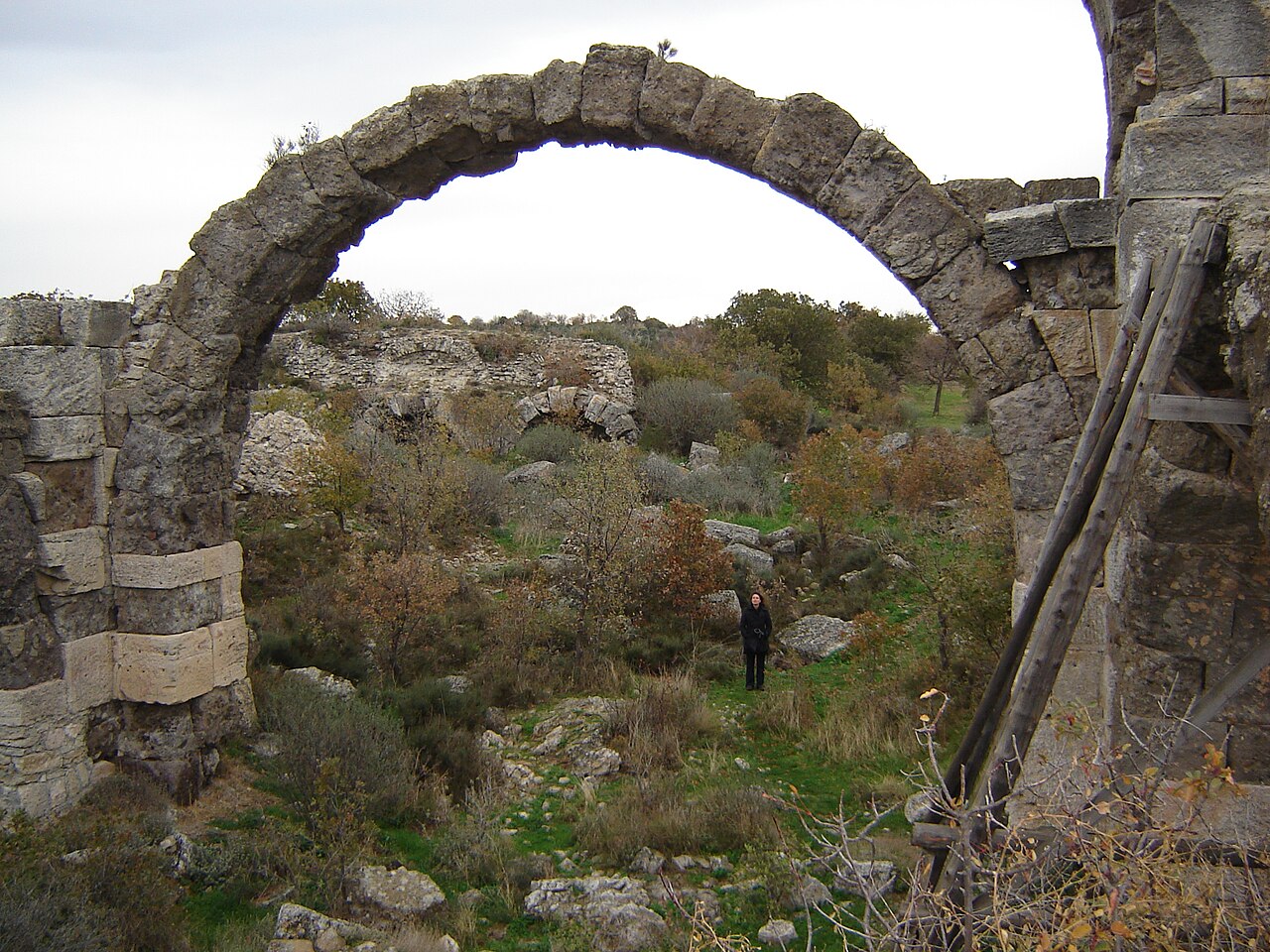
ruins at Alexandria Troas
ruins at Alexandria Troas · Horacio36 · CC BY-SA 3.0 · Official source
Troas Summary STEPBible TIPNR

Troas, a city in Asia Minor, where Paul had a vision of a man urging him to come to Macedonia, and where he later preached and raised Eutychus from the dead (Act.16.8-11; 20:5-12; 2Cor. 2:12; 2Tim. 4:13).

Troas Article STEPBible TIPNR

Troas, also known as Alexandria Troas, was a city located on the western coast of Asia Minor (modern-day Turkey), near the site of ancient Troy. The city was an important seaport and a significant center for trade and commerce. In the New Testament, Troas is mentioned several times in connection with the apostle Paul's missionary journeys. During his second missionary journey, Paul received a vision of a man from Macedonia pleading with him to come and help them while he was in Troas (Act.16.8-10). This vision prompted Paul and his companions to sail from Troas to Macedonia, marking a significant expansion of the gospel into Europe. Later, during his third missionary journey, Paul spent a week in Troas, where he preached late into the night (Act.20.5-12). During this visit, a young man named Eutychus fell asleep and fell from a window, but Paul raised him back to life. Paul also visited Troas on other occasions (2Cor. 2:12; 2Tim. 4:13), indicating the city's importance as a strategic location for his ministry.
Troas Dictionary Easton's Bible Dictionary (1897)

A city on the coast of Mysia, in the north-west of Asia Minor, named after ancient Troy, which was at some little distance from it (about 4 miles) to the north. Here Paul, on his second missionary journey, saw the vision of a “man of Macedonia,” who appeared to him, saying, “Come over, and help us” (Acts 16:8-11). He visited this place also on other occasions, and on one of these visits he left his cloak and some books there (2 Cor. 2:12; 2 Tim. 4:13). The ruins of Troas extend over many miles, the site being now mostly covered with a forest of oak trees. The modern name of the ruins is Eski Stamboul i.e., Old Constantinople.

Sources: OpenBible.info Bible Geocoding Data (CC BY 4.0, a91c509) · STEPBible TIPNR (CC BY 4.0, Troas@Act.16.8-2Ti) · Theographic Bible Metadata (CC BY-SA 4.0, troas_1182) · Wikidata (CC0 1.0, Q1393407)

Report an inaccuracy

Describe the inaccuracy and, if possible, provide the correct text or a source. The page address will be included automatically.

Page: /en/places/troas

Up to 5000 characters. You do not need to log in.

Contact details (optional)

Leave only the details you wish to share. They are sent to the administrator with your report and are not displayed publicly.

Make a suggestion

Describe your idea for improving the site. The page address will be included automatically.

Page: /en/places/troas

Up to 5000 characters. You do not need to log in.

Contact details (optional)

Leave only the details you wish to share. They are sent to the administrator with your report and are not displayed publicly.