Abimelech Summary
STEPBible TIPNR
Abimelech, a son of Gideon, declared himself king of Shechem but was eventually killed when a millstone was dropped on his head during the siege of Thebez.
son of Gideon (Jerubbaal) by a concubine in Shechem (JDG 8:31) who killed his brothers
Lineage: Joash › Gideon › Abimelech
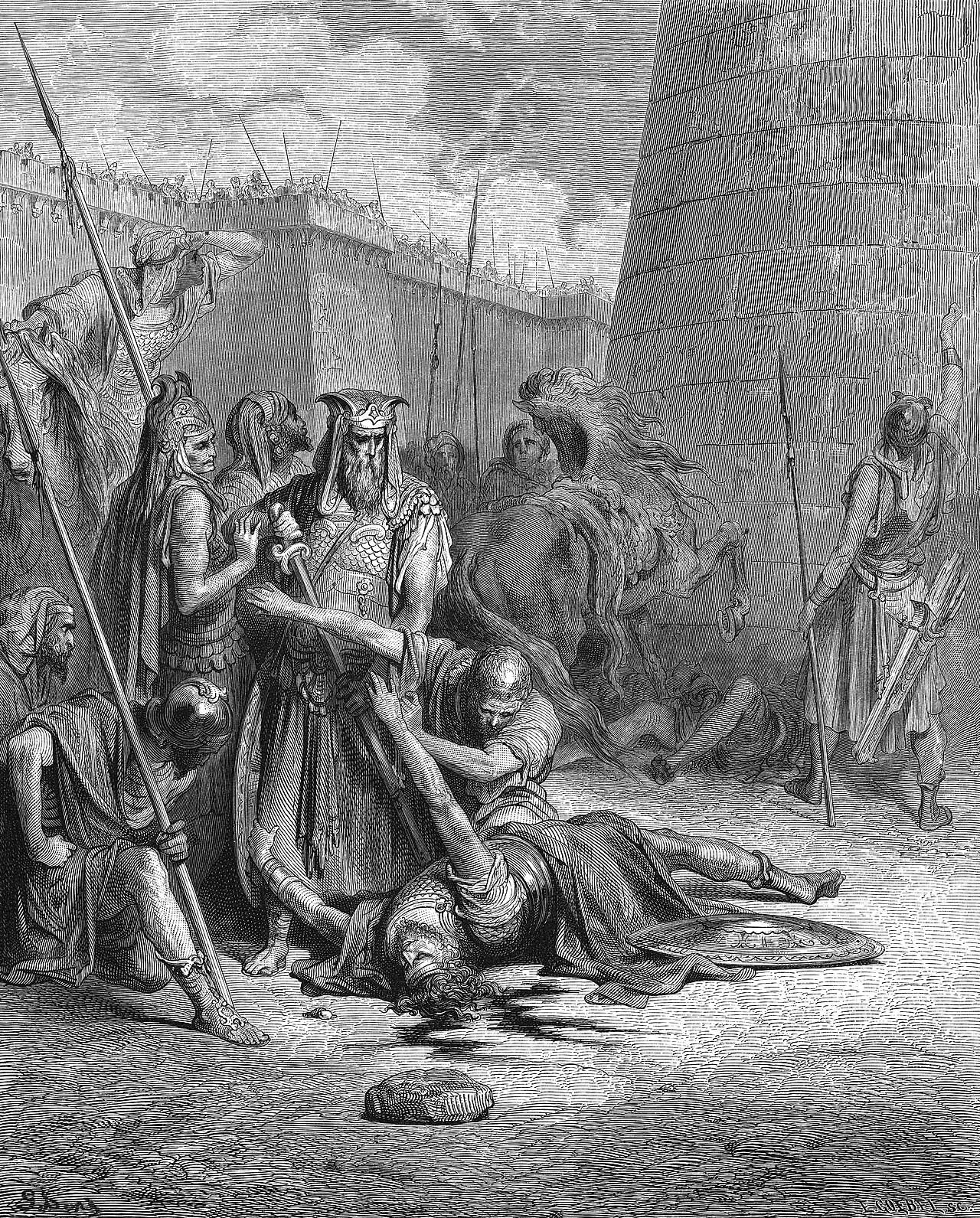
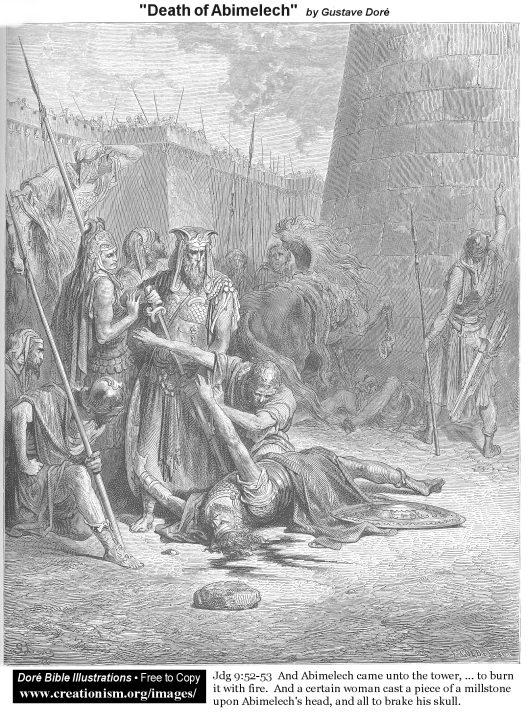
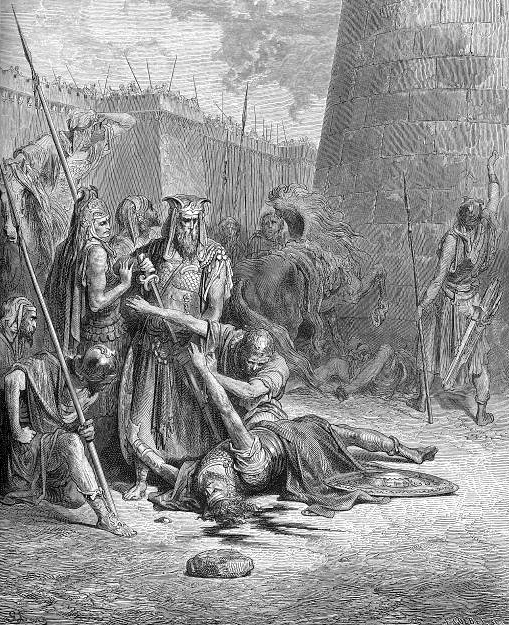
Abimelech, a son of Gideon, declared himself king of Shechem but was eventually killed when a millstone was dropped on his head during the siege of Thebez.
Abimelech was a son of Gideon, the judge of Israel, by his Shechemite concubine (Jdg 8:31). After Gideon's death, Abimelech conspired with his mother's family in Shechem to make himself king. He killed his seventy brothers, with only the youngest, Jotham, escaping (Jdg 9:1-6).
Jotham confronted the people of Shechem with a parable, warning them of the consequences of their actions in supporting Abimelech (Jdg 9:7-21). After three years, tensions arose between Abimelech and the people of Shechem, who eventually rebelled against him. Abimelech defeated the Shechemites and destroyed their city, sowing it with salt (Jdg 9:22-49).
Abimelech then attacked the city of Thebez. During the siege, a woman dropped an upper millstone on his head, severely wounding him. To avoid the disgrace of being killed by a woman, Abimelech ordered his armor-bearer to kill him with a sword (Jdg 9:50-54). His death was seen as God's judgment for his wickedness in killing his brothers (Jdg 9:56-57).
Abimelech's story is a cautionary tale about the dangers of ambition, treachery, and the abuse of power. It also demonstrates the consequences of failing to follow God's leadership and the importance of loyalty and integrity in relationships.
The death of Abimelech by a millstone is later referenced by David when he learns of the death of Uriah the Hittite in battle (2Sa 11:21), highlighting the ignominy associated with Abimelech's demise.
A son of Gideon (Judg. 9:1), who was proclaimed king after the death of his father (Judg. 8:33-9:6). One of his first acts was to murder his brothers, seventy in number, “on one stone,” at Ophrah. Only one named Jotham escaped. He was an unprincipled, ambitious ruler, often engaged in war with his own subjects. When engaged in reducing the town of Thebez, which had revolted, he was struck mortally on his head by a mill-stone, thrown by the hand of a woman from the wall above. Perceiving that the wound was mortal, he desired his armour-bearer to thrust him through with his sword, that it might not be said he had perished by the hand of a woman (Judg. 9:50-57).
Sources: BibleData (CC BY 4.0, Abimelech_2) · STEPBible TIPNR (CC BY 4.0, Abimelech@Jdg.8.31-2Sa) · Theographic Bible Metadata (CC BY-SA 4.0, abimelech_41)