Golgotha Summary
STEPBible TIPNR
Golgotha, also known as the Place of a Skull, was the site outside Jerusalem where Jesus was crucified (Matthew 27:33; Mrk.15.22; Luke 23:33; Jhn.19.17).
The place where Jesus was crucified, meaning "Place of a Skull."
Loading book references…
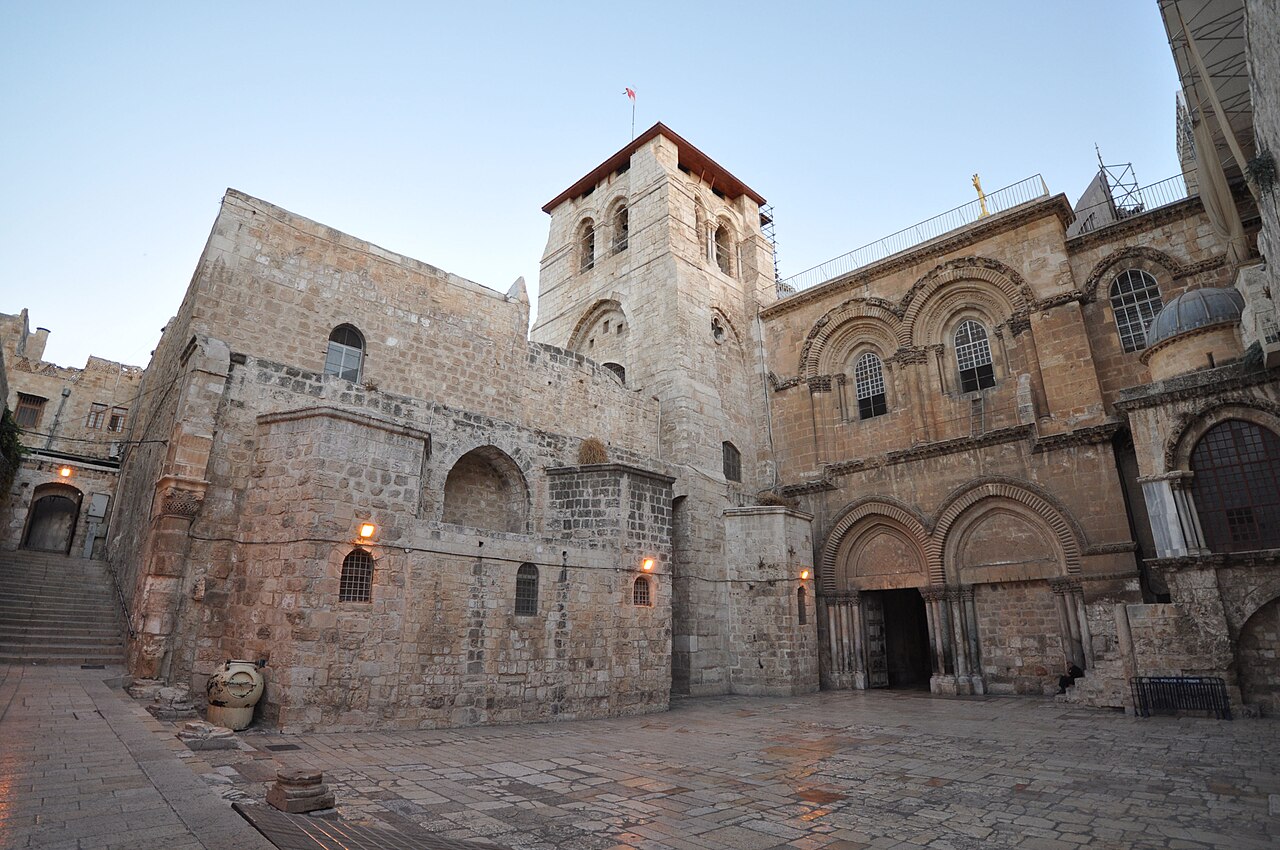
Golgotha, also known as the Place of a Skull, was the site outside Jerusalem where Jesus was crucified (Matthew 27:33; Mrk.15.22; Luke 23:33; Jhn.19.17).
Golgotha, which means "Place of a Skull" in Aramaic, was the location outside the walls of Jerusalem where Jesus Christ was crucified. All four Gospels mention Golgotha as the site of the crucifixion (Matthew 27:33; Mrk.15.22; Luke 23:33; Jhn.19.17). The exact reason for the name is not specified in the Bible, but it may refer to the physical appearance of the site, resembling a skull, or it could be associated with a place of execution. The Gospel accounts describe how Jesus, after being sentenced to death by Pontius Pilate, was led to Golgotha, where he was crucified along with two criminals. The location of Golgotha was outside the city walls, as was customary for executions in ancient times. It is also mentioned that the site was near a garden and a tomb, which belonged to Joseph of Arimathea, where Jesus' body was later laid (Jhn.19.41-42). The crucifixion at Golgotha is the central event in the Christian faith, as it represents Jesus' sacrificial death for the sins of humanity, leading to his resurrection and the offer of salvation to all who believe in him.
The common name of the spot where Jesus was crucified. It is interpreted by the evangelists as meaning “the place of a skull” (Matt. 27:33; Mark 15:22; John 19:17). This name represents in Greek letters the Aramaic word Gulgaltha, which is the Hebrew Gulgoleth (Num. 1:2; 1 Chr. 23:3, 24; 2 Kings 9:35), meaning “a skull.” It is identical with the word Calvary (q.v.). It was a little knoll rounded like a bare skull. It is obvious from the evangelists that it was some well-known spot outside the gate (comp. Heb. 13:12), and near the city (Luke 23:26), containing a “garden” (John 19:41), and on a thoroughfare leading into the country. Hence it is an untenable idea that it is embraced within the present “Church of the Holy Sepulchre.” The hillock above Jeremiah’s Grotto, to the north of the city, is in all probability the true site of Calvary. The skull-like appearance of the rock in the southern precipice of the hillock is very remarkable.
Sources: OpenBible.info Bible Geocoding Data (CC BY 4.0, a631d35) · STEPBible TIPNR (CC BY 4.0, Golgotha@Mat.27.33-Jhn) · Theographic Bible Metadata (CC BY-SA 4.0, golgotha_487)