Moab Summary
STEPBible TIPNR
Moab was an ancient kingdom located east of the Dead Sea in present-day Jordan, often in conflict with Israel.
Ancient kingdom east of the Dead Sea in Jordan
Loading book references…
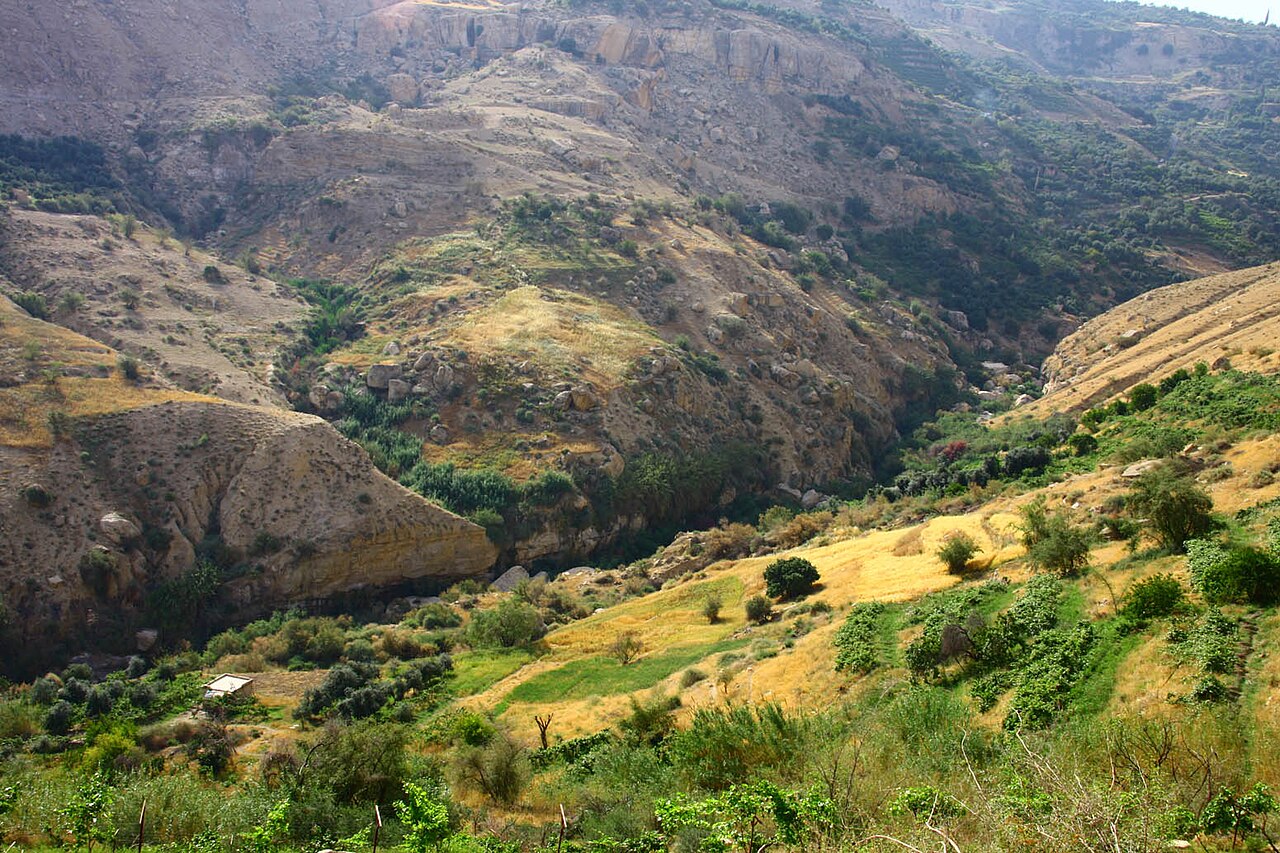
Moab was an ancient kingdom located east of the Dead Sea in present-day Jordan, often in conflict with Israel.
Moab was an ancient kingdom located east of the Dead Sea in the central Transjordan region, in what is now the country of Jordan. The Moabites were a Semitic People from Moab, the son of Lot by his elder daughter (Gen. 19:37).
The Moabites first appear in the biblical record at the time of the Exodus. Balak, the king of Moab, feared the Israelites and hired Balaam to curse them (Num. 22-24). The Moabites worshipped the god Chemosh and induced some Israelites to join in their idolatrous sacrifices (Num. 25:1-2).
Throughout the time of the judges and early monarchy, the Moabites were in frequent conflict with Israel. King Saul fought against them (1Sam. 14:47), and David subjugated them and made them tributaries (2Sam. 8:2,12). After the division of the kingdom, the Moabites regained their independence.
During the reign of King Omri of Israel (c. 884-872 BC), who is mentioned in 1Ki.16.23-28, Moabite lands were reconquered. However, about 40 years later, the Moabite king Mesha rebelled against Israel, as recorded on the famous Moabite Stone discovered in 1868 in Dibon (modern Dhiban, Jordan).
The prophets Isaiah, Jeremiah, Ezekiel, and Amos all prophesied against Moab (Isa. 15-16, Jer. 48, Ezek. 25:8-11, Amo.2.1-2). After the fall of Jerusalem in 586 BC, some Jews took refuge in Moab (Jer. 40:11). Moab disappears as a nation from the historical record sometime during the Persian period.
The land of Moab (Jer. 48:24), called also the “country of Moab” (Ruth 1:2, 6; 2:6), on the east of Jordan and the Dead Sea, and south of the Arnon (Num. 21:13, 26). In a wider sense it included the whole region that had been occupied by the Amorites. It bears the modern name of Kerak.
In the Plains of Moab, opposite Jericho (Num. 22:1; 26:63; Josh. 13:32), the children of Israel had their last encampment before they entered the land of Canaan. It was at that time in the possession of the Amorites (Num. 21:22). “Moses went up from the plains of Moab unto the mountain of Nebo, to the top of Pisgah,” and “died there in the land of Moab, according to the word of the Lord” (Deut. 34:5, 6). “Surely if we had nothing else to interest us in the land of Moab, the fact that it was from the top of Pisgah, its noblest height, this mightiest of the prophets looked out with eye undimmed upon the Promised Land; that it was here on Nebo, its loftiest mountain, that he died his solitary death; that it was here, in the valley over against Beth-peor, he found his mysterious sepulchre, we have enough to enshrine the memory in our hearts.”
Sources: OpenBible.info Bible Geocoding Data (CC BY 4.0, aa0b1d6) · STEPBible TIPNR (CC BY 4.0, Moab@Gen.19.37b-Zep) · Theographic Bible Metadata (CC BY-SA 4.0, moab_815)