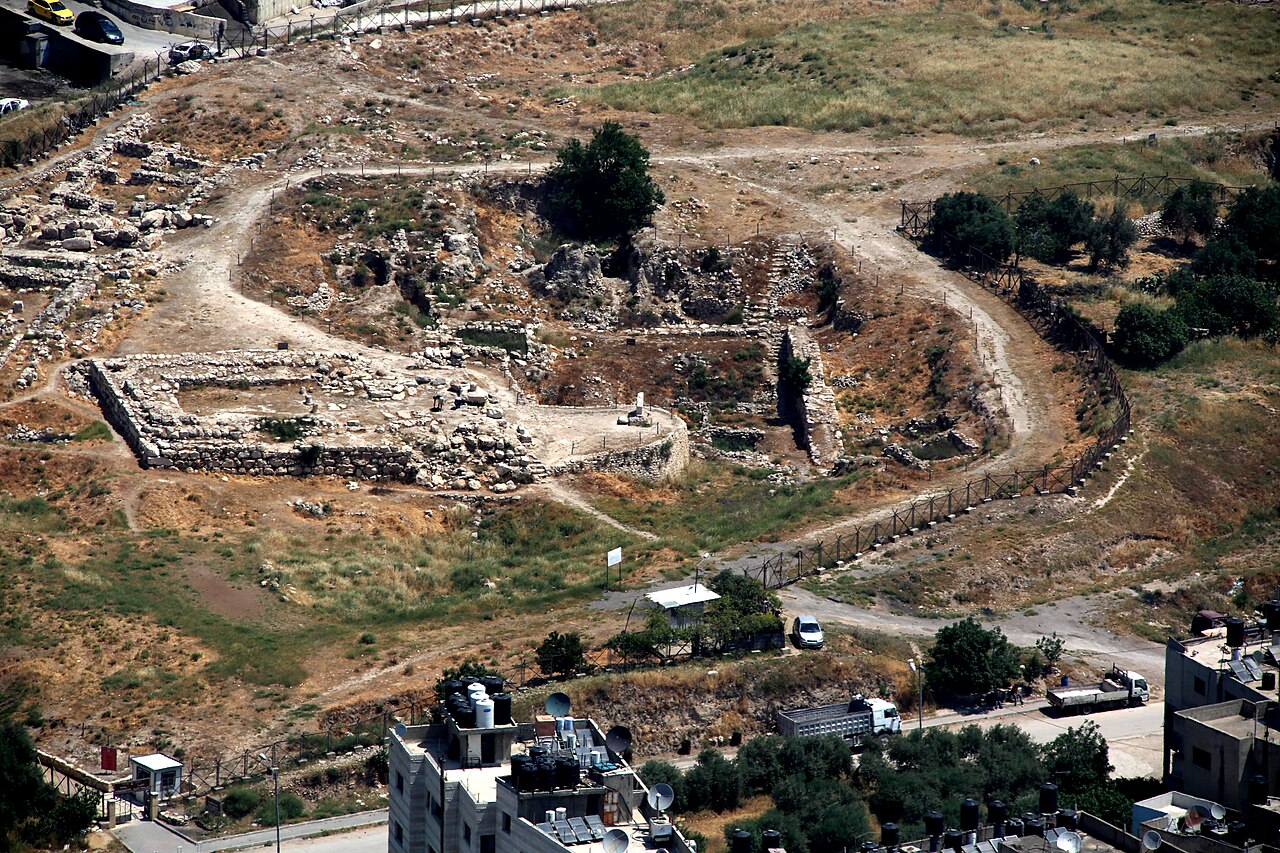
Moreh refers to two locations: a place near Shechem where Abraham built an altar (Gen 12:6) and a hill near Gilgal, associated with the blessing and cursing ceremony (Deut 11:30).
Moreh (Shechem)
PlacePlace near Shechem; also a hill near Gilgal
- en Moreh (Shechem)
- en Moreh
-
en
Moreh
· Also called stretching
-
en
Shechem
· Also called part; portion; back early in the morning
- he מוֹרֶה · H4176G
- bg Море (при Сихем)
SDA Books
Awaiting permission to publishLoading book references…
- Joshua · c. 1443 BC
Moreh is the name of two distinct locations mentioned in the Bible. The first is a place near Shechem, where Abraham built an altar to the Lord after arriving in Canaan (Gen.12.6). This location is described as being near the great tree (or terebinth) of Moreh, which served as a landmark. It was here that God appeared to Abraham and promised to give the land to his descendants. The second location is a hill near Gilgal, mentioned in Deu.11.30 in connection with the blessing and cursing ceremony that the Israelites were to perform upon entering the Promised Land. The hill of Moreh was likely situated opposite Mount Gerizim and Mount Ebal, where the ceremony was to take place. The name "Moreh" may be derived from the Hebrew word meaning "teacher" or "diviner," possibly indicating the presence of a religious site or oracle in ancient times.
A Canaanite probably who inhabited the district south of Shechem, between Mounts Ebal and Gerizim, and gave his name to the “plain” there (Gen. 12:6). Here at this “plain,” or rather (R.V.) “oak,” of Moreh, Abraham built his first altar in the land of Palestine; and here the Lord appeared unto him. He afterwards left this plain and moved southward, and pitched his tent between Bethel on the west and Hai on the east (Gen. 12:7, 8).
Sources: OpenBible.info Bible Geocoding Data (CC BY 4.0, a38ad9f) · STEPBible TIPNR (CC BY 4.0, Moreh@Gen.12.6-Deu) · Theographic Bible Metadata (CC BY-SA 4.0, moreh_817)