Ruth Summary
STEPBible TIPNR
Ruth was a Moabite woman who married Boaz and became an ancestor of King David and Jesus Christ.
the Moabitess (RUT 1:22)
Loading book references…
Absolute years are conditional chronological estimates. A biblical passage may state an age or event, but does not by itself establish a BCE year. Different calendar systems are preserved separately.
-1115 · Calendar interpretation is unverified; the raw value is shown.
ruth_2450 · birthYeartheographic/People.csv · record 2438a234a539192fc0d294155e0736870a9c1b2a42ea33744cb3aaf8c07deb86fef6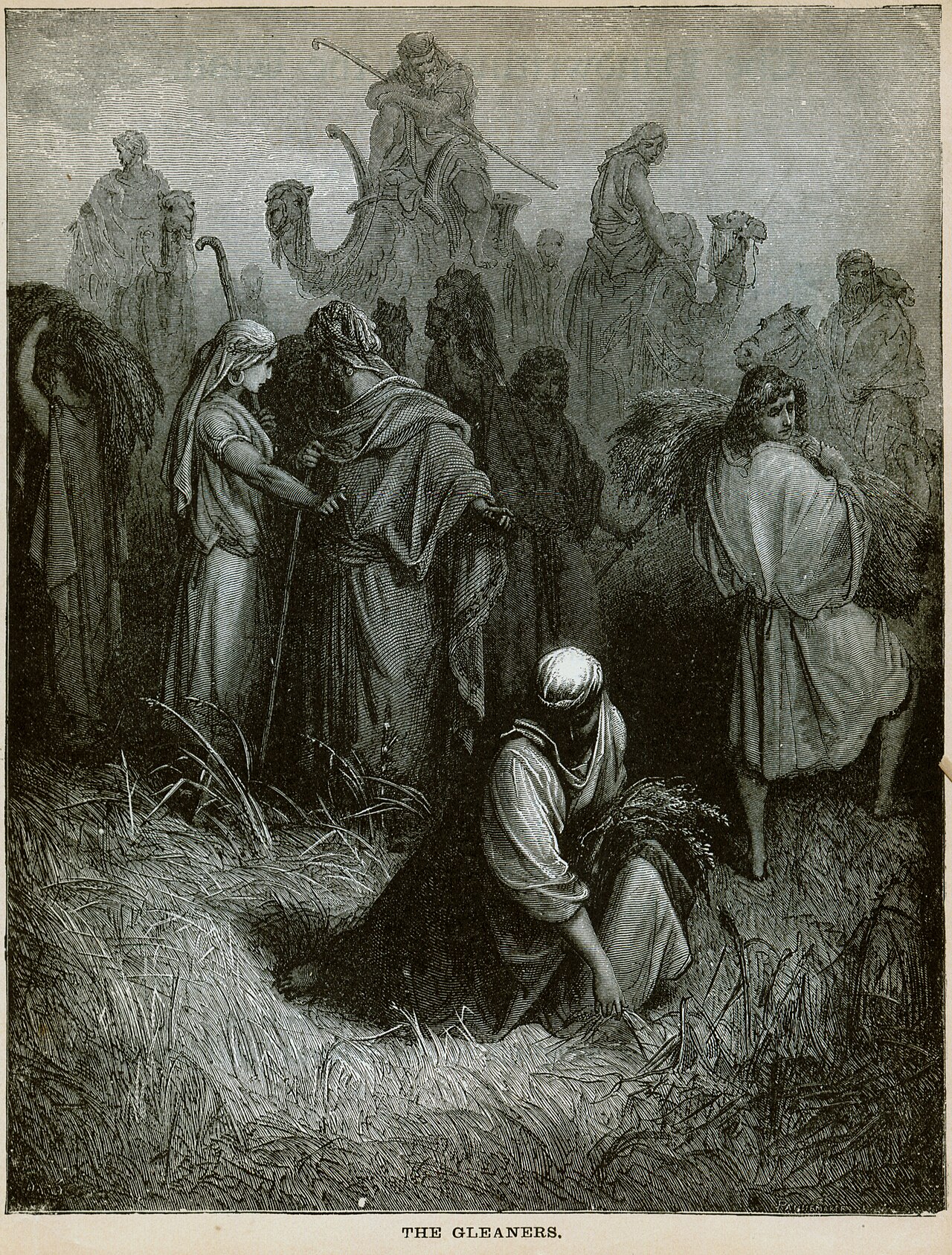
Ruth was a Moabite woman who married Boaz and became an ancestor of King David and Jesus Christ.
Ruth was a Moabite woman who married Mahlon, the son of Elimelech and Naomi, who had moved to Moab from Bethlehem due to a famine (Rut 1:1-4). After the deaths of Elimelech, Mahlon, and Chilion (Naomi's other son), Naomi decided to return to Bethlehem (Rut 1:6-7). Ruth, despite Naomi's urging to return to her own people, insisted on staying with her mother-in-law, demonstrating remarkable loyalty and faith in the God of Israel (Rut 1:14-18). In Bethlehem, Ruth worked in the fields, gleaning grain to support herself and Naomi (Rut 2:2-3). She caught the attention of Boaz, a wealthy relative of Elimelech (Rut 2:8-16). Following Naomi's advice, Ruth approached Boaz at the threshing floor, asking him to fulfill the role of a kinsman-redeemer (Rut 3:1-9). Boaz, impressed by Ruth's character and loyalty, agreed to marry her after a closer relative declined to do so (Rut 4:1-12). Ruth and Boaz had a son named Obed, who became the grandfather of King David (Rut 4:13-17). As an ancestor of David, Ruth is also mentioned in the genealogy of Jesus Christ (Mat 1:5). Her story exemplifies God's grace, providential care, and the inclusion of Gentiles in His plan of redemption.
A friend, a Moabitess, the wife of Mahlon, whose father, Elimelech, had settled in the land of Moab. On the death of Elimelech and Mahlon, Naomi came with Ruth, her daughter-in-law, who refused to leave her, to Bethlehem, the old home from which Elimelech had migrated. There she had a rich relative, Boaz, to whom Ruth was eventually married. She became the mother of Obed, the grandfather of David. Thus Ruth, a Gentile, is among the maternal progenitors of our Lord (Matt. 1:5). The story of “the gleaner Ruth illustrates the friendly relations between the good Boaz and his reapers, the Jewish land system, the method of transferring property from one person to another, the working of the Mosaic law for the relief of distressed and ruined families; but, above all, handing down the unselfishness, the brave love, the unshaken trustfulness of her who, though not of the chosen race, was, like the Canaanitess Tamar (Gen. 38:29; Matt. 1:3) and the Canaanitess Rahab (Matt. 1:5), privileged to become the ancestress of David, and so of ‘great David’s greater Son’” (Ruth 4:18-22).
Sources: BibleData (CC BY 4.0, Ruth_1) · STEPBible TIPNR (CC BY 4.0, Ruth@Rut.1.4-Mat) · Theographic Bible Metadata (CC BY-SA 4.0, ruth_2450)