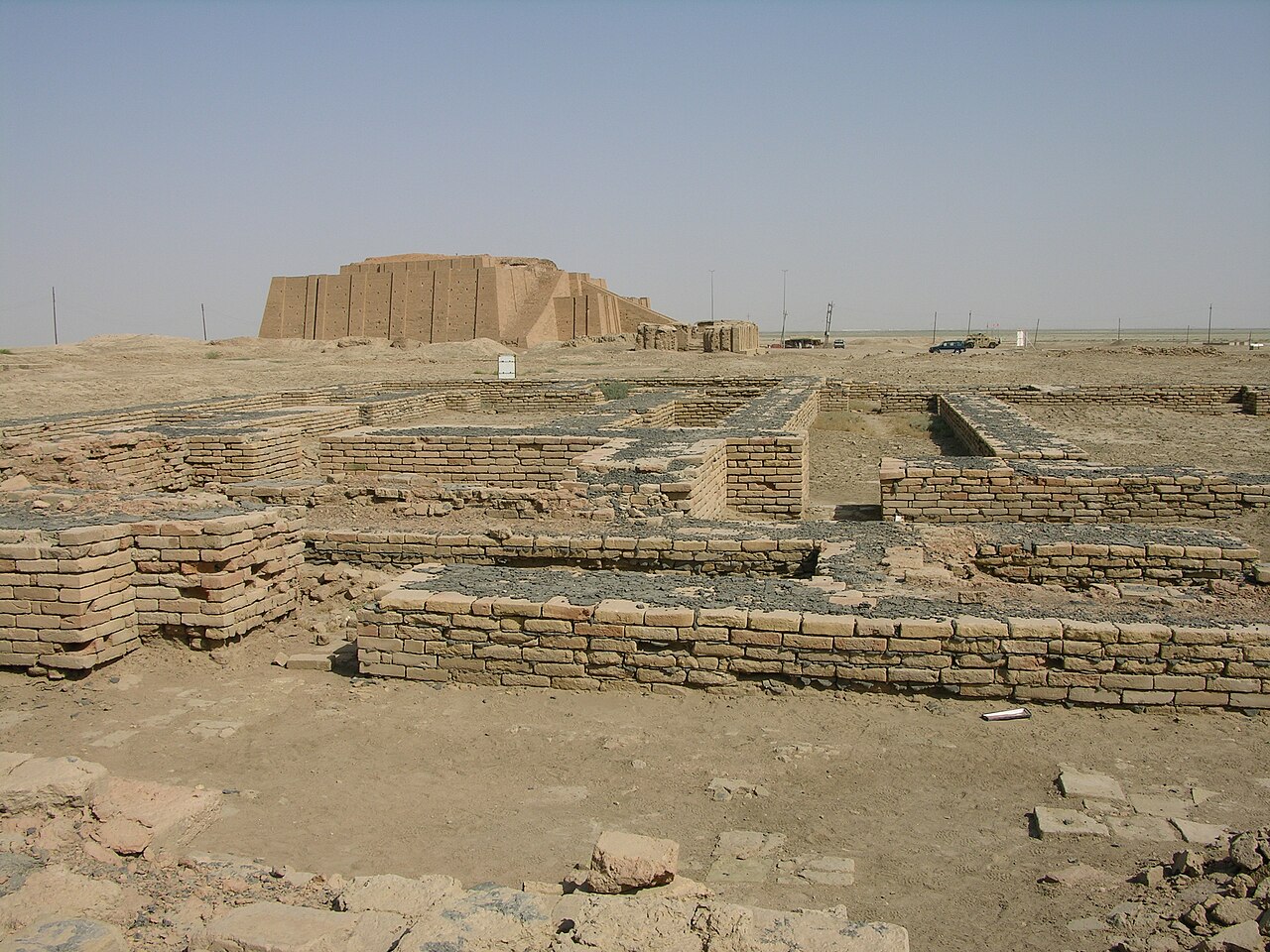
Светлина, или лунният град, град „Халдейски“, родното място на Харан (Бит. 11:28, 31), най-големият град на Сеннаар, или Северна Халдея, и главният търговски център на страната, както и центърът на политическата власт. Той се намирал близо до устието на Ефрат, на западния му бряг, и останките му са могилите (от тухли, споени с битум) на el-Mugheir, т.е. „покритият с битум“, или „градът на битума“, сега на 150 мили от морето и на около 6 мили от Ефрат, малко над мястото, където в него се влива Shat el-Hie, приток от Тигър. Някога той бил морски град, тъй като водите на Персийския залив достигали толкова навътре в сушата. Ур бил пристанището на Вавилония, откъдето се водела търговия с жителите по бреговете на залива и с далечните страни Индия, Етиопия и Египет. Бил изоставен около 500 г. пр. Хр., но подобно на Ерех дълго продължил да бъде голям свещен град некропол, както личи от броя на откритите там гробници.
Най-древният известен ни цар на Ур е Ur-Ba’u (служител на богинята Ba’u), както Хомел разчита името, или Ur-Gur, както го разчитат други. Той живял около 2800 г. пр. Хр. и участвал в изграждането на прочутия храм на лунния бог Син в самия Ур. Представената тук илюстрация показва неговия клинописен надпис, написан на шумерски език и отпечатан върху всяка тухла на храма в Ур. Той гласи: „Ur-Ba’u, цар на Ур, който построи храма на лунния бог“.
„Ур бил посветен на поклонението пред Син, вавилонския лунен бог. Той обаче споделял тази чест с друг град и този град бил Харан, или Harran. Харан се намирал в Месопотамия и получил името си от главния път, който минавал през него от изток на запад. Името е вавилонско и свидетелства, че градът е основан от вавилонски цар. За същото свидетелстват още по-категорично почитта, отдавана в него на вавилонския лунен бог, и древният му храм на Син. Всъщност храмът на лунния бог в Харан може би бил дори по-прочут в асирийския и вавилонския свят от храма на лунния бог в Ур.
„Следователно между Ур и Харан трябва да е имало тясна връзка в древни времена, сведенията за която още не са открити. Възможно е Харан да дължал основаването си на цар на Ур; във всеки случай двата града били свързани чрез поклонението пред едно и също божество — най-тясната и най-трайна обединяваща връзка, съществувала в древния свят. Затова преселването на Тара от Ур в Харан престава да изглежда необичайно. Ако изобщо напуснел Ур, това било най-естественото място, към което да се отправи. То било като преминаване от един храмов двор в друг.
„Такова забележително съвпадение между библейския разказ и свидетелствата на археологическите изследвания не може да бъде плод на случайност. Разказът трябва да е исторически; никой автор от по-късно време, дори да е бил вавилонец, не би могъл да измисли история, която толкова точно съответства на онова, което сега знаем, че е било истина. Също толкова невъзможно е подобна история да е измислена от палестинското предание. Непредубеденият ум неизбежно стига до заключението, че историята за преселването на Тара от Ур в Харан се основава на факт“ (Сейс).
Покажи английския оригинал
Light, or the moon city, a city “of the Chaldees,” the birthplace of Haran (Gen. 11:28, 31), the largest city of Shinar or northern Chaldea, and the principal commercial centre of the country as well as the centre of political power. It stood near the mouth of the Euphrates, on its western bank, and is represented by the mounds (of bricks cemented by bitumen) of el-Mugheir, i.e., “the bitumined,” or “the town of bitumen,” now 150 miles from the sea and some 6 miles from the Euphrates, a little above the point where it receives the Shat el-Hie, an affluent from the Tigris. It was formerly a maritime city, as the waters of the Persian Gulf reached thus far inland. Ur was the port of Babylonia, whence trade was carried on with the dwellers on the gulf, and with the distant countries of India, Ethiopia, and Egypt. It was abandoned about B.C. 500, but long continued, like Erech, to be a great sacred cemetery city, as is evident from the number of tombs found there.
The oldest king of Ur known to us is Ur-Ba’u (servant of the goddess Ba’u), as Hommel reads the name, or Ur-Gur, as others read it. He lived some twenty-eight hundred years B.C., and took part in building the famous temple of the moon-god Sin in Ur itself. The illustration here given represents his cuneiform inscription, written in the Sumerian language, and stamped upon every brick of the temple in Ur. It reads: “Ur-Ba’u, king of Ur, who built the temple of the moon-god.”
“Ur was consecrated to the worship of Sin, the Babylonian moon-god. It shared this honour, however, with another city, and this city was Haran, or Harran. Harran was in Mesopotamia, and took its name from the highroad which led through it from the east to the west. The name is Babylonian, and bears witness to its having been founded by a Babylonian king. The same witness is still more decisively borne by the worship paid in it to the Babylonian moon-god and by its ancient temple of Sin. Indeed, the temple of the moon-god at Harran was perhaps even more famous in the Assyrian and Babylonian world than the temple of the moon-god at Ur.
“Between Ur and Harran there must, consequently, have been a close connection in early times, the record of which has not yet been recovered. It may be that Harran owed its foundation to a king of Ur; at any rate the two cities were bound together by the worship of the same deity, the closest and most enduring bond of union that existed in the ancient world. That Terah should have migrated from Ur to Harran, therefore, ceases to be extraordinary. If he left Ur at all, it was the most natural place to which to go. It was like passing from one court of a temple into another.
“Such a remarkable coincidence between the Biblical narrative and the evidence of archaeological research cannot be the result of chance. The narrative must be historical; no writer of late date, even if he were a Babylonian, could have invented a story so exactly in accordance with what we now know to have been the truth. For a story of the kind to have been the invention of Palestinian tradition is equally impossible. To the unprejudiced mind there is no escape from the conclusion that the history of the migration of Terah from Ur to Harran is founded on fact” (Sayce).