Hagar Summary
STEPBible TIPNR
Hagar, Sarah's Egyptian maidservant, bore Abraham a son named Ishmael and is also mentioned in Paul's allegory in Galatians.
the Egyptian servant of Sarai (GEN 16:1)
Loading book references…
Absolute years are conditional chronological estimates. A biblical passage may state an age or event, but does not by itself establish a BCE year. Different calendar systems are preserved separately.
-1910 · Calendar interpretation is unverified; the raw value is shown.
The raw date makes Hagar about 1 year old at Ishmael’s birth (2 in the current age-derived chronology). Genesis 16 describes a servant given as wife, not an infant; her birth year is unsupported.
GEN 16:1-4GEN 16:16hagar_1348 · birthYeartheographic/People.csv · record 10217f798967091ebc6bc2e4a72d81d2fc143a8d59963d768077ae0d3e2e93fb4551Conditional birth bounds under generation assumptions; not attested parental ages, biological limits or a lifespan.
Below are relatives with a selected birth year, the generations separating them, and the interval allowed by each anchor. Each relative’s page shows available dates and sources. The overall estimate uses the intersection of the allowed intervals.
| Relative / anchor year | Generations | Conditional interval |
|---|---|---|
| Ishmael · 1909 BC Descendant |
1 20–45 years per generation |
c. 1954 BC – 1929 BC |
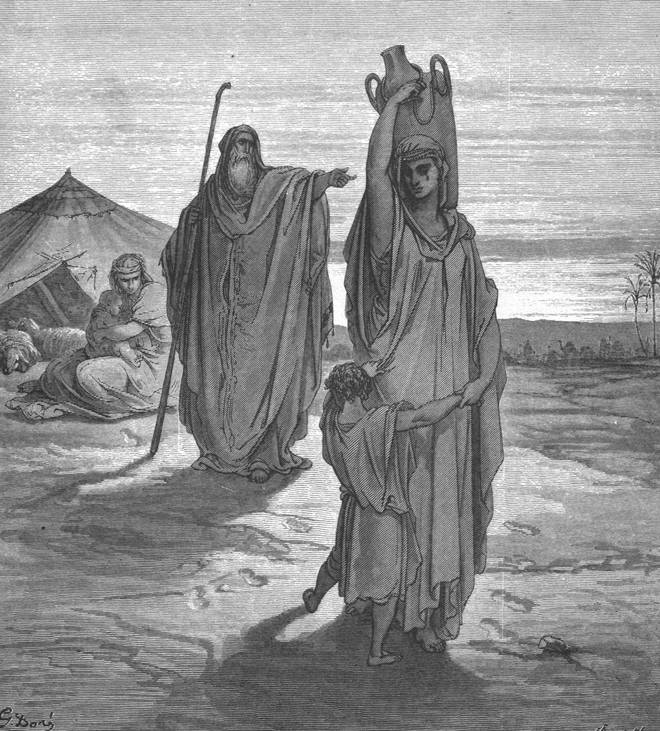
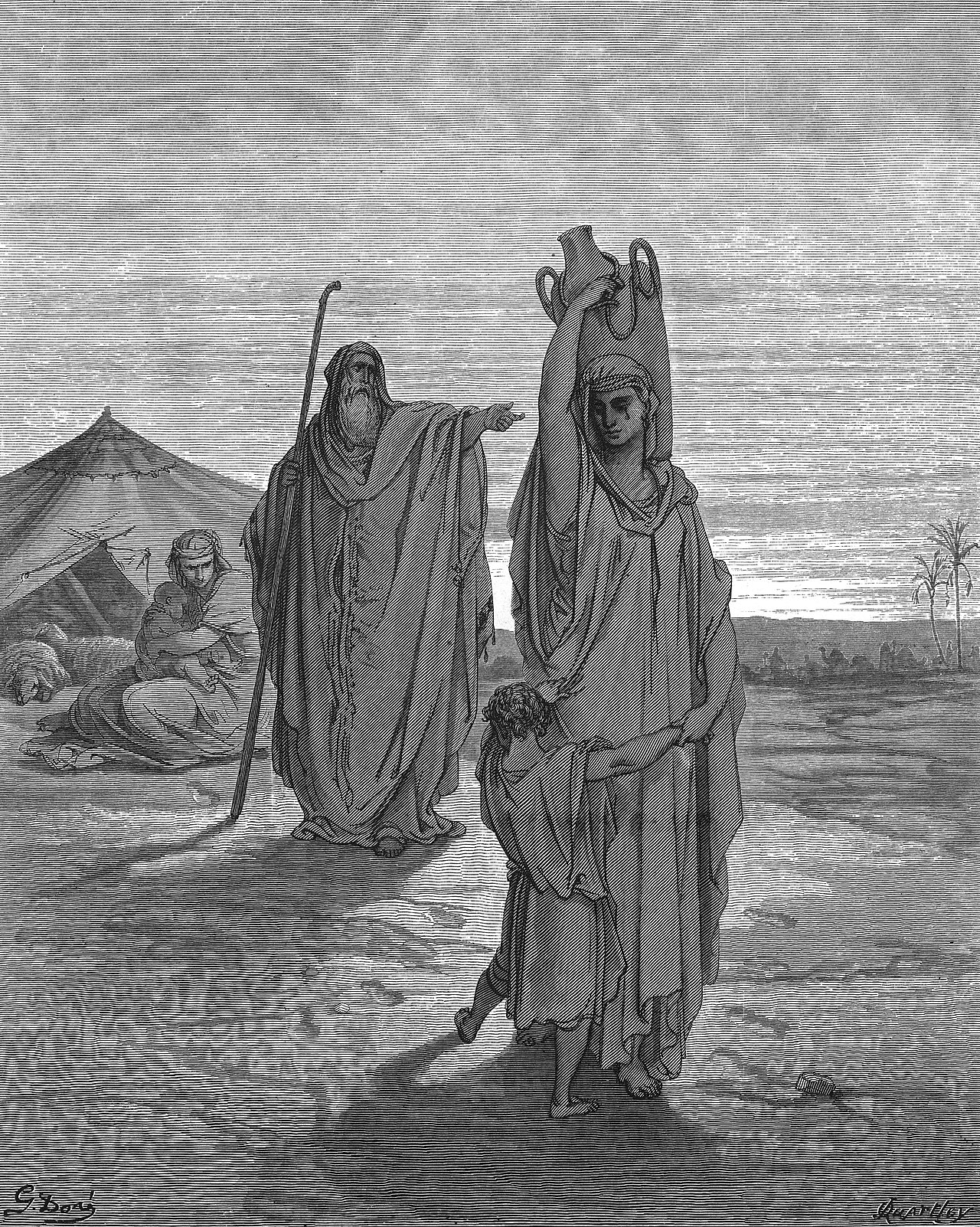
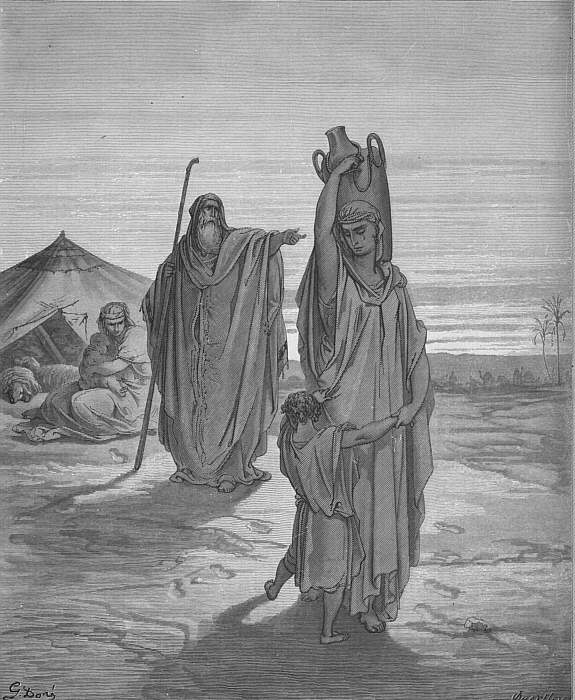
Hagar, Sarah's Egyptian maidservant, bore Abraham a son named Ishmael and is also mentioned in Paul's allegory in Galatians.
Hagar was an Egyptian maidservant of Sarah, Abraham's wife. When Sarah was unable to conceive, she gave Hagar to Abraham as a concubine to bear a child on her behalf, following the custom of the time (Gen 16:1-3). Hagar conceived and gave birth to a son named Ishmael (Gen 16:15). However, tensions arose between Hagar and Sarah, leading Sarah to mistreat Hagar, who then fled into the wilderness (Gen 16:4-6). An angel of the Lord appeared to Hagar, instructing her to return and submit to Sarah, and promising that her descendants would be greatly multiplied (Gen 16:7-10). Years later, after Isaac was born to Sarah, Hagar and Ishmael were sent away by Abraham at Sarah's insistence (Gen 21:9-14). God heard Ishmael's cry in the wilderness and provided for him and Hagar, promising to make Ishmael into a great nation (Gen 21:17-21). In the New Testament, Paul uses Hagar and Sarah as an allegory, with Hagar representing the old covenant of slavery under the law, and Sarah representing the new covenant of freedom through Christ (Gal 4:24-25). Hagar's story illustrates God's care for the oppressed and His faithfulness to His promises, even to those outside the primary line of Abraham's descendants.
Flight, or, according to others, stranger, an Egyptian, Sarah’s handmaid (Gen. 16:1; 21:9, 10), whom she gave to Abraham (q.v.) as a secondary wife (16:2). When she was about to become a mother she fled from the cruelty of her mistress, intending apparently to return to her relatives in Egypt, through the desert of Shur, which lay between. Wearied and worn she had reached the place she distinguished by the name of Beer-lahai-roi (“the well of the visible God”), where the angel of the Lord appeared to her. In obedience to the heavenly visitor she returned to the tent of Abraham, where her son Ishmael was born, and where she remained (16) till after the birth of Isaac, the space of fourteen years. Sarah after this began to vent her dissatisfaction both on Hagar and her child. Ishmael’s conduct was insulting to Sarah, and she insisted that he and his mother should be dismissed. This was accordingly done, although with reluctance on the part of Abraham (Gen. 21:14). They wandered out into the wilderness, where Ishmael, exhausted with his journey and faint from thirst, seemed about to die. Hagar “lifted up her voice and wept,” and the angel of the Lord, as before, appeared unto her, and she was comforted and delivered out of her distresses (Gen. 21:18, 19).
Ishmael afterwards established himself in the wilderness of Paran, where he married an Egyptian (Gen. 21:20, 21).
“Hagar” allegorically represents the Jewish church (Gal. 4:24), in bondage to the ceremonial law; while “Sarah” represents the Christian church, which is free.
Sources: BibleData (CC BY 4.0, Hagar_1) · STEPBible TIPNR (CC BY 4.0, Hagar@Gen.16.1-Gal) · Theographic Bible Metadata (CC BY-SA 4.0, hagar_1348)