Ezekiel
Ezekiel is explicitly identified as a priest, the son of Buzi, among the exiles by the Chebar in the land of the Chaldeans. The opening date is related to the fifth year of Jehoiachin’s captivity. His vision by the river begins the account of his prophetic work, while the settlement notice places him with the captives at Tel-abib. These particulars establish his priestly identity and exilic setting. Ezek 1:1-3 Ezek 3:14-17
A later temple vision presents restoration through flowing water. The stream issues from the sanctuary, becomes progressively deeper and brings healing and life where it reaches the sea. The fishermen’s prospective setting includes En-gedi and En-eglaim, while fruit and medicinal leaves describe the abundance along the banks. The passage provides an image of life extending outward from divine presence. Ezek 40:1-5 Ezek 47:1-12 The river image
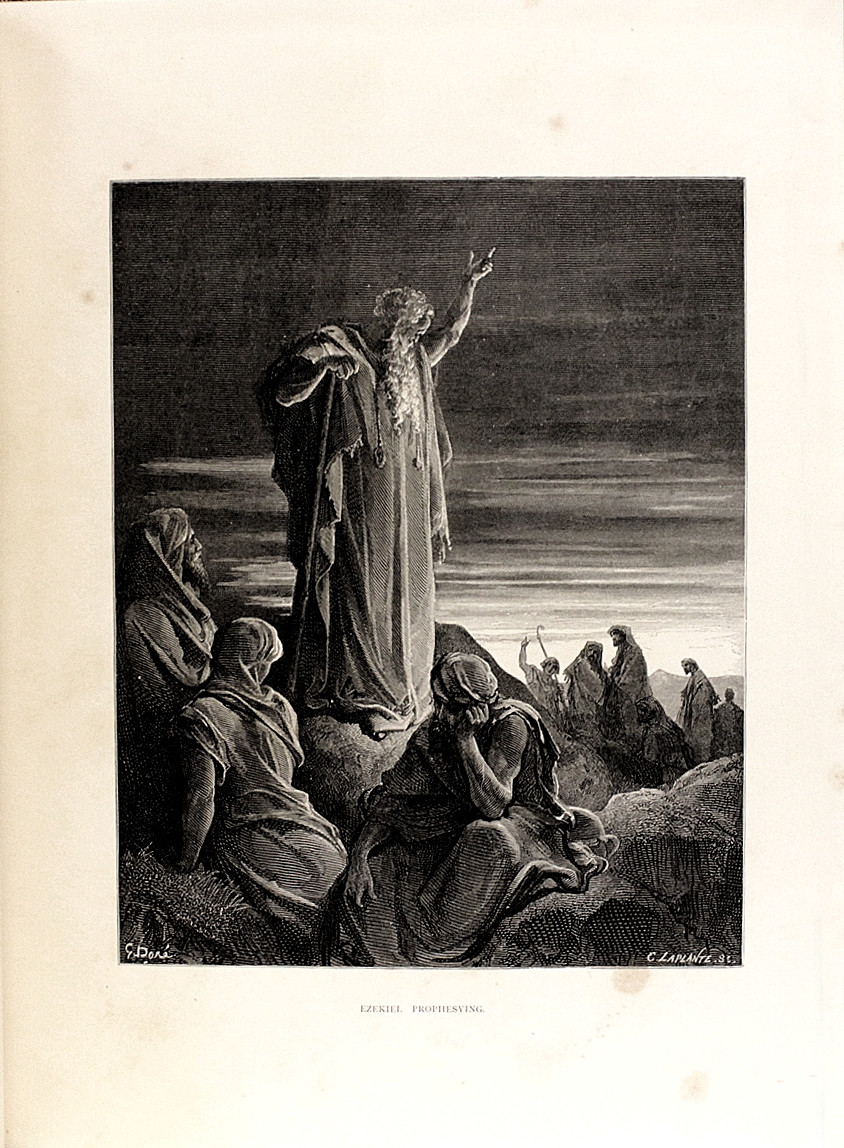
The earlier commission combines a vision of God’s glory with a duty to speak. Ezekiel falls before the throne-like appearance, receives the scroll bearing lamentation and woe, and is sent to Israel whether the people listen or refuse. The eating of the scroll belongs to the prophetic account of receiving the message. After seven days among the captives, he is appointed a watchman who must give the warning entrusted to him. The preserved account defines the office through responsibility for communication, not through the audience’s approval. Ezek 1:26-28 Ezek 2:1-10 Ezek 3:1-17
His message is also communicated through enacted signs and visionary scenes. The drawing of Jerusalem on a tile and the posture of lying on the two sides represent siege and the iniquity of the houses of Israel and Judah. Elders of Judah sit before him in his house when the visionary account turns to the sanctuary’s offenses at Jerusalem. The narrative later returns him in a vision to the captives, whom he tells what he has seen. These transitions explicitly distinguish the exilic audience from the city depicted in the revelation. Ezek 4:1-8 Ezek 8:1-6 Ezek 11:19-25
The death of Ezekiel’s unnamed wife places his household within the sign-bearing ministry. He is instructed not to perform the usual public acts of mourning, and the people ask for an explanation. His answer connects the loss with the sanctuary and with the coming consequences for the people’s families. Later, an escaped person brings news that Jerusalem has fallen; the same notice describes the opening of Ezekiel’s mouth. The audience is subsequently characterized as enjoying his words while failing to act on them. Private loss, public warning and reception of the message are therefore joined in the biographical notices. Ezek 24:15-27 Ezek 33:21-33
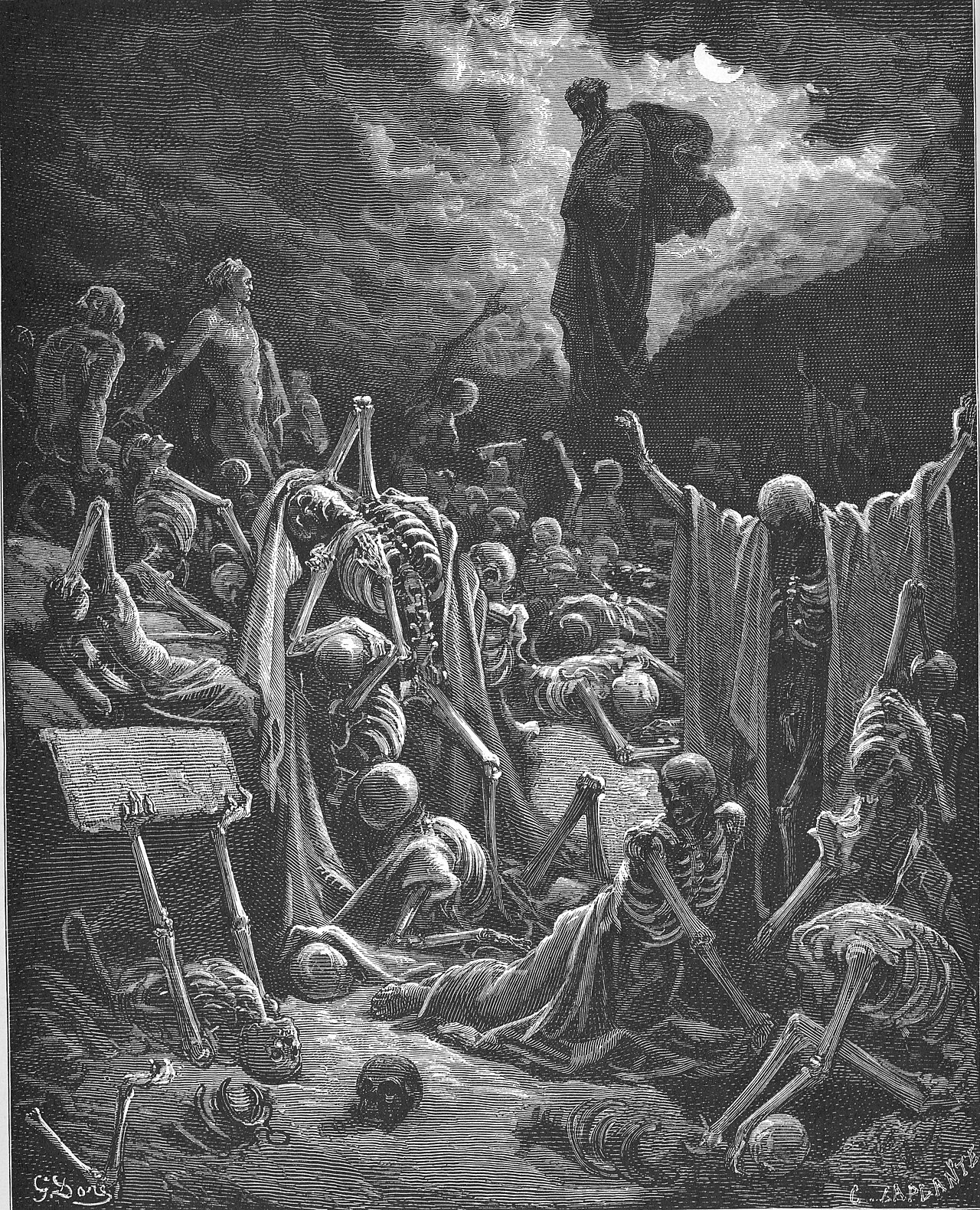
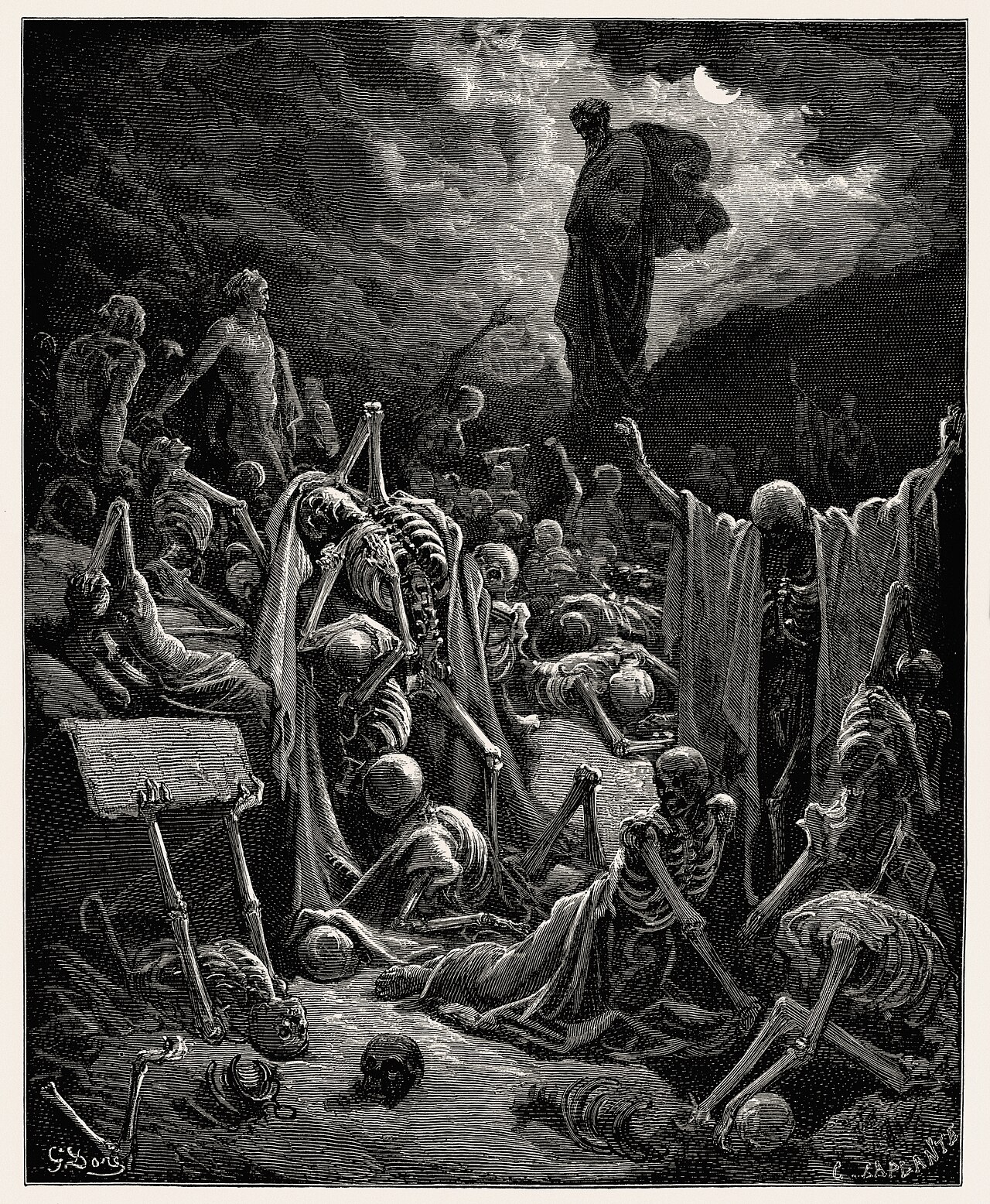
The vision of dry bones develops the promise of renewed life. The bones receive sinews and flesh, then breath, and stand as a great army. The explanation explicitly identifies them with the whole house of Israel, whose hope is described as lost; the promise includes being brought into the land and receiving the divine spirit. The later measured-sanctuary vision is introduced in the twenty-fifth year of the captivity, fourteen years after the city’s fall. Those dated and interpreted visions preserve both the chronology within the book and the message of restoration addressed to the exiled community. Ezek 37:1-14 Ezek 40:1-5