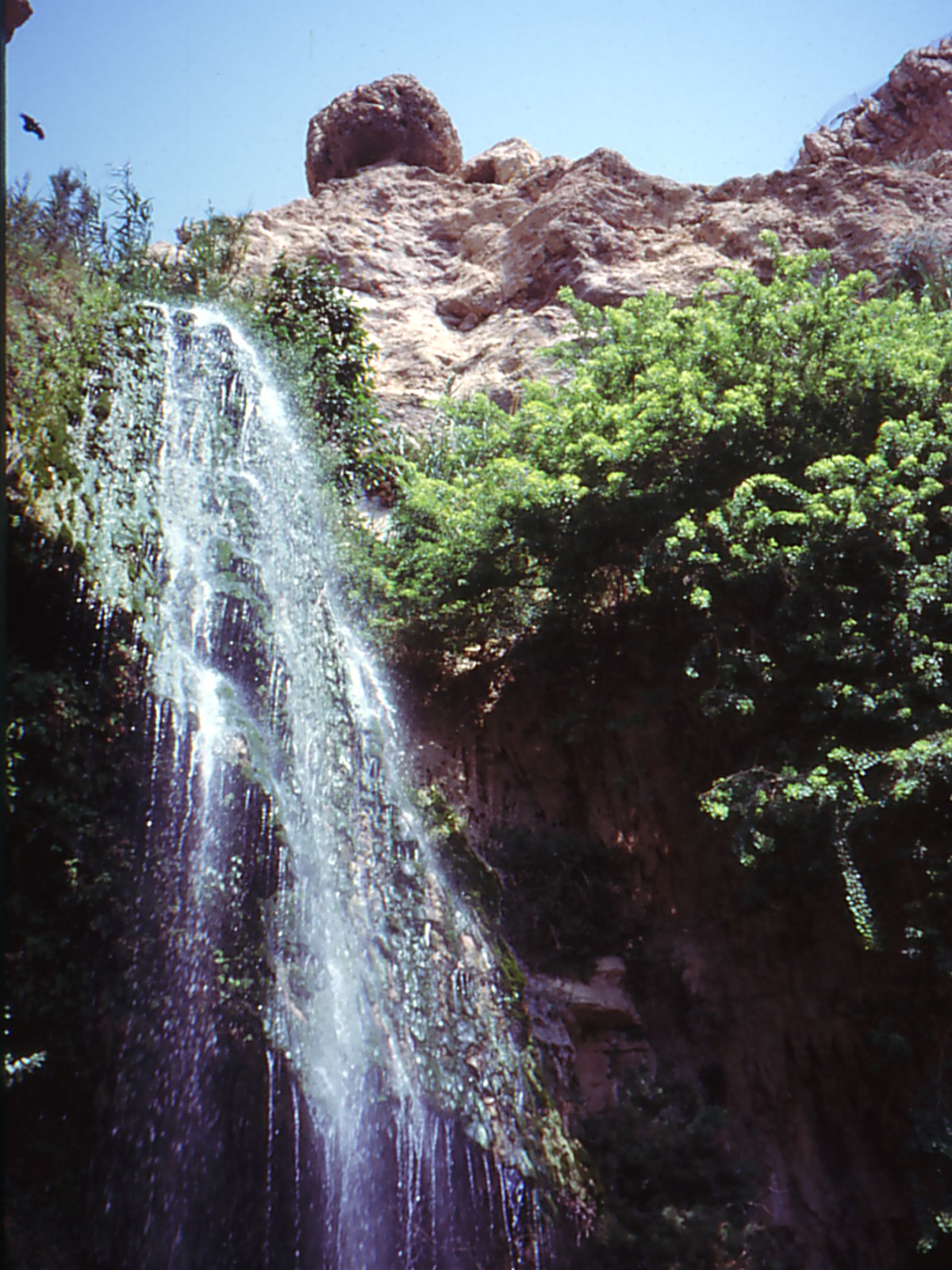
En-gedi
En-gedi (BG1940: Енгади; Ен-гади and Ен-Гади in 1 Samuel 24:1) is first in view under its older name Hazezon-tamar, where the Amorites dwelt whom Chedorlaomer and the kings with him smite after En-mishpat; Chronicles supplies the gloss “Hazazon-tamar, which is En-gedi”, and Nave accordingly calls it a city built by the Amorites. Easton’s entry in the site catalogue explains the name as “fountain of the kid” and places it on the western shore of the Dead Sea, nearly equidistant from both ends. Gen 14:7; 2 Chr 20:2.
In the lot of Judah it is the last of the six cities “in the wilderness”, after Nibshan and the city of Salt. Josh 15:62.
David, fleeing Saul, goes up and dwells in strong holds at En-gedi (KJV 1 Samuel 23, verse 29, which BG1940 joins to the start of 24:1), and when Saul returns from following the Philistines he is told that David is in the wilderness of En-gedi; there, in a cave, David spares Saul. Nave lists the wilderness and the cave of En-gedi as David’s stronghold. 1 Sam 24:1; 1 Sam 24:3.
Messengers tell Jehoshaphat that a great multitude is coming against him from beyond the sea (BG1940 adds “Соленото”, the Salt Sea) on this side Syria, “and, behold, they be in Hazazon-tamar, which is En-gedi”; the king seeks the LORD and Judah is delivered. Ellen G. White, Prophets and Kings, chapter 15, quotes this “startling word” of the messenger when the children of Moab and of Ammon invaded Judah toward the close of Jehoshaphat’s reign. 2 Chr 20:1-2.
The Song names the vineyards of En-gedi, where the beloved is as a cluster of camphire (BG1940: кипрова китка), which Nave notes as its fame; and Ezekiel, in the vision of the river from the sanctuary, sees fishers standing upon the healed waters “from En-gedi even unto En-eglaim”, their fish as the fish of the great sea. Song 1:14; Ezek 47:10.